






 Portuguese
  Spanish


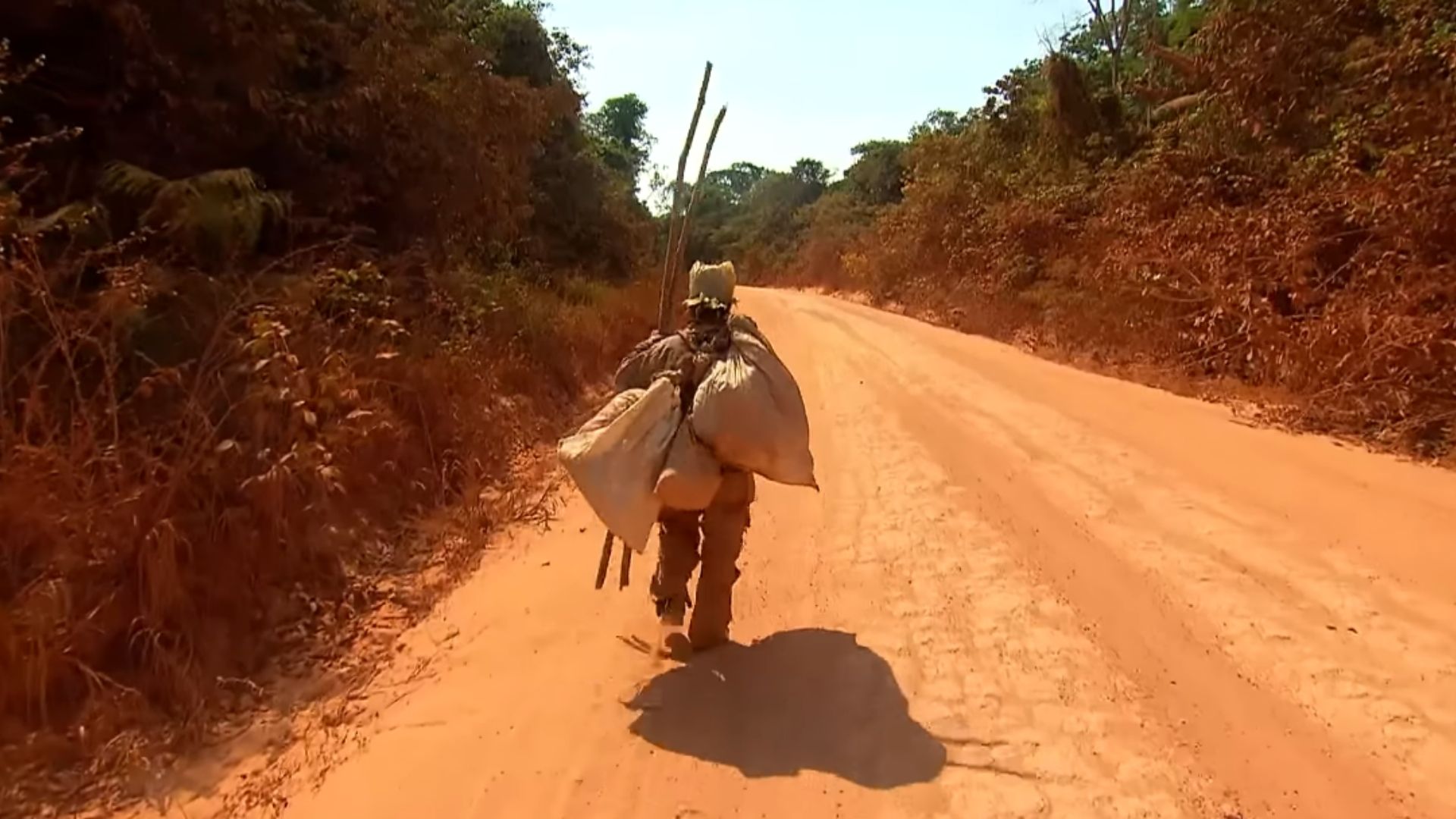


A Silent Journey Along the Banks of the Transamazon Highway Reveals a Little-Seen Story of Human Resilience
While vehicles cross the Transamazon Highway at high speeds daily, an unusual scene caught the attention of those passing by: a man walking alone, carrying his few belongings, moving steadily even under the scorching sun, dust, and long stretches without any support. The wanderer, identified as Mr. João, reported that he has been walking for a long time and that his journey began in Porto Velho, heading to the state of Mato Grosso, crossing isolated stretches of the northern part of the country.
According to him, the walk does not follow digital maps or navigation apps. On the contrary, the route is guided only by the road, the accumulated experience, and the necessity to move forward. At one point in the conversation, it was reported that the next city with a bus station was about 120 kilometers away, in the region of Itaituba, in Pará. It was still ten o’clock in the morning, which made it practically impossible to cover that entire distance in the same day.
However, despite this reality, the wanderer stated that it did not prevent him from continuing. After all, as he explained naturally, he sleeps in the middle of the woods, improvising shelter whenever necessary, showing no fear of animals, spiders, or solitude itself. Thus, the Transamazon Highway ceases to be just a highway and becomes the backdrop of a human story marked by resilience.
-
Farewell to Toilet Paper? New Technology Sparks Debate on Bathroom Habits

-
Young Entrepreneur Who Started Recycling Bottles at Age 3 Becomes Environmental Icon in the U.S.

-
Nivea Blue Tin Cream: Popular Post-Beach and Pool, But Pharmacist Warns About Missing Ingredients and Common Summer Mistakes Regarding UVA and UVB Protection.
-
Archaeologists Recover Colossal Structure Lost for Over 1,600 Years Under the Sea, Including 22 Monumental Blocks Weighing Up to 80 Tons, Intriguing Experts.



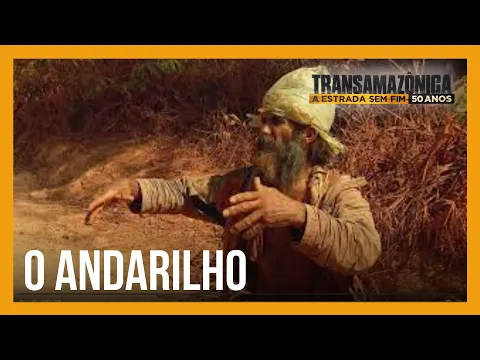
Sleeping in the Woods, Facing Rain, and Moving Forward Are Part of the Wanderer’s Routine

Throughout the account, Mr. João described in detail how he organizes his survival during the journey. To protect himself from the rain, he uses a makeshift double mattress, which keeps him from making direct contact with the wet ground. In addition, he carries water, sugar, and simple foods, stored strategically so they do not spoil during the trip. Each item has a clear function, and nothing is taken without necessity.
Even with the constant dust of the Transamazon Highway, which bothers his eyes and breathing, he continues to walk. When questioned about the discomfort, he explained that he has already gotten used to the extreme conditions of the road. According to him, the rain, although it makes walking difficult, also brings relief from the intense heat, allowing him to move “a little further” when the weather cooperates.
Another point that draws attention is the physical aspect of the wanderer. Described as a large, strong, and resilient person, he appears to carry on his body the marks of a life in motion. Despite the difficulties, he stated that he does not go hungry, does not feel constant fear, and continues with faith. At several moments, expressions like “thank God” come up spontaneously in his speech, reinforcing spirituality as an essential part of the journey.
The information was disclosed through records made along the roadside, according to accounts captured during the conversation, showing a daily life that rarely makes it to traditional news outlets.
Stories Like Mr. João’s Reveal an Invisible Side of the Transamazon Highway and Deep Brazil

The Transamazon Highway is often associated with major works, deforestation, logistics, and economic development. However, stories like Mr. João’s reveal a much less visible side of the highway: that of people who make it not only a route but a way of life. By walking hundreds of kilometers, the wanderer transforms the road into a temporary home, refuge, and daily challenge.
During the farewell, after receiving food, water, and words of encouragement, he continued his journey calmly, wishing only to “get there.” There were no complaints, requests, or dramatic speeches. Just the acknowledgment that the road is still long and that stopping is not an option. This type of account exposes, in a raw and human way, the regional inequalities and social invisibility of those who live on the margins of traditional structures.
According to local observers, it is not uncommon to find people in similar situations along the Transamazon Highway. Still, each story carries its own motivations, pains, and hopes. Mr. João’s, in particular, draws attention for his serenity in the face of isolation and his extreme adaptation to the conditions imposed by the road.
In the end, one is left to reflect: how many stories like this go unnoticed every day, hidden among trucks, dust, and kilometers of asphalt?






Ja tive essa vontade de andar sem rumo, mas hj me considero um cidadão idoso e sem essa vontade, parabens aos corajosos da estrada.
Andarilho como vcs chamam são seres humanos bem adaptado a uma vida real,em contato direto com a natureza e o criador nosso Pai, livre da desordem,da mentira,da falsidade,um ser completamente livre de todas loucuras humana
Não é bem assim não chefe
Essa trans Amazônia, desde que eu me conheço essa estrada sempre de barro ,esburacadas, entra governo e sai governo ninguém asfalta , mais deve constar com asfaltada devem fazer manutenção mais nunca vil um asfalto só pra comer dinheiro, se liga o presidente LULA ,QUANTOS MANDATO S VOCÊ JÁ COMEU ESSE DINHEIRO, ASSIM QUE QUER SE REELEGER…
Que comentario sem lógica. Você sabia que a Transamazônica é obra iniciada na **** militar e que ela é uma estrada **** pelo desmatamento absurdo da floresta e que foi criada pelos militares **** da **** como mera propaganda pra agradar os ****? Então, só comente sobre certos assuntos depois de estudar a respeito, assim você não posa de ridículo.