






 Portuguese
  Spanish


In the United States, the startup Cocoon Carbon, led by entrepreneur Eliot Brooks, wants to turn the slag leftover from steel plants into a resource for concrete: the company raised US$ 15 million and is building a demonstration plant with a goal to produce 10 thousand tons per year, in a case where the slag becomes low-carbon cement.
Every time a steel plant produces steel, slag is left over, a heavy waste that usually becomes rubble or goes to landfill. Entrepreneur Eliot Brooks looked at this waste and saw cement. Leading the startup Cocoon Carbon, he wants to transform the slag from steel plants into a resource for concrete, tackling two of the world’s most polluting sectors, steel and cement, at once. The venture has already raised US$ 15 million to build a demonstration plant in the United States capable of producing 10 thousand tons per year.
The investment was reported by Axios, which referred to Cocoon Carbon as a bet on cleaner cement. The idea is to use the byproduct of electric steel mills to manufacture a material that replaces part of the common cement in concrete, cutting emissions. Instead of a curiosity, it’s a substantial business: industrial waste becoming construction raw material on a large scale.
The slag leftover from steel plants
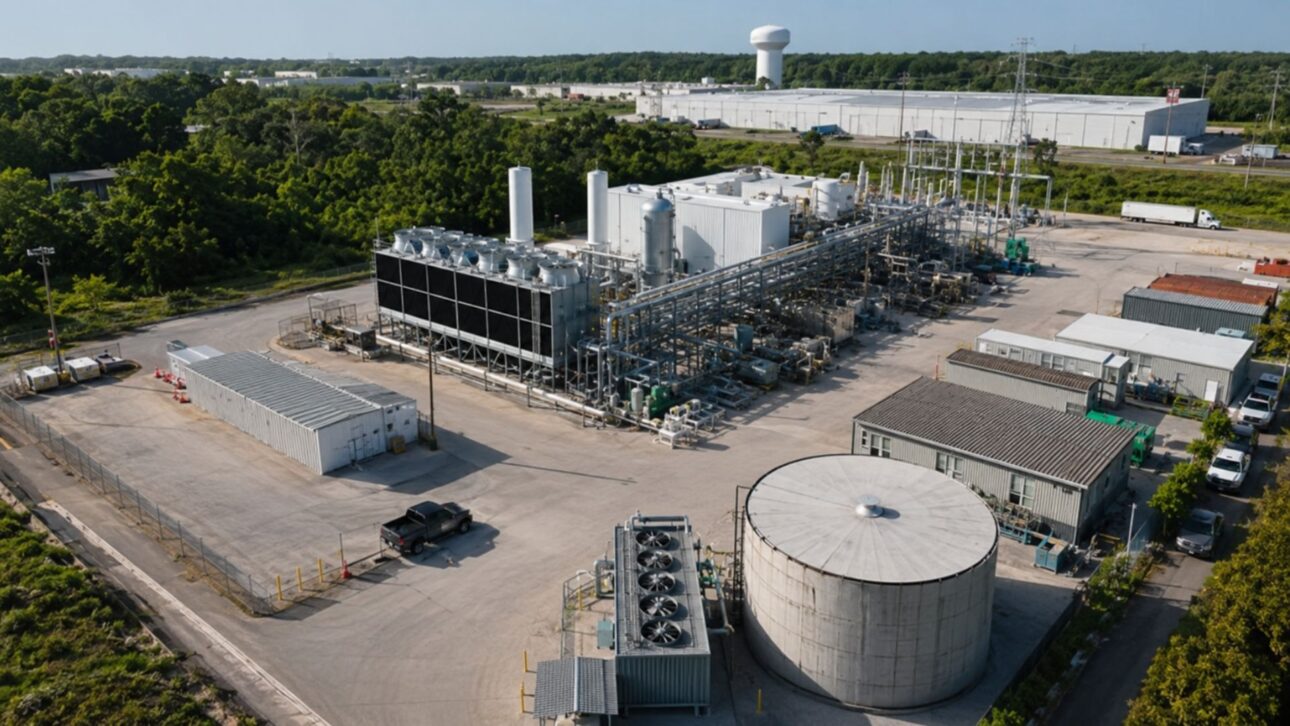
When steel plants melt metal to make steel, a mass of impurities called slag is left over, which exits the furnace in a liquid state and at very high temperature.
-
World’s Most Powerful X-Ray Laser, 3.4 km Long and Emitting 27,000 Flashes Per Second, Unveils Atoms in Motion in Germany

-
Former SpaceX Rocket Engineer Develops Fast-Growing Grass Panels to Replace Wood in Construction, Secures $47.5 Million Funding

-
A Simple Finger Movement Gains Attention for Its Potential Role in Alzheimer’s Prevention
-
MSC Orders Largest Fleet of Gas-Powered Ships in Maritime History, Set to Impact Global Freight Costs



This waste is generated in huge quantities by steel plants worldwide, and a large part ends up underutilized or discarded. Traditionally, part of the slag already becomes the base for asphalt or landfill material.
What Cocoon Carbon proposes is to give it a much more noble destination. Instead of becoming rubble, the slag becomes cement.
How Slag Turns into Cement
The trick is in how the slag is cooled. Cocoon Carbon takes the liquid slag, which reaches temperatures above 1,600 degrees, and cools it very quickly, in a process that changes the structure of the material.
From this controlled cooling comes LoopCem, a powder that functions as a cementitious input, meaning a material that replaces part of the cement when making concrete. In practice, this is where slag turns into cement, or at least a substitute for a good part of it.
The product is tested according to specific technical standards for this type of material. When slag turns into cement in this way, the concrete becomes cleaner without losing quality.
$15 Million for a Demo Plant
The technology has already moved from paper to scale. Cocoon Carbon raised $15 million in an investment round to build a demonstration plant alongside an electric steel mill in the United States.
The goal of the demo plant is to produce about 10,000 tons per year, a number that serves to prove that the process works on an industrial scale, according to Concrete Products.
Validating the technology in a real factory is the missing step for growth. The company is already talking about taking the model to dozens of plants on both sides of the Atlantic. From idea to plant, the leap is underway.
Who is Eliot Brooks and Cocoon Carbon

Eliot Brooks is co-founder and CEO of Cocoon Carbon, a London-based company, which he runs alongside partners Will Knapp and Freddie Scott.
Eliot Brooks’ profile is that of an entrepreneur targeting large industrial problems, not showcase solutions. Cocoon Carbon was born precisely to close a cycle between two giant polluters, steel and cement.
The proposal is to decarbonize both at the same time, using the waste of one to clean the other. It’s process engineering applied to a billion-dollar market.
The Gap that Green Cement Needs to Fill
The bet solves a concrete problem in the sector. To reduce emissions, the industry already mixes materials into concrete that replace part of the cement, such as ashes from coal plants.
However, these ashes are disappearing because coal plants are closing, and the concrete industry is facing a shortage of this input. It is this gap that Cocoon Carbon wants to fill with slag from steel mills.
Where coal ash used to come in, steel residue can now enter. Solving this supply shortage is as important as cutting emissions, and that’s where the business becomes significant.
Why this matters for the climate
The environmental weight of the idea is enormous. Cement production alone accounts for about 8% of global CO2 emissions due to the heat and chemistry involved.
Every ton of regular cement replaced by a slag-based input means less carbon released into the atmosphere. Add to that the use of steel waste that would otherwise be discarded, and the benefit doubles.
It’s the logic of the circular economy applied to heavy industry: one entity’s waste becomes another’s raw material. For concrete, the most used material on the planet after water, any emission cut is significant.
What Cocoon Carbon shows
The biggest lesson is that decarbonizing the industry involves reusing what it already discards. Eliot Brooks and Cocoon Carbon demonstrate that steel mill slag can replace cement and help clean up construction.
Of course, it’s important to stay grounded. For now, it’s a demonstration plant with a target of 10,000 tons per year, and the technology still needs to prove it works and can scale before changing the market.
Even so, seeing a common steel mill residue become a concrete input, backed by $15 million, is the kind of bet that can truly shake up the cement industry. From the steel furnace to the construction site, when slag becomes cement, Cocoon Carbon closes a cycle that few had considered, proving that sometimes the next raw material for construction is in the remnants of another factory.
And you, did you know that steel slag can become an ingredient in the concrete that builds buildings? Tell us in the comments what you think about turning industrial waste into construction material.


