Portuguese
  Spanish


In Istanbul, Turkey, the Marmaray tunnel connected Europe and Asia under the Bosphorus with the world’s deepest immersed railway tunnel, but when it was dug, the project unearthed a lost Byzantine port and the largest collection of medieval ships ever found, delaying the project by four years.
Digging a tunnel under the sea to unite two continents is already a feat. But in Istanbul, Turkey, the Marmaray tunnel project did more than that: when drilling the bottom of the Bosphorus, engineers encountered 8,000 years of buried history. Where only tracks were supposed to pass, a lost Byzantine port and dozens of sunken ships appeared. To connect Europe and Asia under the water, Turkey ended up unearthing the largest collection of medieval ships ever found in the world.
The case was highlighted by Watts & Wild, an engineering and nature site that explained how the city’s past interrupted the modern project. The excavation forced a delay of about four years while archaeologists rescued treasures that had been under Istanbul for millennia. In the end, the Marmaray tunnel became both an engineering landmark and one of Turkey’s greatest archaeological discoveries.
A tunnel to unite two continents
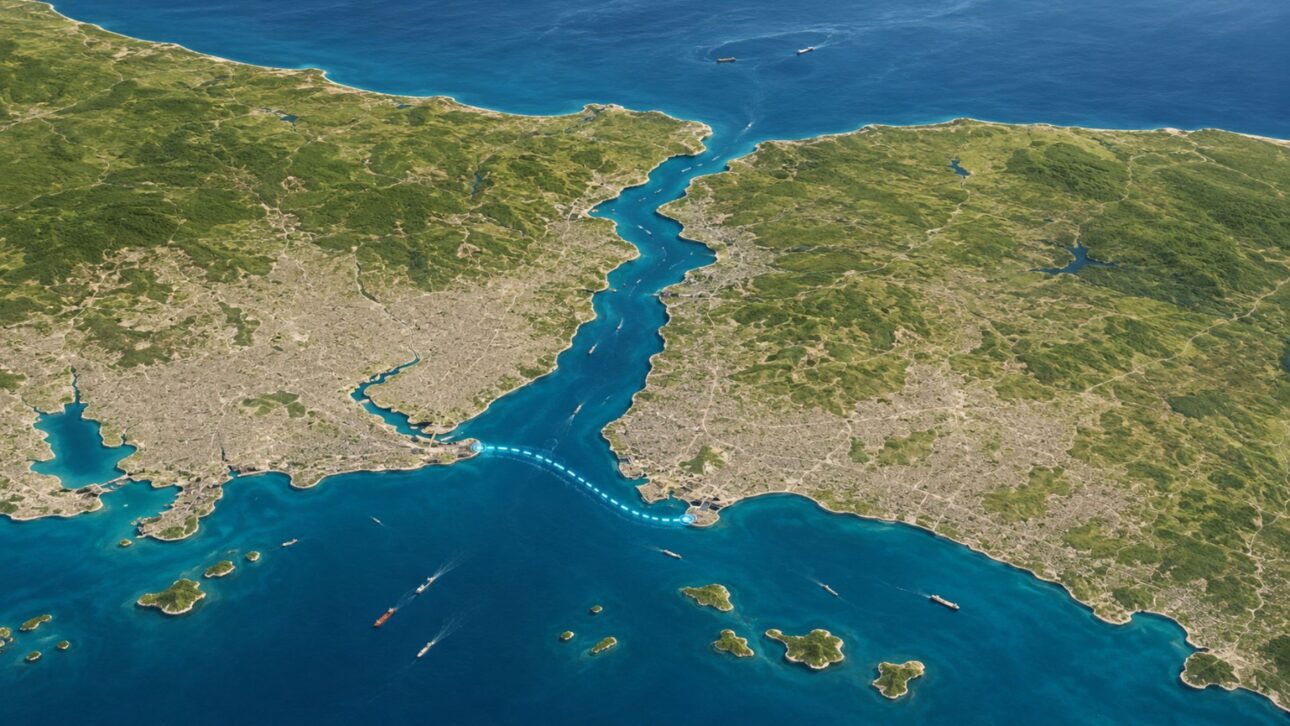
The Marmaray tunnel was built to connect Europe and Asia under the Bosphorus, the strait that cuts through Istanbul and separates the two continents.
-
Revolutionary Building Material, SIP Panels, Set to Transform Construction by 2026 with 70% Heat Reduction and Faster Builds

-
186-Meter Bridge in Brazil Undergoes $9.5 Million Repairs After Structural Damage to a Pillar

-
Northeast Brazil Railway Project Receives New Deadline and Billions in Funding — Will the Transnordestina Finally Be Completed?
-
Saudi Arabia’s $500 Billion Desert Ski Resort Project Canceled — What’s Left Tells a Bigger Story


Inaugurated in 2013, it became the world’s deepest immersed railway tunnel, reaching about 60 meters below the water’s surface. The train crossing between the two sides, which previously depended on boats or bridges, now takes just a few minutes.
It was the realization of an old dream for the city. But to get there, Turkey had to dig very deep, and that’s when history appeared.
The excavation that became a time capsule
The most surprising point of the project was the Yenikapı station. While excavating the ground for the tunnel, workers found traces of human occupation from up to 8,000 years ago, right beneath Istanbul.
The most impressive find was a lost Byzantine port, the ancient port of Theodosius, which had disappeared under the city for centuries. What was meant to be a construction site became the largest archaeological site ever opened in the city.
Each layer of earth revealed a different piece of the past. Istanbul, already one of the oldest cities in the world, showed that it held even more history than imagined.
The largest collection of medieval ships ever found
At the bottom of that ancient port was the greatest treasure. Archaeologists unearthed dozens of sunken Byzantine ships, forming the largest collection of medieval ships ever found in one place.
These were vessels over a thousand years old, preserved in the mud, which tell how trade and life functioned in the Mediterranean during the Middle Ages. Each hull provided clues about shipbuilding, routes, and cargoes from a distant era.
Finding so many medieval ships together is extremely rare in archaeology. It was like opening an entire museum hidden beneath Istanbul’s traffic.
4 years of delay due to history
All this wealth came at a price for engineering. The discovery of the medieval ships and the Byzantine port forced the project to halt for archaeological excavation, adding about four years of delay to the project.
Instead of simply bulldozing through, Turkey chose to preserve what was found, a rare case of a modern project giving way to the past. Engineers and archaeologists had to work side by side.
The schedule suffered, but history was saved. It’s the old tension between progress and preservation, resolved here in favor of memory.
How the world’s deepest immersed tunnel works
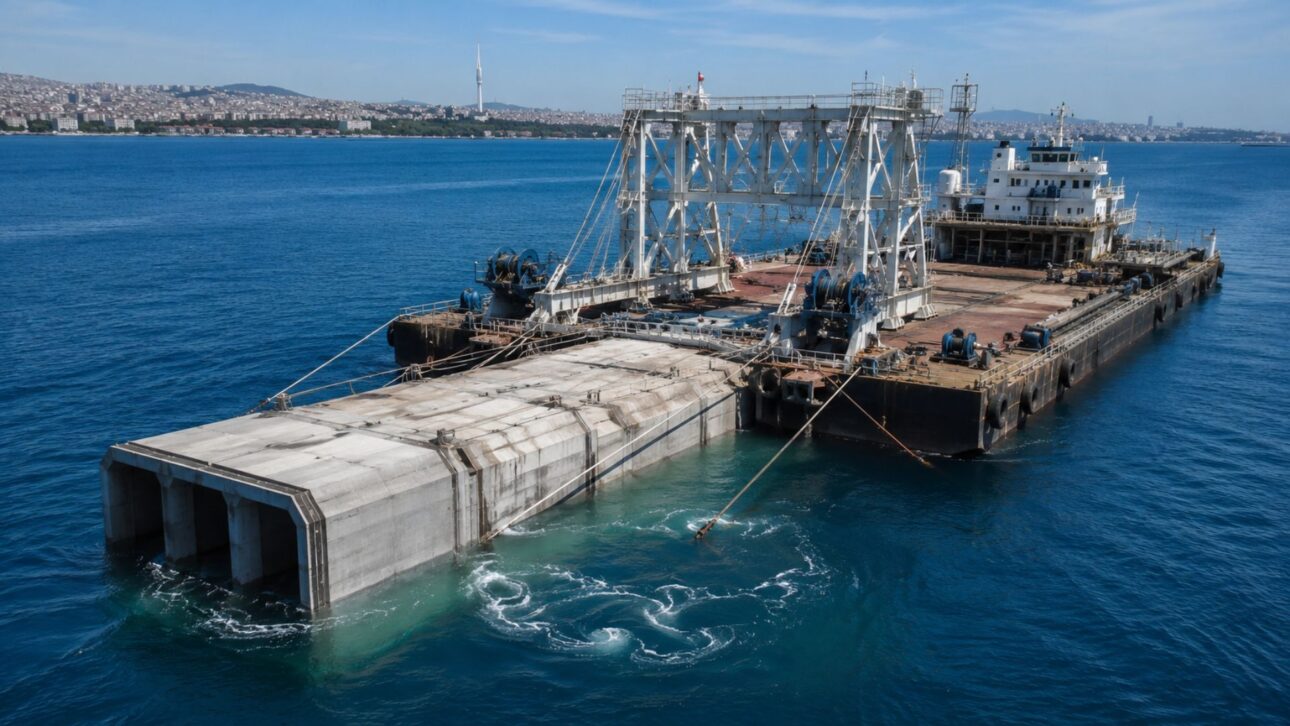
The submerged section of the Marmaray tunnel was constructed using the immersed tube method, where large concrete sections are manufactured, sunk, and fitted into the bed of the Bosphorus.
There were 11 of these giant sections, assembled underwater, in a tunnel designed to withstand earthquakes above magnitude 7, according to Railway Technology. The region is near the North Anatolian Fault, one of the most active in the world, which required extra reinforcement.
Even at the deepest point, under dozens of meters of water, the tunnel needs to be safe. Combining cutting-edge engineering and seismic resistance was part of the challenge.
A 150-year-old dream under the Bosphorus
The idea of crossing the Bosphorus underneath was not new. As early as the 19th century, Ottoman sultans dreamed of a tunnel linking Europe and Asia under the strait, but the technology of the time did not allow it.
The Marmaray tunnel fulfilled, more than 150 years later, an old desire to unite the two shores of Istanbul by rail. What was a fantasy of another era became reality in the 21st century.
The city that lies between two continents finally gained a train seam under the water. It was modern engineering closing a cycle that began in the imagination of previous generations.
What the Marmaray shows
The biggest lesson is about the meeting between future and past. The Marmaray tunnel aimed to connect Europe and Asia and ended up also linking the present to 8,000 years of Istanbul’s history.
Of course, it’s important to keep one’s feet on the ground. The four-year delay and the billion-dollar cost show that such a project is neither simple nor cheap, and that archaeological discoveries can complicate any construction.
Even so, seeing a train tunnel unearth the largest collection of medieval ships in the world is the kind of story that unites engineering and archaeology like few others. From the depths of the Bosphorus emerged tracks and treasures at the same time, proving that, in very old cities, digging for the future also means stumbling upon the past.
And you, did you imagine that a train tunnel could reveal ships over a thousand years old? Tell us in the comments what impresses you most about this mix of engineering and history.