Portuguese
  Spanish


The hybrid Corolla combines a combustion engine, self-recharging electric system, and regenerative braking to reduce urban consumption without relying on a plug. With up to 17.5 km/l in the city, according to Inmetro data, the sedan shows how efficiency, comfort, and space can coexist in a quiet family car for daily use.
The hybrid Corolla caught attention again in Brazil in 2026 for combining urban consumption of up to 17.5 km/l with gasoline, medium sedan space, and operation without a plug. Toyota’s model uses self-recharging hybrid technology to alternate between electric motor and combustion engine according to traffic demand.
According to Market Monitor, in June 2026, the case is of particular interest to drivers facing congestion, short routes, and constant stops in Brazilian cities. In urban use, where many combustion cars consume more fuel, the hybrid system can take advantage of decelerations and low speeds to reduce gasoline consumption.
How the hybrid Corolla works without relying on a plug
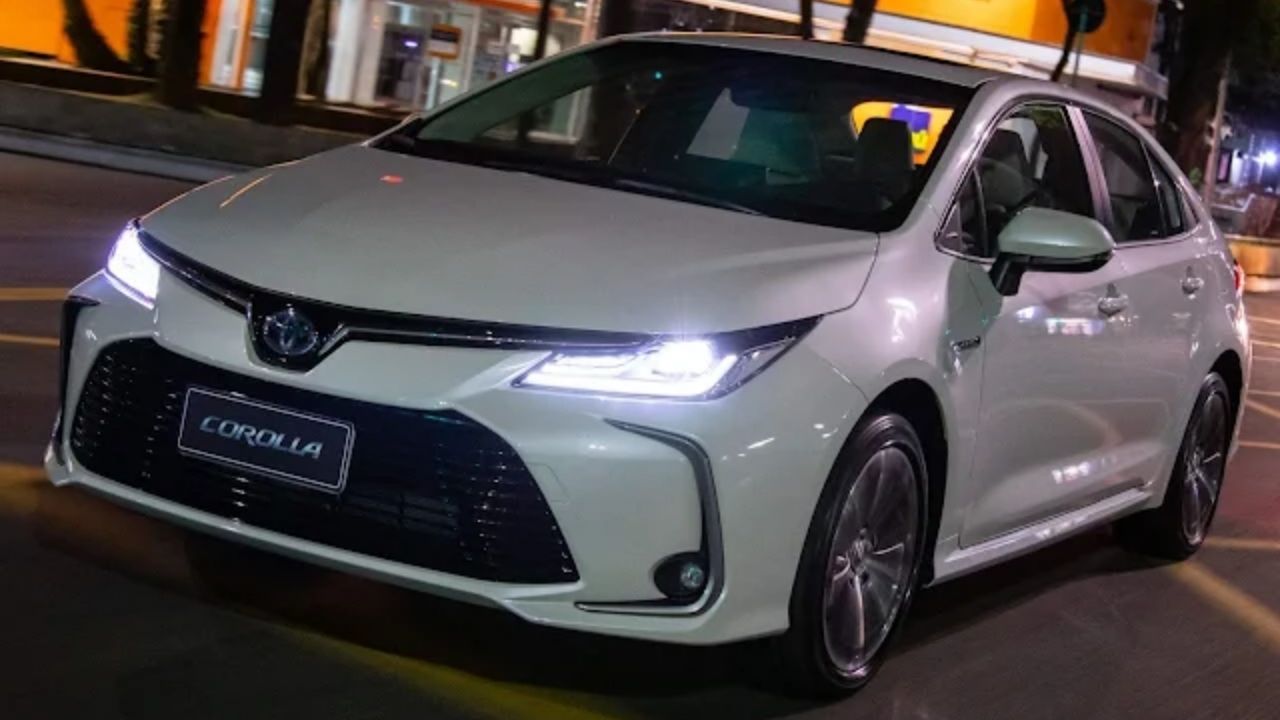
The hybrid Corolla does not need to be plugged in because its battery is recharged by the car’s own operation. Part of the energy comes from the combustion engine, and another part is recovered when the vehicle slows down or brakes, a process known as regenerative braking.
-
Land Rover Issues Recall for Airbag Connector Fault Affecting 250,857 Vehicles in the US, Alerting Drivers in Brazil for Official Notice

-
Brazilian Electric Motorcycle Once Promised 180 km Range and Affordable Price, Now Faces Uncertain Future Amid Delays and Manufacturer’s Bankruptcy

-
Chery Stockman 2026 Unveiled: Larger Than Toyota Hilux, Featuring Unique Plug-In Hybrid Diesel Engine, 3.5 Ton Towing Capacity, and 1,000 kg Payload to Challenge Traditional Off-Road Trucks

-
Does a Flag on Your Car’s Hood Overheat the Engine? Expert Reveals the Overlooked Danger for Drivers


In practice, the driver uses the car like a conventional sedan, fueled with gasoline, but with automatic electric support. The system decides on its own when to use electricity, combustion, or both at the same time, without requiring manual mode switching or external recharge planning.
The city became the best scenario for hybrid technology
Urban traffic is usually the worst environment for traditional cars because there are short accelerations, constant stops, and successive restarts. Each traffic light departure requires energy, and this repeated cycle increases gasoline consumption in vehicles that rely solely on the combustion engine.
In the hybrid Corolla, this same scenario favors the use of the electric motor at low speeds. In traffic jams, maneuvers, and light movements, the car can run more smoothly and with lower instant consumption. That’s why efficiency appears so strongly precisely within the city.
Regenerative braking helps recover energy in daily life
Regenerative braking is one of the central points of the hybrid Corolla‘s operation. Whenever the car decelerates, part of the energy that would be wasted as heat is converted back into charge for the hybrid system’s battery.
This reuse does not turn the vehicle into a pure electric, but it improves efficiency in urban use. On routes with many stops, gentle descents, and frequent slowdowns, the system can recover energy multiple times. The more traffic forces the car to decelerate, the more sense this technology makes.
The consumption of 17.5 km/l changes the perception of sedans
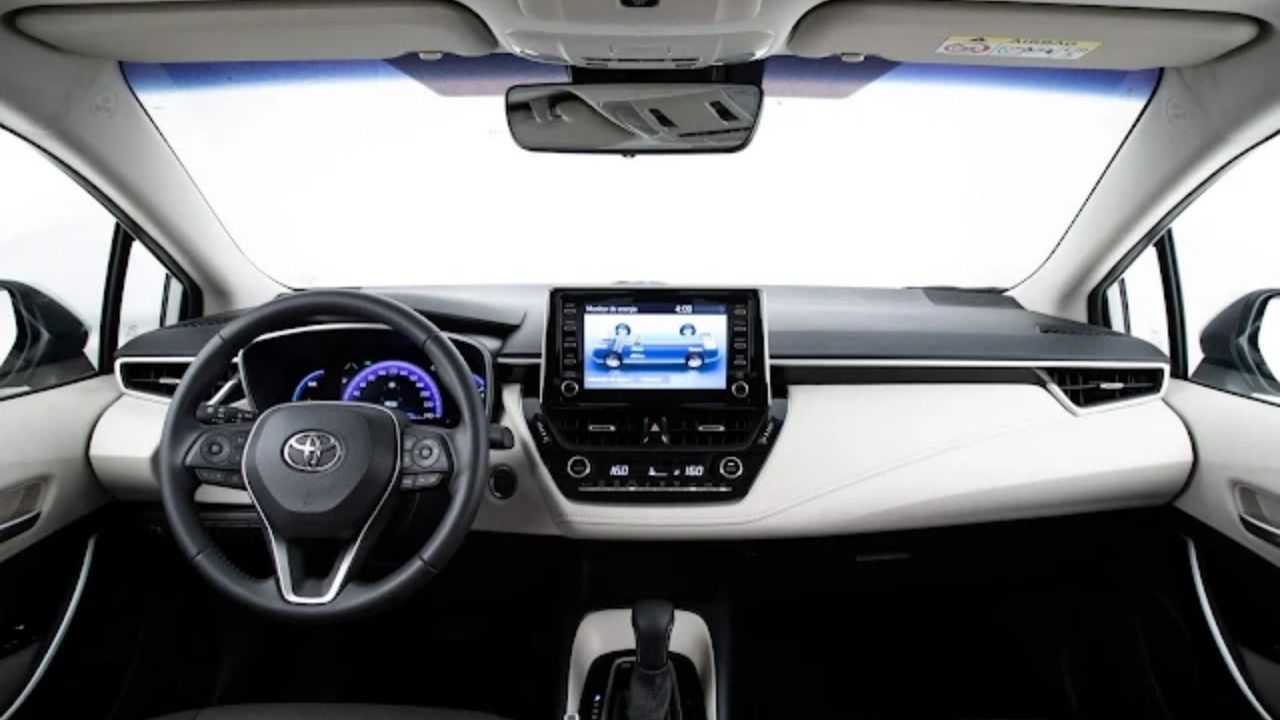
The figure of up to 17.5 km/l in the city with gasoline places the hybrid Corolla in a different position within the market. The economy, often associated with compact cars, appears in a mid-size family sedan, with a more spacious and comfortable proposal.
This changes the comparison for those evaluating usage costs at the end of the month. Urban consumption becomes an important argument not only for those who drive a lot but also for families looking for a quiet, reliable car that is less dependent on frequent refueling.
Interior space remains part of the family appeal
One of the points that reinforce the attention on the hybrid Corolla is precisely the fact that it does not follow the logic of a small car as an obligatory synonym for economy. The model maintains the mid-size sedan proposal, with a cabin focused on passenger comfort and a trunk suitable for family use.
For those who use the car in a mixed routine, with work, school, supermarket, and occasional trips, this balance matters. The fuel economy does not come with a feeling of tightness, which helps explain why the model appeals to a broader audience than just those looking for the smallest car possible.
Silence and smoothness change the traffic experience
Besides consumption, the Corolla hybrid stands out for its silence at low-speed sections. When the electric system operates alone or with greater involvement, the cabin becomes less noisy, especially during light starts and heavy traffic movements.
This smoothness also appears in the transitions between the electric motor and the combustion engine. The operation was designed to reduce jerks and make driving more linear. In daily life, this difference can be felt more in comfort than in the technical sheet, especially by those who spend a lot of time inside the car.
Highway requires a different operating logic
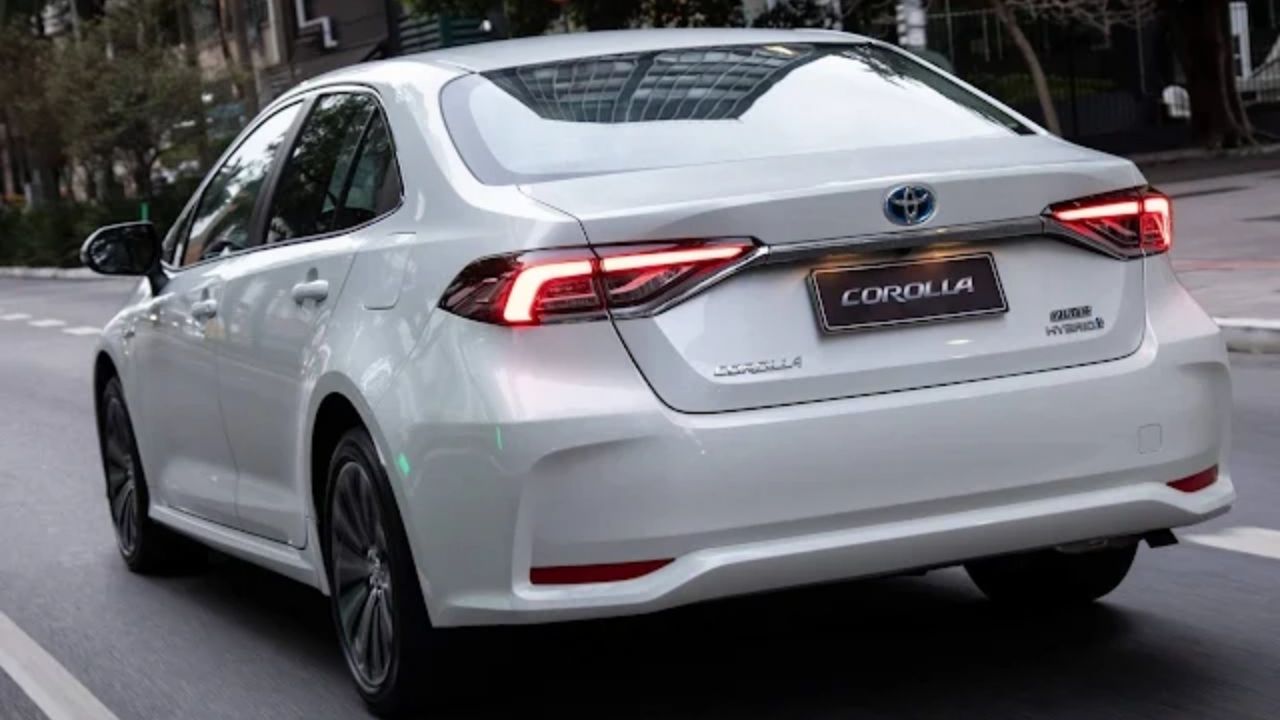
Although the highlight is urban consumption, the Corolla hybrid can also be used normally on highways. At constant speeds, the combustion engine takes on a larger role, while the electric system continues to assist in specific moments of acceleration and energy management.
In this scenario, the gain tends to be different from that seen in the city, as there are fewer braking opportunities and less chance to recover charge. Still, the hybrid set maintains the proposal of overall efficiency. The technology does not rely solely on running in electric mode but on managing energy more intelligently.
Economy does not eliminate the importance of real use
Consumption numbers are measured under standardized conditions, and the result obtained by each driver may vary. Traffic, terrain, tire pressure, fuel quality, air conditioning, vehicle load, and driving style directly influence the final average.
Therefore, the figure of 17.5 km/l should be read as a technical reference, not as a fixed promise for any situation. Even so, it helps to show the potential of the Corolla hybrid in an urban environment favorable to the self-recharging system and energy recovery during braking.
The family sedan has become a provocation in the market
The hybrid Corolla has become a provocation to the idea that an economical car needs to be simple, small, or limited. By combining low consumption, family space, silence, and plug-free technology, the model broadens the debate on what consumers can expect from an efficient automobile.
The question now is whether more brands will follow this path in sedans, SUVs, and other family cars in Brazil. Do you think the self-charging hybrid is the best transition before electric cars, or do you still prefer a traditional combustion car? Leave your opinion in the comments.