Portuguese
  Spanish


A Mediterranean Shipping Company — MSC, the largest container shipping company in the world — has placed the largest order for liquefied natural gas ships in the history of maritime transport, ordering dozens of LNG dual-fuel mega-ships from Asian shipyards in a multi-billion dollar bet on the energy transition of the sector that moves 90% of global trade.
What the order is and why it is historic
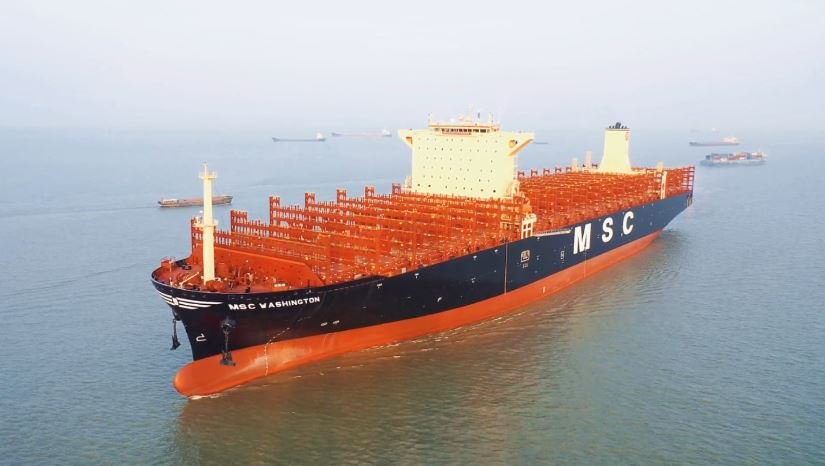
MSC has ordered a fleet of dual-fuel powered container ships — meaning the ships run on both diesel and liquefied natural gas — with a combined capacity that will exceed 200,000 TEUs, the unit of measurement for twenty-foot equivalent containers. To give a sense of scale: an additional 200,000 TEUs is equivalent to more than twelve of the largest ships ever built sailing simultaneously.
The ships have individual capacities between 16,000 and 24,000 TEUs, with a length of 400 meters — Malacca-max size, the largest that can pass through the Strait of Malacca, a critical route between India and China. South Korean shipyards DSME and HD Hyundai Heavy Industries will build most of the fleet, with delivery spread between 2027 and 2030.
The total value of the order has not been officially disclosed, but market analysts estimate it to be between 15 and 20 billion dollars — likely the largest single shipbuilding contract in history.
-
WhatsApp Introduces Two New Features to Revolutionize How Millions Add Contacts

-
Brazil’s Power Grid May Need 6.6 GW of Energy Storage by 2035 Due to Solar and Wind Expansion, Requires Regulatory Framework and Clear Pricing to Attract $11 Billion in Investments

-
Planet Accumulating Heat at Record Pace, Scientists Warn Global Warming Could Exceed 1.5°C Limit in About 4 Years; Only 130 Billion Tons of CO₂ Left, Climate Window Rapidly Closing
-
The Lithium Triangle in the Americas Will Determine the Future of Electric Batteries — and Brazil Is Late to the Game


Why LNG and not ammonia or methanol
Decarbonizing maritime transport is one of the most complex problems of the global energy transition. Giant ships require an amount of energy that electric batteries cannot provide — a 24,000 TEU container ship needs 80,000 horsepower turbines to cross the Pacific at commercial speed. No energy storage technology available today can power this level of output for routes of 10,000 to 15,000 nautical miles.
LNG — liquefied natural gas, which is LNG in English — has clear advantages: it reduces sulfur oxide emissions by 99%, nitrogen oxides by 85%, and CO₂ by 20-25% compared to conventional marine diesel. It is not zero carbon, but it is significantly cleaner — and the LNG port refueling infrastructure already exists in major hubs: Singapore, Rotterdam, Shanghai, Los Angeles.
Ammonia and green methanol are promising alternatives for deeper decarbonization, but the refueling infrastructure is still nascent and commercially proven engines are still few. MSC has bet on LNG as a medium-term solution that is available now.
The impact on global freight and Brazil
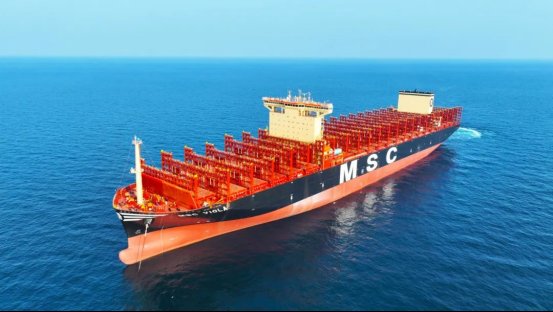
Larger and more fuel-efficient ships tend to reduce freight costs per container on long-distance routes — provided demand absorbs the capacity. The logic is simple: a 24,000 TEU ship moving the same amount of cargo as two 12,000 TEU ships divides the operational cost by two, in rough terms.
For Brazil, which is one of the largest exporters of agricultural and mineral commodities in the world, maritime freight cost is literally decisive in the competitiveness of exports. Soybeans shipped from Santos travel 20,000 kilometers to Shanghai on a ship that consumes tons of fuel per hour. When freight rates rise, as in 2021-2022 after the pandemic, Brazilian exporters lose margin directly.
The entry of dozens of new mega-ships into the global market from 2027 should pressure freight rates down on South Atlantic routes — good news for agricultural exporters from Brazil’s Midwest who ship through the Santos-Paranaguá corridor.
The gas knot: who will supply this fleet
MSC’s bet on LNG only works if LNG is available at the ports these ships will dock. LNG refueling infrastructure is rapidly expanding in major maritime hubs, but there are still significant gaps in medium-sized ports in South America and Africa.
Brazil has a window of opportunity here: the country is a major producer of natural gas — production has grown with the pre-salt — and has nascent scale liquefaction capacity. If Santos or Paranaguá install LNG bunker infrastructure before 2028, they could attract MSC ship routes that currently only call at Buenos Aires or Montevideo.
MSC has made a twenty billion bet on the energy transition of maritime transport. It remains to be seen which countries will have the infrastructure ready to capture the value this transition will generate.
Read also: the 344-meter LNG colossus that Qatar ordered | the world’s largest container ship with 24,000 containers.
Do you think natural gas is really the right bridge to decarbonize maritime transport, or should the sector go straight to ammonia or green methanol? Comment below.