






 Portuguese
  Spanish
 3 min of reading


Equinor Announced Yesterday Its Ambition to Become a Company with Net Zero Emissions by 2050. The Ambition Includes Emissions from Production and Final Energy Consumption. This Represents a Clear Strategic Guideline and Demonstrates Equinor’s Continuous Commitment to Creating Long-Term Value, in Support of the Paris Agreement.
“Equinor is committed to being a leader in the energy transition. It is a sound business strategy to ensure long-term competitiveness during a period of profound changes in energy systems as society demands net zero emissions. In the coming months, we will update our strategy to continue adding value for our shareholders and to achieve this goal,” says Anders Opedal, who today took on the role of Chief Executive Officer (CEO) and President of Equinor.
At the beginning of the year, Equinor revealed its plans to achieve carbon neutrality in global operations by 2030 and to reduce absolute greenhouse gas (GHG) emissions in Norway to virtually zero by 2050. At the same time, Equinor laid out a values-based strategy for significant growth in renewables, as well as a new net carbon intensity target. Continuing to meet short- and medium-term targets will be crucial to achieving net zero emissions.
“Equinor has demonstrated for years its ability to deliver on its climate ambitions and has a strong track record in reducing oil and gas emissions. Now, we are ready for even more ambitious climate goals, aiming for net zero emissions by 2050,” says Opedal.
-
Oil production grows in Rio, but reserve replacement raises a warning sign

-
Petrobras is expected to complete the drilling of the Morpho well in the Foz do Amazonas in August 2026, the first well in the Equatorial Margin, an oil frontier that the ANP estimates at more than 30 billion barrels and could redraw the map of Brazil.

-
Oil returns to the center of concerns with tension between the US and Iran

-
IEA reduces forecast for global oil demand in 2026 after impacts of the Middle East crisis
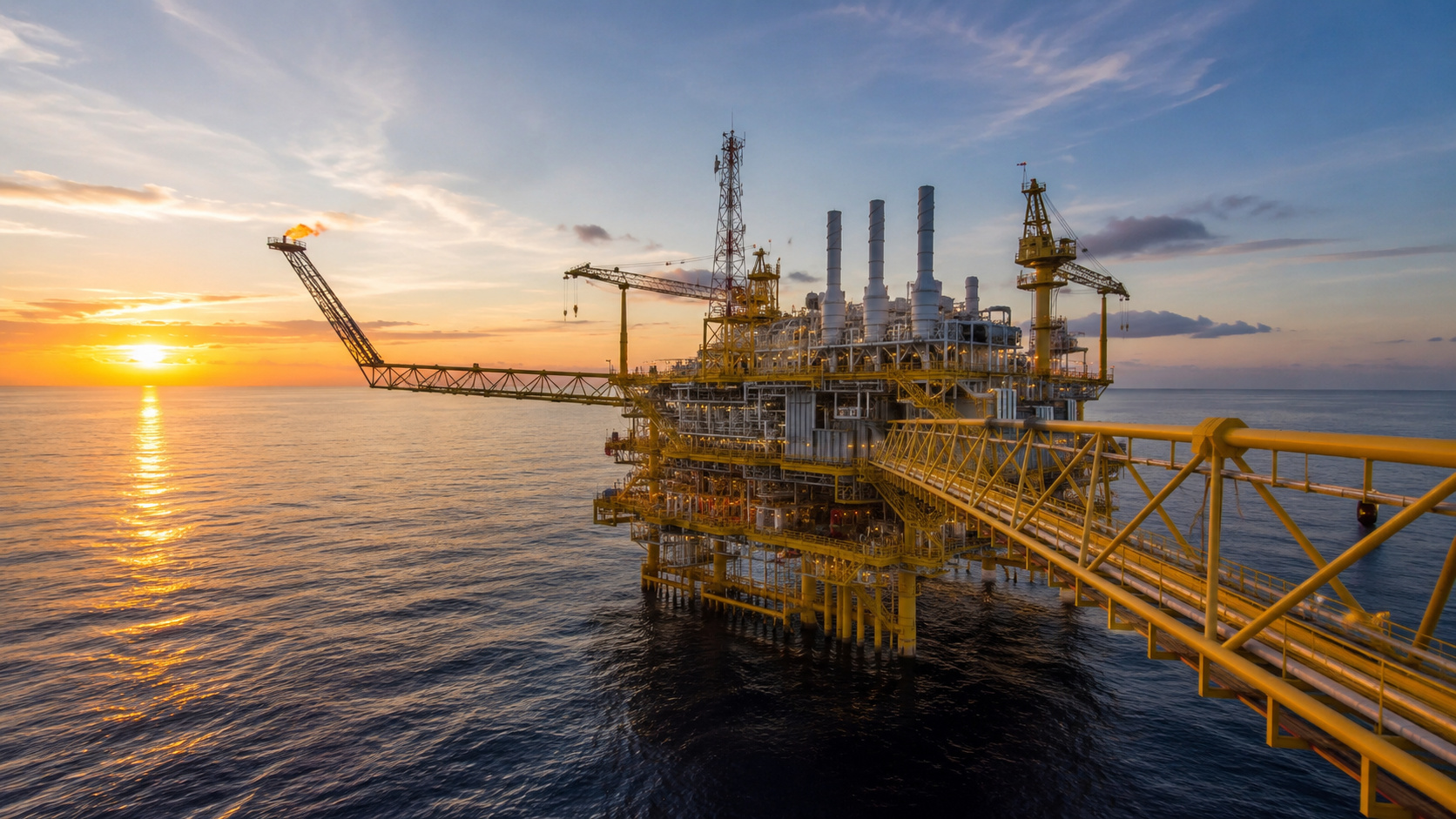


Equinor expects to provide an average annual growth in oil and gas production of around 3% between 2019 and 2026. Equinor is well-positioned with global assets in attractive areas with considerable value creation potential. By optimizing its portfolio through financial discipline and prioritization, Equinor will continue to develop competitive and resilient projects while maintaining leading recovery rates, costs, and carbon efficiency in the industry. The net zero emissions ambition will enhance our future competitiveness and value creation on the Norwegian Continental Shelf (NCS). Equinor’s production, development, and exploration plans in the NCS remain firm.
Equinor is preparing for a gradual decrease in global demand for oil and gas around 2030 and beyond. Value creation, rather than volume replacement, is and will be the guiding principle of Equinor’s decisions. In the long term, Equinor expects to produce less oil and gas than today.
To develop Equinor as a large-scale energy company, renewables will be an area of significant growth. Equinor has already established profitable growth ambitions within renewables and expects a production capacity of 4-6 Gigawatts (GW) in 2026 and 12-16 GW in 2035. Equinor now aims to expand its offshore wind acreage, with the goal of accelerating profitable growth and will continue to leverage its leadership position in offshore wind. Equinor will establish renewables as an independent business segment starting in the first quarter of 2021.
To achieve net zero emissions, a well-functioning market for carbon capture and storage (CCS) and natural sinks is necessary, along with the development of competitive hydrogen technologies. Based on its capabilities in oil and gas, Equinor is well-positioned to provide low-carbon technologies and establish zero-emission value chains. Equinor is driving the development of these technologies through projects like Northern Lights, which aims to store CO2 from industrial parks across Europe. Equinor also anticipates that an increasing share of oil and gas will be used for petrochemicals by 2050.
“Climate change is a collective challenge. The combined efforts of governments, industries, investors, and consumers are crucial to achieving net zero emissions, for Equinor and for society. Together, we can overcome technological and commercial challenges, reduce emissions, and develop CCS and zero-emission value chains for a zero-emission future,” says Opedal.
Equinor expects to present an updated strategy on Capital Markets Day in June 2021.
Equinor’s net zero emissions ambition encompasses Scope 1 and 2 GHG emissions (100% explored base) and Scope 3 GHG emissions (use of products, equity participation).








Be the first to react!