






 Portuguese
  Spanish
  2 min of reading
  0 comments


Incomplete Luxury Became Rural Shelter: Elite Villages in Shenyang Reveal the Failure of an Urban Model Based on Excess and Appearance
What should have symbolized status in China has become a scene of abandonment. Luxury villages in Shenyang, designed to house the elite, have been left unfinished. Today, they serve as makeshift housing for farmers. Cows graze among neoclassical columns, in an image that summarizes the contrast between ambition and reality.
The “State Guest Mansions,” built by the Greenland Group, followed a European style. But after two years of construction, the project stopped.
Without buyers, the unfinished structures have been occupied by rural residents, who have given some use to the abandoned space.
-
Brazilian Joins Homeownership Consortium, Faces Decade of Dual Payments Totaling $141,000, Surpassing Traditional Mortgage

-
Land Rover to Halt Production in July, Putting 371 Jobs at Risk, as Chinese Automaker Negotiates to Convert Factory to 100,000 Vehicles Annually by 2027

-
Mexican Pest Threatens U.S. Cattle Herds at Historic Lows, Potentially Boosting Brazilian Beef Exports as Burger Prices Soar

-
Brazilian Freight Bill Progresses in Congress with $5,000 Minimum Wage, 70% Advance Payment, and Fines Up to $1 Million, as Agriculture and Industry Warn of Rising Costs and Legal Uncertainty


Bubble-Based Model
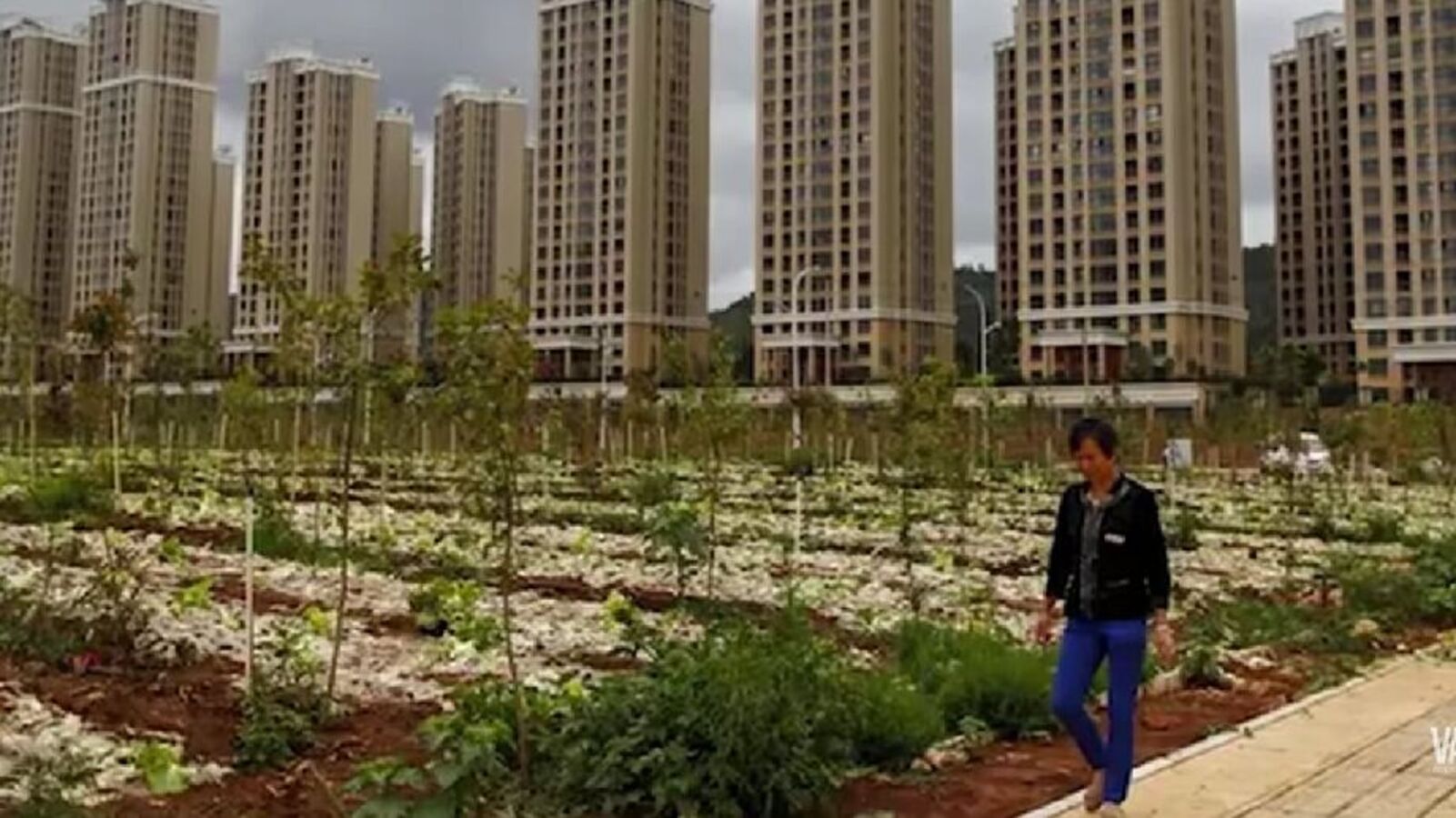
The most important thing is that this is not an isolated case. These villages are part of a larger phenomenon: ghost cities.
Resulting from an economic model that prioritized large-scale construction, even without real demand, they reveal flaws in Chinese urban planning.
With the support of large public financing, construction companies erected entire buildings and neighborhoods in anticipation of future appreciation.
But the math didn’t add up. According to AD Magazine, there are around 65 million vacant properties in the country — a number close to half of the Brazilian population.
Abandoned Cities: Causes and Consequences
The crisis has several causes. The lack of buyers, an aging population, and rising living costs have undermined confidence in the sector.
Indebted construction companies halted projects. Entire projects came to a standstill.
Besides Shenyang, there are other striking examples. Thames Town, near Shanghai, imitates a British town but remains virtually uninhabited.
Kangbashi, in Ordos, was built for one million people. It never received even 10% of that.
Improvisation and Irony
Thus, informal occupation is a way to prevent the complete degradation of the properties. But it also reveals the irony of a system that invested in unattainable luxury for most of the population.
The contrast between the mansions and the herd highlights the fragility of an urban model more focused on appearance than real needs.
With information from Diário do Litoral.





-

1 person reacted to this.