






 Portuguese
  Spanish


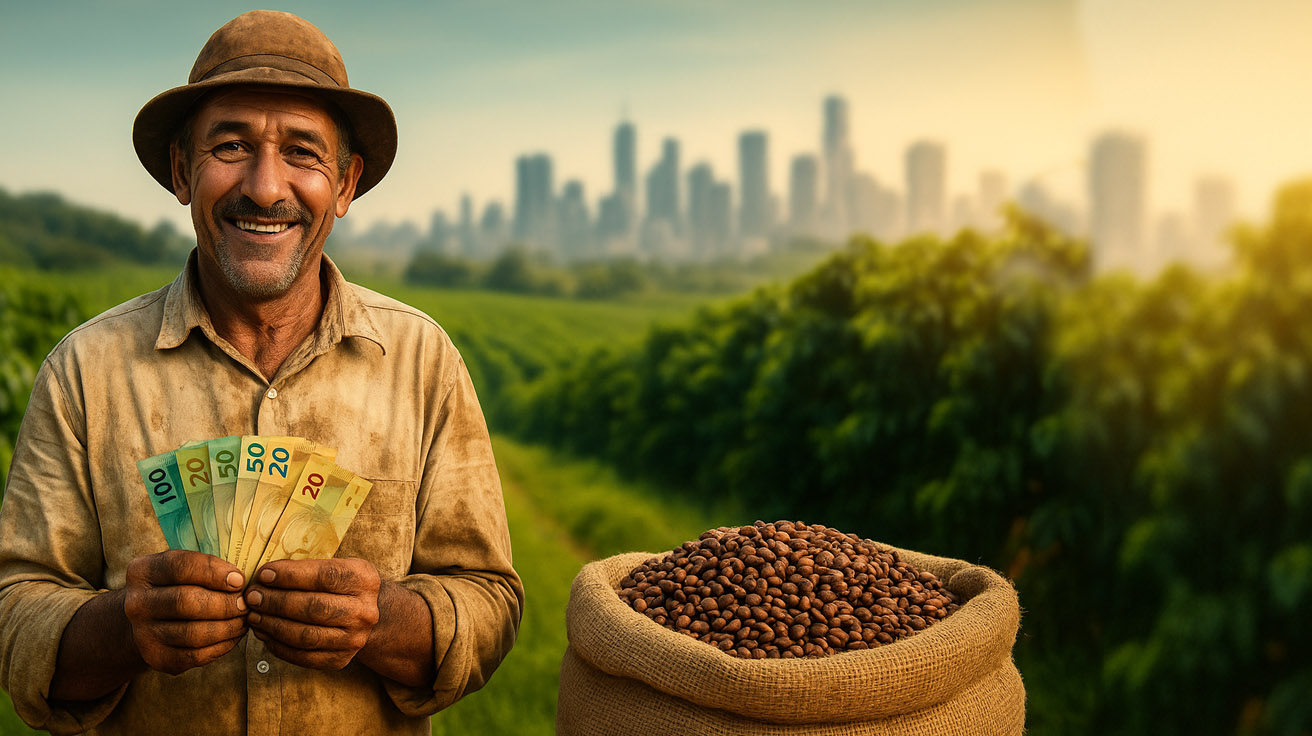


Producer Promises Salaries of Up to R$12,000 Per Month to Attract Urban Workers to the Countryside.
The remuneration for rural labor in Espírito Santo has reached unprecedented levels this harvest season, highlighting the strength of agribusiness and the challenge of labor scarcity in the countryside.
In Laranja da Terra, producer Adelson Rossmann plans to pay up to R$ 12,000 per month to each of the eight harvesters in his conilon coffee plantation — an amount that surpasses the historical average and draws attention to the importance of competitive wages.
According to Rossmann, this harvest’s production is expected to reach around 300 sacks of conilon coffee, a slightly higher volume than in 2024, driven by high prices for both conilon and arabica.
-
Brazil’s Federal Revenue Auction: iPhone 13 for $95, PlayStation 4 for $80, and Volkswagen Jetta for $2,600 Among 232 Lots Available

-
Award-Winning Japanese Restaurant Reveals It Has Preserved Part of the Same Frying Oil for 66 Years
-
American Youth Transforms from Severe Obesity to U.S. Air Force Enlistment, Losing 90 Kilograms in Two Years
-
Tech Giant Oracle Lays Off 21,000 Employees and Invests $70 Billion in Artificial Intelligence


This scenario strengthens the remuneration of workers and brings the scarcity of labor in the sector into focus.
The state Secretary of Agriculture, Enio Bergoli, confirms the trend: recently, there have been reports of earnings between R$ 7,000 and R$ 8,000 per month among coffee harvesters in Espírito Santo.
The president of the Federation of Agriculture and Livestock of Espírito Santo (Faes), Júlio Rocha, emphasizes that there are cases of daily payments ranging from R$ 500 to R$ 1,000, depending on performance and type of contract.
In Linhares, coffee picker João da Silva, 45, stated he earned R$ 7,000 last month. He worked in several plantations during shifts that started at dawn, sharing the benefits with his family. “This money will help fix the roof of my house and still have some left for the kids,” he said.
An anonymous worker reported that it is possible to earn up to R$ 3,000 per week, although some prefer not to identify themselves out of fear of exposure.
Why Have Salaries Increased So Much?
According to Abraão Carlos Verdin Filho, coordinator of coffee cultivation at Incaper, the salary increase is due to the average price of R$ 40 per sack, with harvesters collecting around 15 sacks per day — generating a typical monthly income of R$ 6,000 to R$ 8,000 per worker.
Producer Márcio José Gomes, 48, adds that there are contracts paying between R$ 35 and R$ 75 per sack.
Some properties have adopted land leasing, offering 20% of the production to the landowner, a trend that is growing in response to the scarcity of specialized labor.
Urban Exodus and Competition for Harvesters in Espírito Santo
A curious phenomenon has been occurring: urban sector professionals have been temporarily migrating to the countryside during the harvest season.
Many workers in commerce in the cities enroll as harvesters to earn extra income, sometimes even taking vacations to work in the coffee harvest, according to Júlio Rocha.
However, the entry of these workers into the countryside encounters bureaucratic barriers related to assistance benefits, such as Bolsa Família.
To address this, a bill passed by the Chamber aims to allow beneficiaries to retain their assistance by obtaining temporary work contracts — a proposal that is now under review in the Senate.
Growth of Production and Profitability in Espírito Santo
Espírito Santo is expected to be responsible for harvesting 16.4 million sacks of coffee in 2025, totaling both conilon and arabica, an increase of 18.2% compared to the previous year.
The state has the largest area of conilon in the country — 286.7 thousand hectares of the 379.8 thousand hectares total — and plays a vital role in the national tradition of this variety.
A harvest of 13.1 million sacks of conilon (+33.1%) and 3.3 million sacks of arabica (‑18.2%, due to a low biennial effect) is anticipated. This dynamic reflects the resilience and adaptability of conilon coffee to the Capixaba climate.
Record Prices and Economic Return
Current prices add even more value to the harvest. In the domestic market, the sack of rio-type arabica has been traded for over R$ 1,900, while conilon remains above R$ 1,600.
As a result, the gross value of coffee production in Espírito Santo may reach R$ 30.88 billion in 2025, accounting for about 24.6% of the total value of coffee produced in Brazil (estimated at R$ 125.7 billion).
This scenario reinforces the importance of agribusiness in Espírito Santo and the urgency of strategies to attract harvesters.
The growth of salaries reflects the balance between supply and demand for labor and underscores the need to maintain policies that harmonize rural development and social security.
Management, Family Succession, and Salaries in the Countryside
Although earnings for harvesters are high, the sector faces another growing challenge: the professionalization of management and family succession.
With heirs often pursuing other fields, many properties have hired specialized managers.
This professional profile with higher education can earn between R$ 6.5 thousand and R$ 7 thousand per month — reaching R$ 20 thousand per month in strategic positions — further enhancing agribusiness competitiveness and leading to greater formalization in the countryside.


