Portuguese
  Spanish


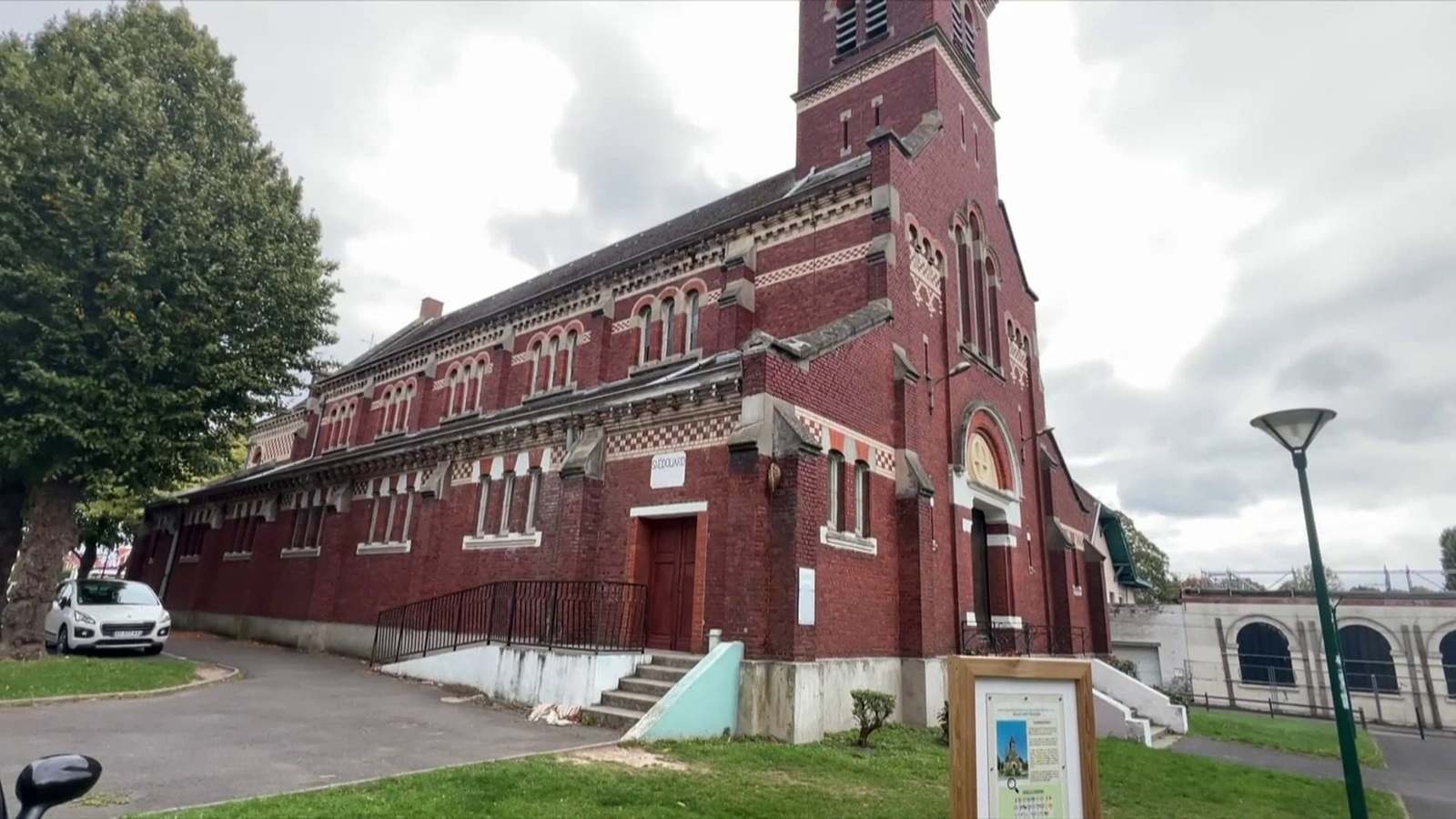


After Being Put Up for Sale Due to Lack of Funds, the Centennial Church of Saint-Édouard Gained a New Role: It Became a Training Center Dedicated to Restoration, Historical Preservation, and Conservation of Old Structures
In the heart of the old mining town of Lens, France, the history of the church Saint-Édouard de Lens – built in 1901 to serve the working community – gained new chapters: put up for sale by the Diocese for about 362,500 euros in February 2025.
The news shocked the residents of the region: a church for sale is something rarely seen.
Sale Motivated by Financial Urgency and Decline in Use
The church was part of an imposing set of housing and facilities for miners. However, in recent decades, the attendance at religious celebrations has drastically declined, while maintenance costs continued to weigh on the diocese.
-
11-Year-Old Entrepreneur Turns Fear of Bees into Honey Lemonade, Wins $60,000 on Shark Tank, Secures Whole Foods Deal, and Expands Brand Across U.S. Stores

-
9-Year-Old in Brazil Sells Homemade Sweets to Support Grandfather with Parkinson’s, Family Dreams of Buying Candy-Making Machine

-
Man Disguises as His Own Mother to Collect €3,000 Monthly Pension, but Makeup and Beard Stubble Raise Suspicions at Registry Office

-
Brazilian Airport to Receive $2.8 Million Investment, Completion Expected Within a Year





As recorded by the priest himself: “When we had fifteen people at mass, it was a good Sunday” – a phrase summarizing the reality of reduced use.
Faced with the situation, the diocese opted for an unprecedented sale: to advertise the church on the online classified portal Leboncoin, with the listing describing the temple as “Four-bedroom house, very well located,” which caused surprise and unease among the population.
Community Reactions and Heritage Safeguarding
The initiative provoked strong local mobilization. Residents signed petitions, created social media groups, and criticized the process.
They feared that the building, listed as a historical monument since 2009 (including the presbytery and the associated school), would be decharacterized or transformed into common commercial use.
On the diocese’s side, the sale was seen as “sad, but necessary”: not only due to the decline of celebrations but because 90% of French churches were already facing a similar situation, and the costs of conservation made it unsustainable to maintain large buildings with very residual use.
An Investor, a New Use, and a “Second Life” for the Building
In September 2025, the NA Group, through its subsidiary specializing in vocational training, confirmed the acquisition of the church.
The project: to transform the temple into a training center for professionals in the field of heritage preservation.
The adaptation works have already begun, with the goal of opening the first classes on January 5, 2026. The transformation was described as “A vibrant training center that combines pedagogy, field immersion, and heritage preservation.”
The diocese and the city hall of Lens expressed support for the initiative, considering it an “acceptable ending” given the fragility of the religious and heritage maintenance of the building.
Symbolic Meaning and Implications for the City and Heritage
The reconversion of the church Saint-Édouard reflects several converging phenomena: the decline of organized religious practice in working-class areas, the increasing burden of historical buildings for ecclesiastical institutions, and the search for new uses that reconcile heritage appreciation and economic viability.
For the local community, the outcome is mixed: although abandonment or uncontrolled commercial conversion has been avoided, there remains a longing for the building to continue being dedicated to faith, and a vigilance to ensure that the new affection for the place is realized with respect for the past.