






 Portuguese
  Spanish
  4 min of reading
  0 comments


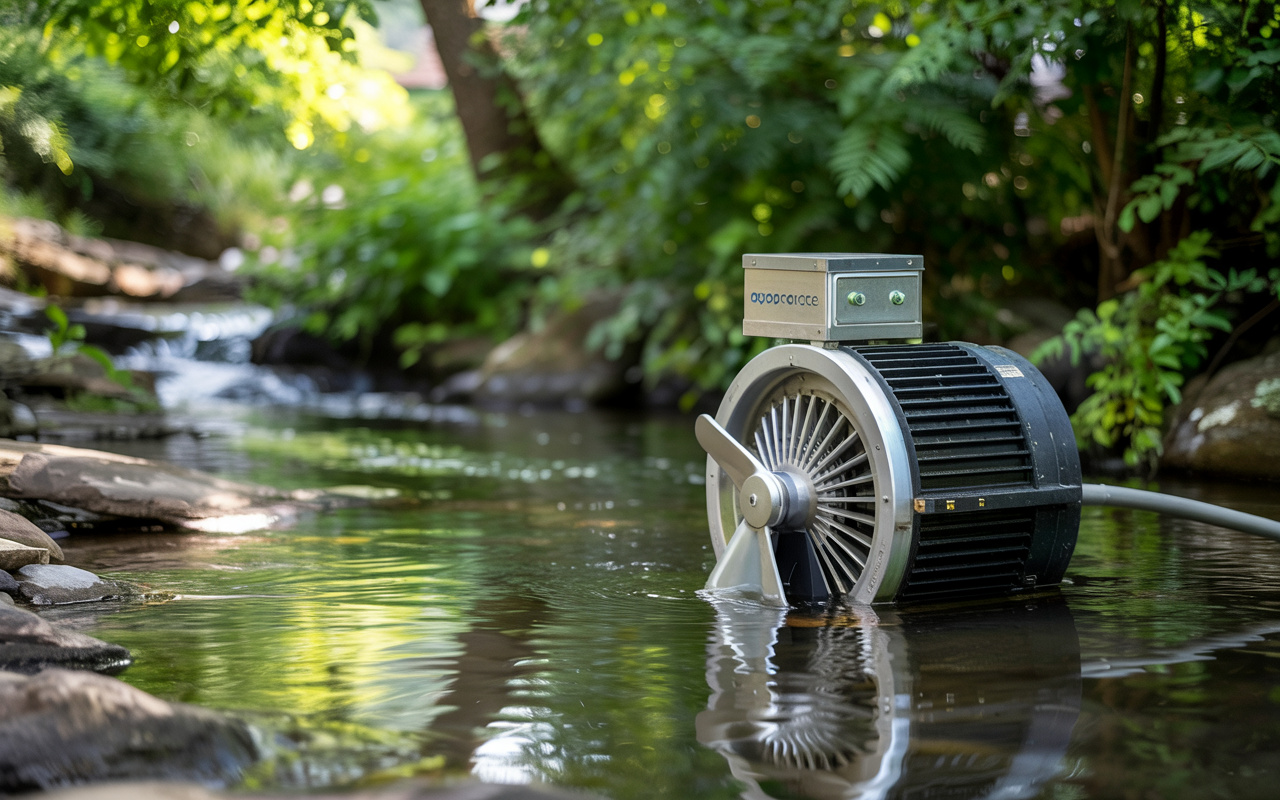
A Mini Turbine Installed in a Well in France Has Generated Continuous Electricity for Over 60 Years, Guaranteeing Energy Independence to a Rural Community and Showing the Potential of Small Hydroelectric Turbines for Isolated Areas.
In the depths of a remote valley in France, a fascinating example of engineering demonstrates how simplicity can be synonymous with efficiency. This is a mini turbine installed in a well, capable of generating continuous electricity for over six decades. The system, which remains hidden from the eyes of those passing through the region, continues to power homes and workshops of a small rural community without relying on the national power grid.
The Birth of an Innovative Idea
The installation of this turbine occurred in the 1960s, at a time when the concept of renewable energy was still not part of the global debate. Unlike large hydroelectric plants, this technology was designed to operate on a small scale, harnessing the constant flow of groundwater flowing beneath the village.
Without the need for combustion engines or complex systems, the mini turbine operates solely with the force of gravity and the natural pressure of water. The blades spin continuously and drive a generator, producing electricity silently, reliably, and without pollutant emissions.
-
Helicopter Drops 180 Tons of Sand and Gravel on Swedish River to Revive Ecosystem Damaged by Decades of Exploitation

-
Brazilian Company Launches Retro Smartphone with 48 MP Camera, T9 Keyboard, and Privacy Features for Social Media-Free Use

-
Self-Taught Chinese Farmer Builds 5-Ton Submarine from Scrap, Launches It in Anhui River
-
Invisible Induction Technology Enables Wireless Power for Blenders, Coffee Makers, and Air Fryers, Reducing Countertop Cables





The Heart of a Self-Sufficient Village
For the local residents, this turbine is much more than just a piece of equipment: it is a fundamental part of the community’s identity. Farmer Jean Baret, a resident of the area, describes the installation as “the heart of our village,” highlighting its importance for the energy independence of the inhabitants.
Thanks to the robustness of the project and the residents’ commitment to maintaining the system, the turbine has never stopped functioning. Over more than 60 years, it has significantly helped reduce the community’s carbon footprint and ensured clean energy for homes, small workshops, and even agricultural activities.
Simple and Durable Engineering
One of the most impressive aspects of this project is its durability. Unlike systems that require constant maintenance and replacement of parts, the mini turbine installed in the well was designed with a simple and extremely robust design.
The absence of complex electronic components or fossil fuels contributed to the structure withstanding the test of time, operating almost without interruptions. This model contrasts with the instability of the traditional power grid, subject to technical failures or supply crises.
Potential for Other Isolated Communities
The success of this experience has attracted international attention. Engineers and researchers who visited the site recognize the enormous potential of the solution to be replicated in other isolated areas of the world, especially in regions that are hard to access and lack electrical infrastructure.
Mini hydroelectric turbines are seen as a viable alternative to replace fossil fuels and provide energy autonomy to rural communities. Their relatively low cost, combined with the simplicity of operation, makes the technology attractive for developing countries and remote regions.
Technological Advancements Expand Possibilities
Although the French turbine has maintained the same design for over 60 years, the renewable energy sector is already working on new generations of this technology. Researchers today are developing smaller turbines made with more durable and sustainable materials, in addition to automated flow control systems that further reduce environmental impact.
The idea is that in the future these turbines can be installed in wells, small rivers, and underground channels, becoming affordable and replicable solutions in different contexts, from small rural villages to indigenous communities and remote urban settlements.
Clean and Independent Energy: A Possible Future
The example from France shows that energy independence does not have to be a distant dream or a billion-dollar project. A turbine that generates continuous energy, even hidden inside a well, could be the key to transforming the lives of thousands of people around the world.
Combining low cost, efficiency, and sustainability, this model of electricity generation reinforces the importance of looking for simple solutions that can have a significant impact. In a scenario of climate crisis and increasing demand for clean energy, mini turbines present themselves as protagonists of a fairer and more accessible energy transition.





Be the first to react!