






 Portuguese
  Spanish
  5 min of reading
  0 comments


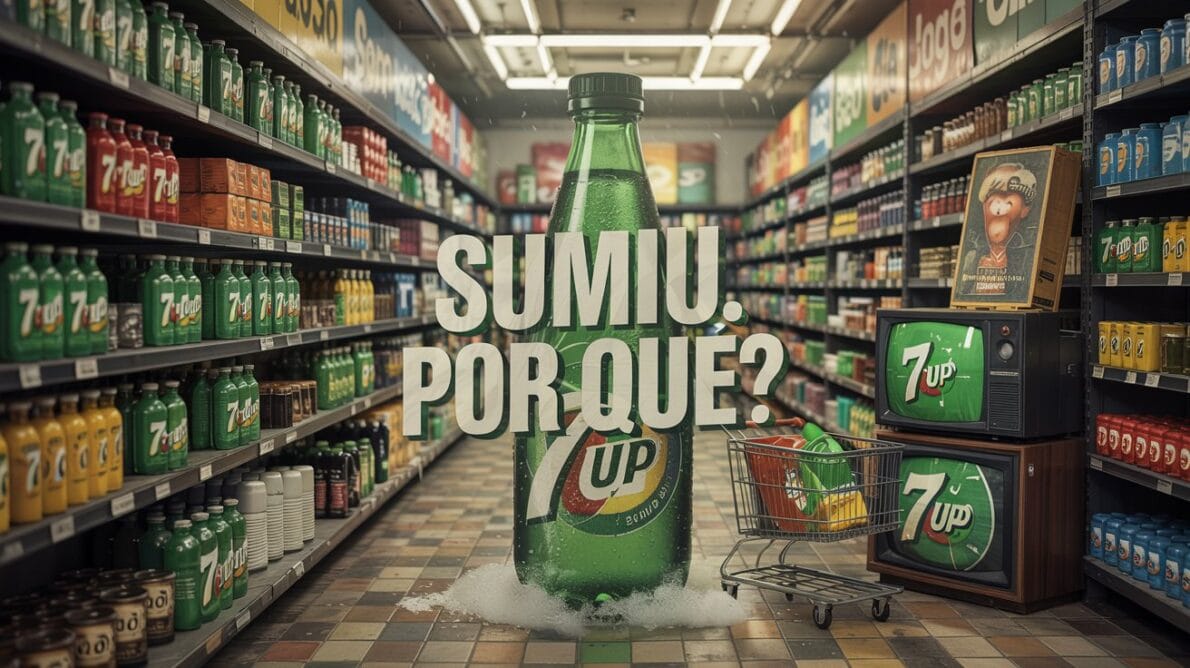
Behind The Sudden Disappearance Of One Of The World’s Most Popular Soft Drinks: A Curious Story Of Miscalculated Strategies, Increased Nostalgia, And Brazilian Fans Who Still Dream Of The Return Of The Drink That Disappeared Without A Trace.
7 Up, a citrus-flavored soda that made its presence felt in several countries, arrived in Brazil with great expectations but quietly exited a few years later.
Launched in 1995 with a bold advertising campaign and support for football teams like Botafogo, the drink seemed destined for success here.
However, in 1997, just two years after its debut, its production and distribution were discontinued in the country.
-
Survivor of 1966 SS Daniel J. Morrell Shipwreck in Lake Huron Recounts 38-Hour Ordeal in Extreme Cold

-
The Greatest Hoax in World Cup History? The Film That Denied Brazil’s 1958 Victory and Exposed How Fake Evidence Can Seem Convincing on TV
-
Fake South Korean Online Stores Offer Shopping Thrill Without Spending Money or Receiving Products
-
The War of Jenkins’ Ear: How a Severed Ear Sparked One of the 18th Century’s Most Unusual Conflicts


Today, 7 Up is still consumed in various parts of the world, but its disappearance from Brazilian markets intrigues even the most nostalgic consumers.
The Birth Of A Global Brand
The story of 7 Up begins long before its brief stint in Brazil.
The soda was created in 1929 by American Charles Leiper Grigg in St. Louis, Missouri.
Grigg, who was already working in the beverage industry, spent two years developing a formula that was refreshing and different from the traditional flavors dominating the market at the time.
Initially, the drink bore a rather peculiar and unmarketable name: “Bib-Label Lithiated Lemon-Lime Soda.”
The term “lithiated” referred to lithium citrate, a chemical compound that was used in medicines and, at the time, was also included in carbonated beverages for supposed therapeutic benefits.
The drink was marketed as a kind of “hangover cure,” something common for sodas in the early 20th century.
Over time, the name was simplified to 7 Up, a term easy to pronounce and quickly remembered.
The exact origin of the name is still a matter of debate, with theories ranging from the number of ingredients to the height of the bottle.
Whatever the correct explanation may be, the brand quickly rose in popularity and, by 1933, it was already recognized in much of the United States.

Meteoric Rise And Global Fame Of 7 Up
By the end of the 1940s, 7 Up had become the third most consumed soda on the planet, behind only giants like Coca-Cola and Pepsi.
Its citrusy and bubbly flavor set it apart from traditional colas, winning over consumers across continents.
The brand underwent various control changes over time.
In 1986, PepsiCo acquired the distribution rights for 7 Up in Latin America, paving the way for its entry into new markets, including Brazil.
But two years later, in 1988, 7 Up was sold to Cadbury Schweppes, which also owned the Dr Pepper brand.
The new management altered commercial strategies, which directly influenced the brand’s trajectory in several countries.
The Brief Stint Of 7 Up In Brazil
It was only in 1995 that 7 Up officially landed in Brazil.
The arrival was marked by a robust investment in marketing and promotional activities.
Television commercials, magazine ads, billboards, and even sponsorship of the Botafogo football team helped introduce the drink to Brazilian consumers.
At the time, the soda market was booming, with brands like Guaraná Antarctica, Fanta, and Sprite competing for national preference.
Still, 7 Up managed to attract attention with its vibrant visual identity, characteristic green tone, and promise of refreshment.
Despite the advertising effort, the drink failed to establish itself in Brazil.
Competition from already established brands and the peculiar taste of its formula – milder and less sweet than the competing Sprite – may have hindered its popular acceptance.
In 1997, production was halted, and the soda simply vanished from the shelves.
An Absence Felt By Nostalgic Fans
Even with its early exit from Brazil, 7 Up left memories.
Consumers who had contact with the drink in the 90s still comment on social media about its unique taste and their curiosity regarding the reason for its disappearance.
Some specialty import stores even brought limited editions of the drink in subsequent years, but always in a sporadic manner and at high prices.
Currently, the soda remains strong in markets like the United States, Mexico, Canada, Pakistan, and the Philippines.
In some regions, 7 Up has gained new versions such as editions with less sugar, variations with additional flavors, and modern packaging.
In the United States, it is still a recognized brand and easily found in supermarkets.
According to data from Statista updated in March 2025, 7 Up is still among the ten most consumed soft drinks globally, particularly strong in Asian and North American countries.
Although it is far from its historic position as the third most popular drink in the world, the brand maintains its relevance despite market changes.

What Could Have Been Different?
The failure of 7 Up in Brazil raises a series of questions about market strategies, cultural preferences, and stiff competition.
Beverage marketing experts point out that to remain competitive in the Brazilian landscape, a repositioning more aligned with local tastes and greater persistence in brand building would be necessary.
Moreover, Brazilians have always shown a strong preference for sweeter beverages or those with regional appeal, like guaraná.
Perhaps that’s why the milder citrus flavor of 7 Up failed to charm most consumers.
Currently, with the rise of nostalgia as a consumption force and the interest in retro products, many brands are relaunching old products.
Cases like the Mineirinho soda and Guaraná Taí have returned to shelves in revamped versions.
Could 7 Up find a new space in the Brazilian market if it returned with an updated campaign?
The World Has Changed, But The Memory Remains
The disappearance of 7 Up from Brazilian markets shows how even global brands can fail in certain regions.
A combination of strategy, culture, and local preferences can determine the success or oblivion of a drink.
Meanwhile, the brand continues its course in other countries, reinventing itself and winning over new generations of consumers.
For Brazilians who remember the drink fondly, there remains hope for a possible return or at least an imported bottle to reminisce.
And you, did you ever try 7 Up when it was sold in Brazil? Do you think the soda deserved a second chance in Brazilian supermarkets?





-

1 person reacted to this.