Portuguese
  Spanish


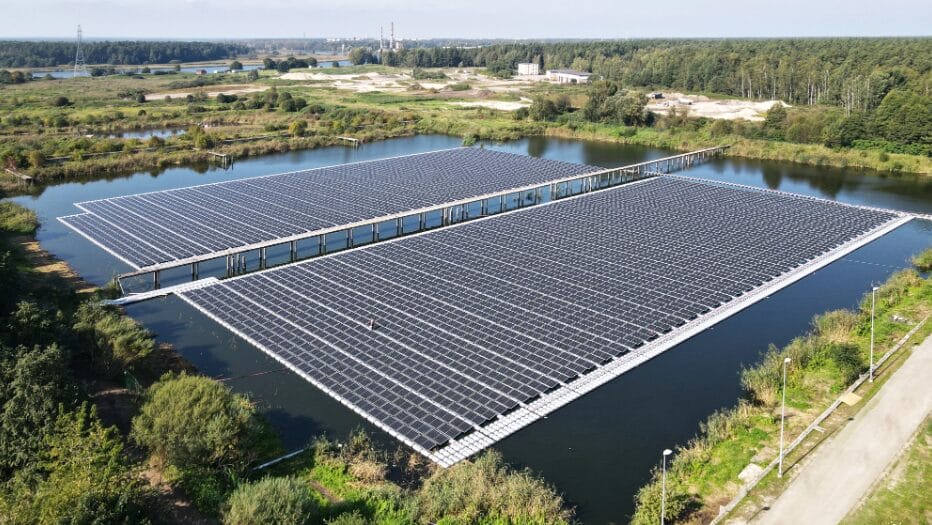

Recom Technologies and Derex Develop the 1st Floating Solar Power Plant in Latvia, with 2.1 MW of RECOM Panther 550Wp Solar Modules.
Recom Technologies and Derex collaborated to create the first floating solar power plant in Latvia.
The floating station, with a capacity of 2.1 MW, is located on the water surface via floating pontoons and will provide power to the ‘Sloka’ wastewater treatment plant in Jurmala, showcasing the potential of solar energy as a sustainable power source.
Solar Energy at the Sloka Wastewater Treatment Plant: Cost and Emission Reduction
The ‘Sloka’ WTP consumes 40% of the total energy expenses of ‘Jūrmalas ūdens’, the utility company that operates the wastewater station. The installation of the solar station allows ‘Sloka’ to generate its own energy, effectively reducing the electricity costs for ‘Jūrmalas ūdens’ and decreasing the organization’s dependence on fluctuations in energy market rates. The project aims to reduce carbon dioxide emissions by 231,657 tons per year, decreasing the region’s carbon footprint and helping to preserve its resources in the long term, while maintaining ecological balance.
-
OPEC+ Boosts Oil Supply by 188,000 Barrels per Day in July 2026, Leading to Price Drop from $112 to $89 per Barrel in Under Two Months

-
TotalEnergies Signs 20-Year Deal to Purchase 2 Million Tons of LNG from Alaska, Boosting Project Viability
-
Turkey Deploys Çağrı Bey Drilling Ship to Explore New Oil Frontier Off Somalia’s Coast
-
Golden Pass LNG Ships First Liquefied Gas Cargo from the U.S., Completing $10 Billion QatarEnergy and ExxonMobil Investment



Benefits of Renewable Energy in the Baltic Region
Over the guaranteed operational life of 30 years, the floating solar station will be able to operate continuously in the harsh local environment. Thanks to specially designed solutions, the system is resistant to salt, fog, snow, and ice – typical precipitation of Latvia’s climate – as well as to the effects of ammonia and hydrogen sulfide on the station’s materials and equipment. Floating stations have not yet gained significant popularity in Latvia and the Baltic region, although this is the safest option for the typical fragile ecosystems of the region. The ‘islands’ on the water protect the surface from excessive sunlight, preventing the growth of underwater vegetation and preserving the balance and purity of the aquatic ecosystem, said Yulia Nikulina, project manager and Director of the green energy division at DEREX.
Photovoltaic Energy at the Sloka Wastewater Treatment Plant: Sustainability and Efficiency
Additionally, the aquatic environment is ideal for the panels themselves, as the natural cooling effect of the water helps the station maintain a stable temperature. Even greater performance from the station is achieved with bifacial panels (front and back), which absorb sunlight reflected off the water surface. The project includes 3,820 RECOM Panther 550Wp Half Cut mono bifacial double glass modules, each with a capacity of 550 Wp. They are installed on the ‘island’ at an angle of 12° to optimize solar light collection.
Source: © OFF Shore Energy