






 Portuguese
  Spanish
 5 min of reading
  0 comments


Paraná Begins A Traffic Transformation By Replacing Traditional Asphalt With Concrete On Strategic Highway, Investing In Solutions With Greater Durability And New Structures For Drivers And Local Communities.
The state of Paraná is promoting a significant transformation in its road network by deciding to abandon traditional asphalt and invest in concrete pavement on the PR-466 highway, utilizing a solution internationally recognized for its durability.
This change represents a new chapter for state infrastructure, aiming to reduce maintenance costs and increase traffic safety, while adapting to growing demands for more resilient roads.
According to the state government, in a publication made last Thursday (26), the Paraná Department of Highways (DER/PR), an agency linked to the Secretary of Infrastructure and Logistics (SEIL), held a public hearing to detail the expansion and restoration project for the PRC-466.
-
Brazilian Joins Homeownership Consortium, Faces Decade of Dual Payments Totaling $141,000, Surpassing Traditional Mortgage

-
Land Rover to Halt Production in July, Putting 371 Jobs at Risk, as Chinese Automaker Negotiates to Convert Factory to 100,000 Vehicles Annually by 2027

-
Mexican Pest Threatens U.S. Cattle Herds at Historic Lows, Potentially Boosting Brazilian Beef Exports as Burger Prices Soar

-
Brazilian Freight Bill Progresses in Congress with $5,000 Minimum Wage, 70% Advance Payment, and Fines Up to $1 Million, as Agriculture and Industry Warn of Rising Costs and Legal Uncertainty


The project covers a stretch of 51.86 kilometers between Porto Ubá, in Lidianópolis, and the access to the Furnas substation, in Manoel Ribas, also covering municipalities such as Jardim Alegre, Ivaiporã, and Ariranha do Ivaí.
The proposal is to use rigid concrete pavement, a technique known as whitetopping, which provides an estimated useful life of up to 30 years for the new surface, surpassing the traditional limits of asphalt.
Rigid Pavement Techniques And Durability
According to official information from DER/PR, the old asphalt pavement will serve as a structural base for the new concrete layer, following standards already tested on highways in countries such as the United States, Germany, and Japan.
In Brazil, this type of intervention is seen on highways with high truck traffic, where wear is more accelerated.
Infrastructure experts emphasize that concrete offers less frequent repairs, increased grip, and resistance to heat, all relevant factors for the state’s road network.
Duplication, Third Lanes And Pavement Standards
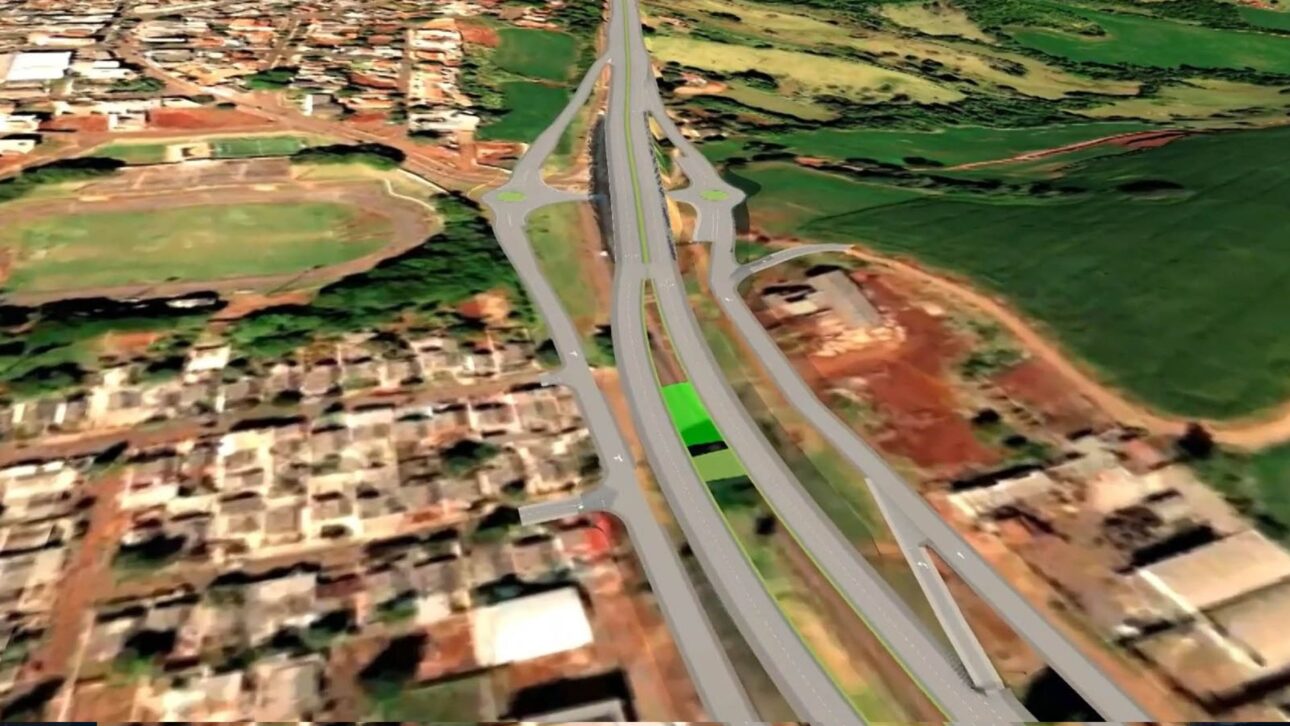
The PR-466 project foresees the duplication of 15.9 kilometers of the route, starting near the intersection with PR-082 and extending approximately 3.7 kilometers after the second access to Ivaiporã, in the area near the municipality’s Exhibition Park.
In the other sections, the plan includes the implementation of 17.1 kilometers of third lanes in critical locations, facilitating overtaking and contributing to the safety of drivers and passengers.
All these additional lanes will follow the same rigid concrete standard, a measure adopted to extend service life and minimize operational costs.
Technical Specifications For Road Safety
The projects also include technical specifications focused on road safety.
The traffic lanes of the new roads will have a width of 3.6 meters, accompanied by external shoulders of 2.5 meters in both simple and double sections, in addition to a safety lane of 1 meter on the third lanes, where there is no space for conventional shoulders.
This configuration aligns with engineering standards aimed at reducing conflict points and ensuring fluidity even during peak hours or periods of higher agricultural movement, characteristic of the region.
New Overpasses And Expanded Bridges
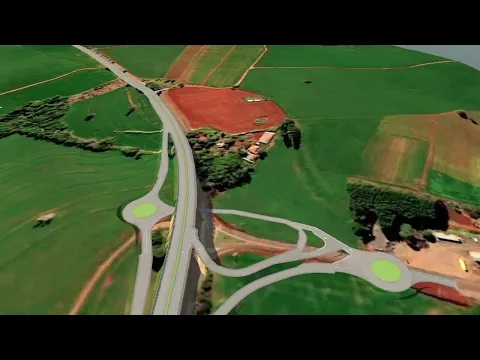
Among the project’s highlights is the construction of six new overpasses, which will replace roundabouts and at-grade crossings with safer and more efficient structures.
Overpasses are planned in Lidianópolis, Jardim Alegre, and Ivaiporã, as well as a crucial connection at the intersection with PR-082, facilitating access to the municipality of Lunardelli.
In Jardim Alegre, two new overpasses will be built at the intersections with Avenida Mattos Leão, while in Ivaiporã, another two overpasses will serve the intersection with the secondary access and Avenida Ladislao Gil Fernandes.
Another point of attention in the project is the expansion of the bridge over the Ivaí River, which marks the boundary between Lidianópolis and Cruzmaltina.
The structure will feature shoulders and pedestrian sidewalks separated by concrete barriers, with a total length of 289.6 meters, reinforcing safety for travelers and residents of neighboring areas.
The reinforcement of the bridge follows the trend of prioritizing safe access adapted to different types of users, including pedestrians and cyclists.

Other Improvements And Regional Impact
In addition to the main interventions, new roundabouts, at-grade turnarounds, marginal roads in urban areas, and other improvements are planned to increase traffic capacity and facilitate regional mobility.
These adaptations meet the needs of drivers as well as agricultural and logistical flow, as PR-466 connects important productive hubs in the interior of Paraná.
The project package is pointed out by sector managers as essential for economic development and for the competitiveness of the state’s exports.
Community Participation And Transparency
The participation of the local community has been a fundamental part of the process.
The public hearing, held in the DER/PR auditorium and broadcast live on the internet, received significant attendance from residents in the impacted towns, presenting questions, suggestions, and demands related to the progress of the works, execution deadlines, and any environmental impacts.
The transparency of the discussion seeks to meet legal requirements and consolidate the integration between the government and civil society in the management of large projects.
Trend Of Concrete In Brazilian Highways
By adopting concrete as a standard in a large-scale project, Paraná aligns itself with a global trend toward long-lasting infrastructure solutions that require less frequent maintenance.
In Brazil, other states are also analyzing the feasibility of this transition, especially in strategic logistical corridors.
Concrete, in addition to offering greater resistance to the impact of heavy vehicles, can contribute to reducing the number of pothole repairs and emergency interventions that often disrupt flow and generate additional costs for the public sector.
National Comparative And Perspectives
The PR-466 project occurs in a context of expanding highway concessions in Paraná and increasing use of concrete in logistical corridors throughout the country.
Recent studies indicate that the choice of rigid pavement can be advantageous, especially when considering the overall cost of the road over decades of intense use.
Different engineering associations and industry entities have been monitoring the execution to assess the performance of the solutions and possibly recommend the replication of the model in other state and federal highways.
Challenges, Expectations And Future Of Highways
As the machines advance through the interior of Paraná, experts, public managers, and drivers closely monitor the impacts of this choice.
The challenge will be to demonstrate, in the coming years, whether the investment in concrete will deliver the promised results in savings, safety, and durability.
With the start of works on PR-466, the question remains: will other regions of Brazil also adopt concrete as the new standard for their most important roads?





Be the first to react!