





 Portuguese
  English
  Spanish
 5 min of reading
  1 comment




The State of Paraná Receives Significant Investment from BNDES to Become a Leader in Biometane Production, Boosting the Sustainable Energy Sector and Regional Economic Development. See the Details!
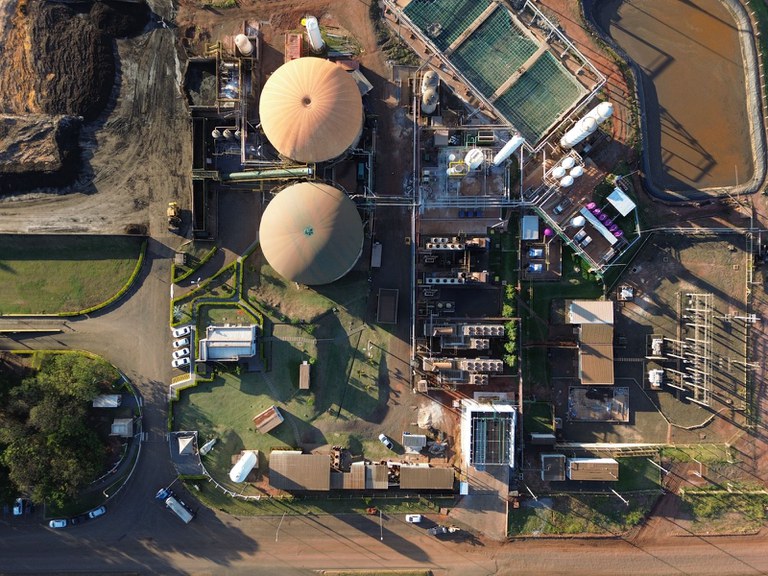
The National Bank for Economic and Social Development (BNDES) announced significant financing of R$ 37.6 million for Geo Biogás & Carbon, a company specialized in biometane and biogas production, with the goal of expanding its facility located in Tamboara, Paraná.
The financial operation, totaling an investment of R$ 41 million, will allow the company to increase the production capacity of these renewable fuels, contributing to the country’s energy transition and reduction of greenhouse gas emissions.
Details of the Financing in Paraná
The amount approved by BNDES is divided into two main sources of funding: R$ 33.6 million from the Climate Fund, aimed at supporting projects with a positive environmental impact, and R$ 3.9 million from Finem Standard B, a specific line for the acquisition of new imported equipment without national equivalents.
-
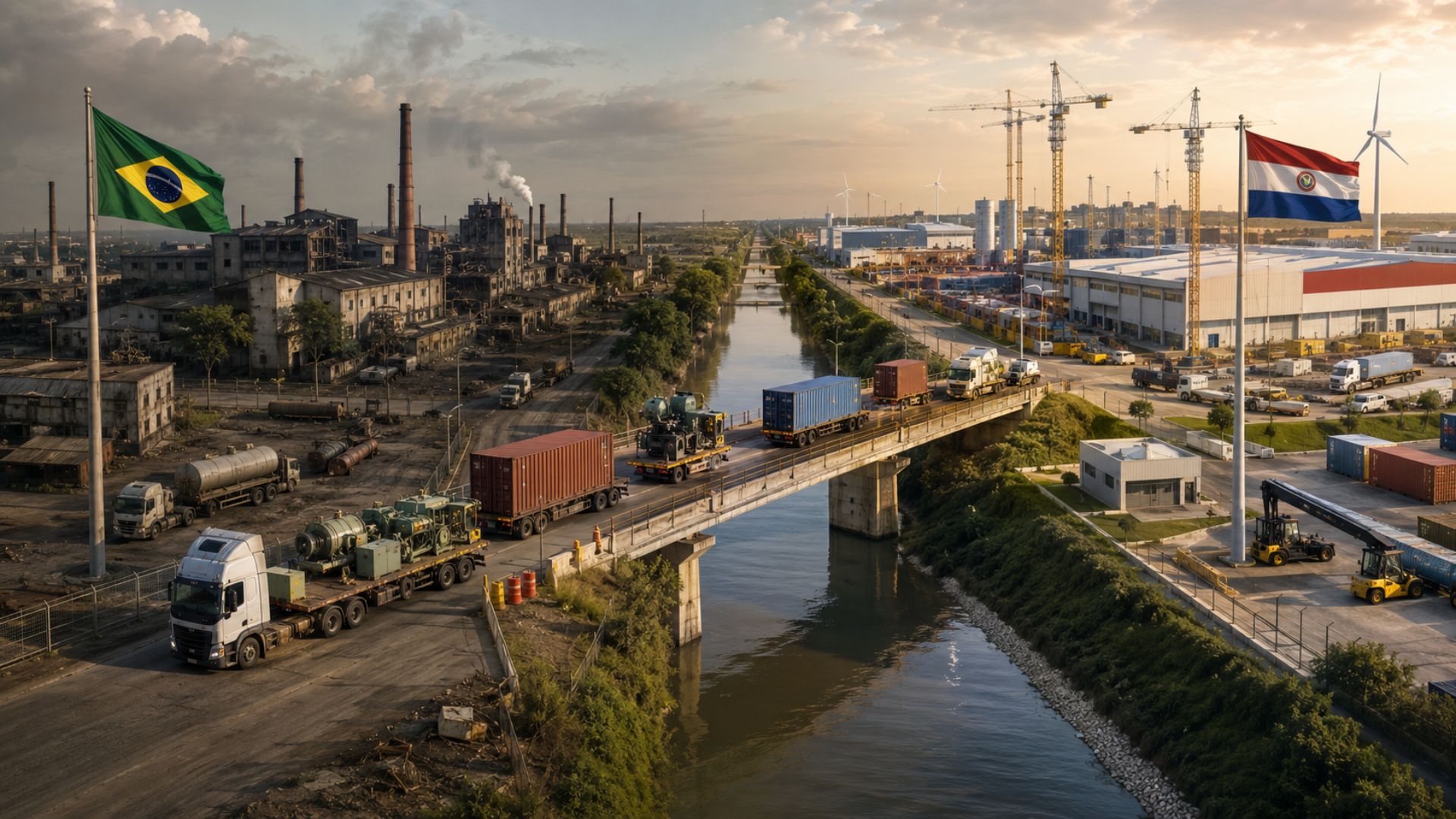
More than 220 Brazilian industries have already fled towards Paraguay and no one seems to be paying attention. The small neighbor is growing three times faster than Brazil and attracting billions in foreign investments while the South American giant remains stagnant.

-
Government prepares billion-dollar discount on electricity bills: Aneel will return R$ 5.5 billion to consumers in the North, Northeast, Mato Grosso, Minas Gerais, and Espírito Santo in the form of reduced energy tariffs.

-
Starting June 7, 27 European countries prohibit asking about previous salary in interviews, and Brazil has chosen a different path.

-
Billionaire Anne Marie Werninghaus, heir to WEG with R$ 9.1 billion, inaugurated the a.marie store at Casarão Emmendörfer in Jaraguá do Sul.



With these funds, the biometane production capacity at the Tamboara facility will be increased from 70 Nm³/h to an impressive 1,500 Nm³/h. Meanwhile, the biogas capacity will jump from 1,750 Nm³/h to 3,500 Nm³/h.
The Tamboara facility is a pioneer in large-scale commercial biogas production in Brazil, using waste from sugar and alcohol production, such as vinasse, filter cake, and straw. Traditionally, the biogas produced was intended for generating electricity.
However, with the expansion, most of the biogas production will be directed towards biometane production, after undergoing an “upgrade” process that increases the concentration of methane (CH4) by removing impurities such as CO2.
The Importance of Biometane and Biogas in the Energy Transition
The choice of biometane as a renewable energy source aligns with the new industrial policy of the Brazilian government, which seeks to encourage decarbonization and promote a more sustainable economy. “Biometane production is an important directive of President Lula’s government, as it has a significant environmental impact,” emphasizes BNDES President Aloizio Mercadante.
The expectation is that the Geo Biogás & Carbon project will produce up to 9.4 million Nm³ of biometane per year. This volume of fuel could replace approximately 8.5 million liters of diesel or 7.4 million kilograms of liquefied petroleum gas (LPG), avoiding the emission of around 340,000 tons of CO2 over the year.
According to BNDES Director José Luís Gordon, the investment in technologies such as biometane reflects the bank’s commitment to sustainability. He states that the New Climate Fund is one of the instruments that enable financing for innovative solutions that promote clean energy use in Brazil.
“It is essential that we support the implementation and expansion of projects that use clean energy sources. This contributes to a greener industry and sustainably increases the country’s productivity,” he states.
Impact and Continuity of Biometane Production
One of the advantages of the Tamboara facility in Paraná is its ability to produce biometane year-round, regardless of seasonal conditions, such as the harvest and off-season of sugarcane. The plant employs anaerobic digestion technology that processes solid waste capable of being stored without losing organic matter, ensuring a consistent gas supply.
This stability in supply is an important differentiator in a market where dependence on seasonal raw materials poses one of the challenges.
Alessandro Gardemann, CEO of Geo Biogás & Carbon, emphasizes that BNDES financing has been crucial since the beginning of operations at the facility in 2010. “The support from BNDES was key for this plant to be implemented, just as this new financing allows us to expand the project portfolio for biometane production and contribute to national energy transition,” Gardemann states.
He further points out that the expansion will enable the interiorization of renewable gas, benefiting regions that historically have less access to this energy source.
The Role of Geo Biogás & Carbon in the Renewable Energy Landscape
Founded to innovate in biogas and biometane production, Geo Biogás & Carbon is now one of the references in the application of technological solutions aimed at sustainability in the energy sector.
With a portfolio of four plants operating in the states of Paraná and São Paulo, the company has already invested over R$ 450 million in biogas projects, being responsible for an annual production of 16 million Nm³ of biogas at the Tamboara facility.
This production is converted into electricity, biofuels, and solid and liquid biofertilizers, with part of the fertilizers donated to the Regional Agricultural Cooperative of Sugarcane Producers Ltda (Coopcana), in a partnership that reinforces the company’s commitment to the circular economy.
In addition to generating clean energy, Geo Biogás & Carbon seeks to innovate solutions that provide the agribusiness sector with a sustainable destination for its waste.
The company has its own digestion process that transforms solid and liquid waste into energy sources and fertilizers, closing the production cycle in an ecologically and economically viable manner.
Conclusion: Impact of Financing on the Economy and the Environment
The expansion of the Tamboara plant marks an important milestone for the biogas sector in Brazil. With BNDES’s financial support, the project will contribute not only to the production of renewable fuels but also to strengthening the sustainable energy chain and mitigating the impacts of climate change.
The projection of fossil fuel substitution with biometane produced by Geo reinforces the relevance of biogas in the Brazilian energy matrix, promoting a viable alternative for the country’s energy future.
With the increase in production, it is expected that the facility will create a significant environmental and economic impact, collaborating for the decentralization of gas access and the reduction of dependence on fossil fuels.
In a country where agribusiness is a key component of the economy, initiatives like those from Geo Biogás & Carbon are essential to balance economic development and environmental responsibility.






Uma das melhores empresas para se trabalhar.
http://www.rcwtv.com.br