Portuguese
  Spanish


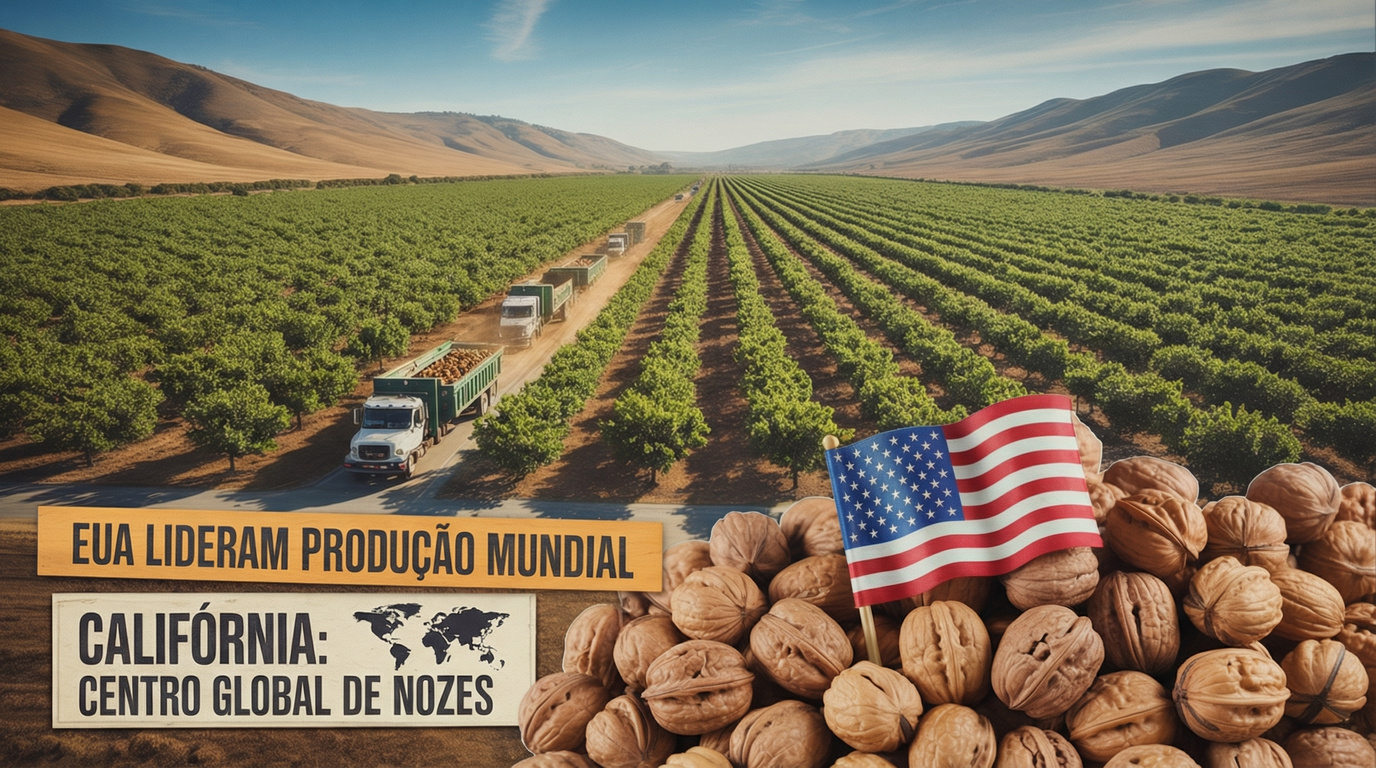


The USA Leads Global Nut Production, With Giant Orchards in California, Total Mechanization, Billion-Dollar Exports, and One of the Most Efficient Agricultural Supply Chains on the Planet.
In 2023, consolidated data from the United States Department of Agriculture (USDA) and the California Department of Food and Agriculture (CDFA) confirmed that the United States is the largest global producer of nuts, with nearly 100% of production concentrated in the state of California, mainly in the Central Valley — a region that stretches over 600 km between the north and south of the state.
This dominance is not supported by isolated small properties, but by continuous industrial-scale orchards that are highly mechanized and connected to a global logistics chain involving automated processing, refrigerated storage, sanitary traceability, and exports to more than 100 countries. The model has transformed nuts into one of the highest value-added agricultural products in the North American rural economy.
Where Are the Largest Nut Orchards in the World
According to the USDA National Agricultural Statistics Service (NASS), California has more than 160,000 hectares of nut orchards, mainly distributed in the counties of San Joaquin, Stanislaus, Yolo, Sutter, and Fresno. In many stretches of the Central Valley, the orchards form continuous blocks spanning dozens of kilometers, something unusual even by global agricultural standards.
-
India’s Sugar Export Cuts and Ethanol Shift Amid El Niño Threat Could Impact Global Prices and Stocks

-
Quarantine Pest Threatening Palm Trees Puts Brazilian Authorities on Alert, Prompts Monitoring at University of Taubaté and Potential Control Measures Across São Paulo
-
Global Alert: Report Finds 159 Pesticides in Coffee Beans Sold in Europe, Posing Serious Risks to Millions of Farm Workers
-
Low-Demand Brazilian Beef Offal Gains Popularity Abroad: Indonesia Purchases $19.5 Million, Boosting Revenue and Reducing Waste




In 2022 and 2023, annual production ranged between 700,000 and 800,000 tons, depending on weather conditions, placing the country well ahead of competitors like China, Iran, and Turkey. These figures are audited and published annually by the USDA in their official harvest reports.
An Agricultural Model Designed for Industrial Scale
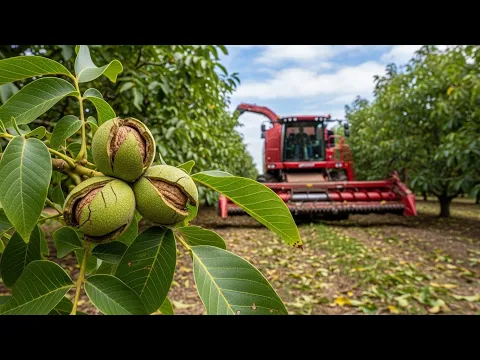
Unlike crops that heavily rely on manual labor, nut production in California has been designed for maximum mechanization. Harvesting occurs with machines that shake the trunks, dropping the nuts, which are then collected by sweeping and automatic harvesting equipment.
After harvesting, the nuts go to processing centers where they undergo controlled drying, size sorting, optical inspection, and packaging. Companies like Diamond Foods and Mariani Nut Company operate plants that process tens of thousands of tons per harvest, directly integrated to ports and logistics centers.
Water, Irrigation, and the Climate Challenge
The success of the sector is directly linked to the intensive use of controlled irrigation, especially in a state subject to cyclical droughts. Data from the California Department of Water Resources shows that most orchards use micro-sprinkling and drip irrigation, with moisture sensors and precision water management.
After the water crisis between 2012 and 2016, many producers started investing in digital soil monitoring, internal reservoirs, and water reuse, reducing consumption per hectare. Still, the sector is a constant subject of environmental debates, especially regarding water use in semi-arid agricultural regions.
Global Exports and Economic Impact
According to reports from the USDA Foreign Agricultural Service, over 65% of American nut production is exported, with markets such as the European Union, China, India, Turkey, and Japan being noteworthy. In 2023, the value of exports surpassed US$ 2 billion, making nuts one of the most profitable agricultural products in the state of California.
The sector generates tens of thousands of direct and indirect jobs, from the field to logistics, genetic research, sanitary certifications, and foreign trade. Universities like the University of California, through the UC Agriculture and Natural Resources program, actively participate in the development of more productive and pest-resistant cultivars.
Why This Concentration Impresses Experts
For agronomists and agricultural economists, the case of nuts in California is an extreme example of territorial specialization. Almost all global production concentrated in a single region creates efficiency gains but also systemic risks, such as climate dependency, vulnerability to pests, and water fluctuations.
Still, until 2024, no other country has managed to replicate the same level of productivity, integrated logistics, and sanitary standard required by major international importers.