






 Portuguese
  Spanish
  3 min of reading
  0 comments


USA and China: Technological Conflict or Diplomacy? Find Out How Antony Blinken Addresses the Issue in Impactful Interview
Antony Blinken, the Secretary of State of the United States, often acts as a counterpoint to Gina Raimondo, the Secretary of Commerce of the U.S. Administration. The stance that the latter tends to adopt in front of the media in the context of the technological war with China is often belligerent. However, Blinken often chooses to make statements with a conciliatory tone. Indeed, he has just made them.
Last Friday, during an interview on national public radio, he argued that the sanctions that the USA is enacting are not intended to undermine China’s economic or technological development; they are merely meant to protect the interests and security of the United States. It is evident that with these statements, Blinken aims to support his argument about the need to prevent Xi Jinping’s government from using American technologies to strengthen its military development.

Antony Blinken, Secretary of State of the United States, Has An Enemy Within
In the context of tensions that dominate the relationship between the United States and China, any statement from a competent member of their governments that serves to calm the scenario a bit is welcome. However, that was probably not Blinken’s only purpose in making his statement last Friday. Certainly, his words also aimed to reinforce his arguments to countries whose economies are being affected by the sanctions, such as the Netherlands, Germany, or Japan.
-
Israel finds Hezbollah militarized tunnel over 200 meters long under village, with 4 missile launch shafts, 12 chambers, anti-tank missiles, drones, and weapons depots at a depth of 25 meters.

-
Ukraine launches largest drone attack on Moscow since 2022, Russia claims to have intercepted nearly 200 aircraft near the capital, Kapotnya refinery targeted again, and offensive reignites alert about war reaching the Russian energy heart just a few kilometers from the Kremlin.

-
Truck drivers, freight, and fines from 2022 take center stage in politics: Chamber approves MP with amnesty, mandatory tracking by CIOT, million-dollar penalties, and new minimum wage for those who spend more than 24 hours on the road.

-
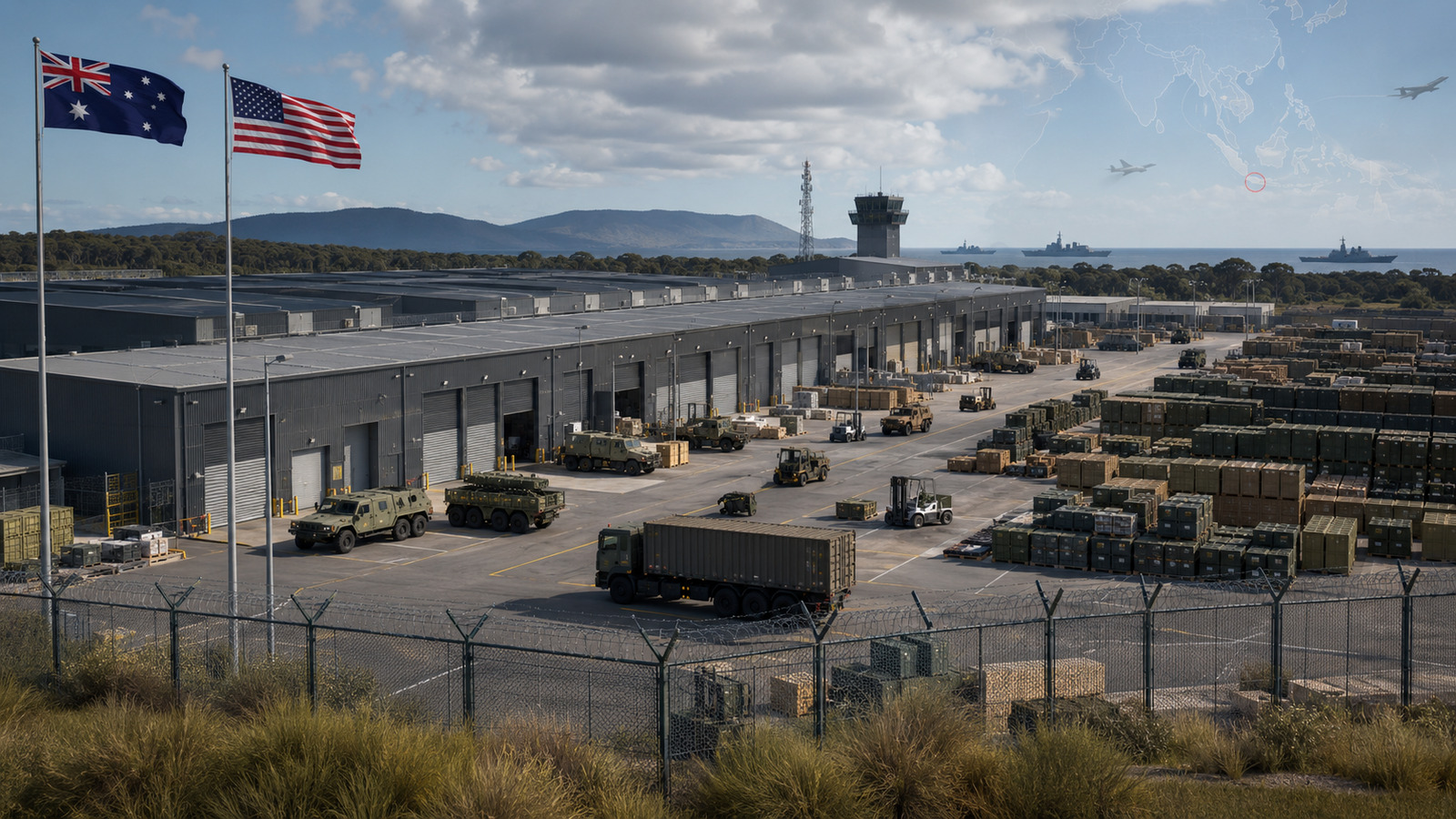
China off the radar: US plans mega $30 million weapons depot in Australia, out of reach of most Chinese missiles, with full capacity expected by 2028



“Huawei just launched a new laptop powered with artificial intelligence (AI) capabilities thanks to the incorporation of an Intel chip […] I believe this demonstrates that we are only protecting our most sensitive technology that could compromise our security. We have no intention of sabotaging trade, much less containing or stifling China’s development,” Blinken said during the interview to strengthen the core of his speech.
However, the words of the Secretary of State of the United States may be compromised sooner or later. Several Republican lawmakers openly criticized that the Department of Commerce has allowed Intel and Qualcomm to continue selling some of their advanced chips to Chinese companies. Michael Gallagher, who chairs the House Committee dedicated to China, does not understand why, in the current situation, American semiconductor manufacturers are allowed to continue selling cutting-edge integrated circuits to Huawei.
“One of the biggest mysteries happening in Washington D.C. is why the Department of Commerce continues to allow American technology to be sent to Huawei.” This statement from Gallagher is nothing more than a pressure measure on the Joe Biden administration aimed at forcing it to further toughen sanctions on China. So far, neither the Department of Commerce nor Intel has commented, but there is a possibility that the permit allowing Intel to sell processors for laptops to Huawei will not be renewed when it expires at the end of this year.
Source: Reuters





Be the first to react!