Portuguese
  Spanish


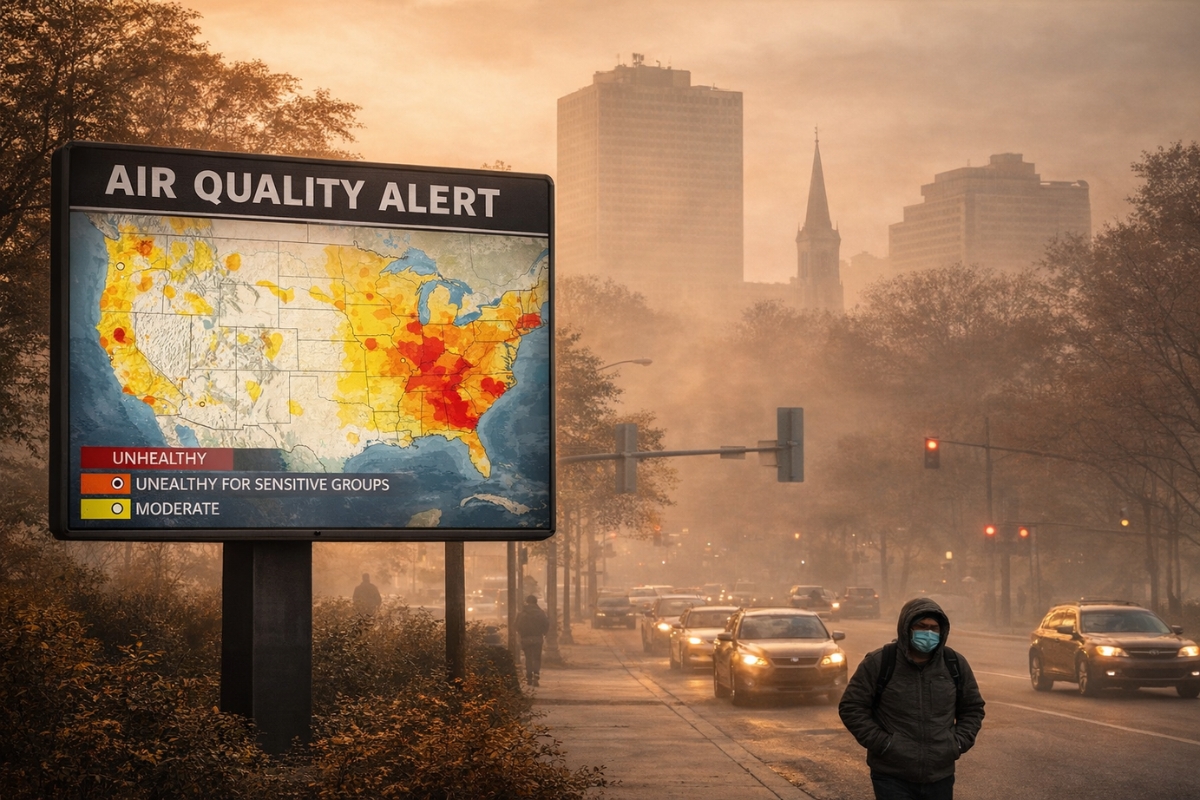


Pollution by PM2.5 Elevates Health Risks and Worsens Air Quality in Georgia, South Carolina, and Oregon
Thousands of Americans face unhealthy air in parts of Georgia, South Carolina, and Oregon, and the guidance is to stay home whenever possible. The issue involves pollutants that increase the risk of respiratory complications and can also affect the heart.
The air quality maps from this Tuesday indicated very high levels of PM2.5, microscopic particles with toxic compounds or heavy metals. They can come from vehicles, industry, and wood burning, creating a dangerous scenario when trapped near the ground.
Augusta Reaches ICA 166 and the Air Becomes Unhealthy for the Entire Population
In Augusta, Georgia, and neighboring areas of South Carolina, including North Augusta, the Air Quality Index (AQI) reached 166. This range is considered unhealthy for everyone, requiring a reduction in outings and limiting any outdoor effort.
-
Orphaned Youth Turns Dismissed Idea into Global Prestige with Innovative Wristwatch

-
English Skills Boost Career Opportunities in the Oil and Gas Industry

-
Brazil Secures Second Place at WorldSkills 2024 in Lyon, with 64 Young Professionals and 8 Medals, Including Gold from a Rio de Janeiro Hairdresser

-
3,000 Military Personnel from 10 Countries, Including US and Chinese Marines, Train Together in Brazil’s Savanna: Operation Formosa Becomes Largest Naval Ground Exercise Before First Cancellation Since 1988



Pollution is associated with traffic, industrial emissions, and occasional controlled burns, with the winter weather helping to keep pollutants concentrated. Even people without diseases can feel irritation and discomfort when the air reaches this level.

Valdosta May Remain Above AQI 100 for More Days
In southern Georgia, Valdosta also continues to have persistently poor air. More days above AQI 100 are forecasted, reinforcing the need for attention to symptoms and reducing exposure.
The scenario combines constant environmental factors with urban and industrial emissions, along with conditions that hinder natural dispersion. This increases the risk for those already having asthma or other respiratory issues.
Oregon Enters Alert with Stagnant Air and Warning Until 7 a.m. on Friday
The central Oregon, including Bend and Deschutes County, is under alerts because stagnant air traps pollutants at ground level. The levels have reached the range of unhealthy for sensitive groups, posing a greater risk to children, the elderly, and individuals with heart or lung diseases.
An air quality warning remains in effect until 7 a.m. on Friday, Pacific Time. The recommendation is to reduce outdoor activities and avoid sources that increase smoke, such as wood burning.
Scale from 0 to 500 Shows When Air Is No Longer Safe
Air quality is measured from 0 to 500, with levels indicating health risk. The good (0 to 50) range is of low danger, while moderate (51 to 100) may already affect sensitive individuals.
When it reaches unhealthy for sensitive groups (101 to 150), the risk increases. The unhealthy (151 to 200) level affects the entire population and requires limiting exposure.
With the advancement of pollution and trapped air near the ground, the priority is to reduce contact with these particles until the weather helps disperse the pollutants. The most practical measure is to stay indoors and monitor local alerts to adjust routines.