Portuguese
  Spanish


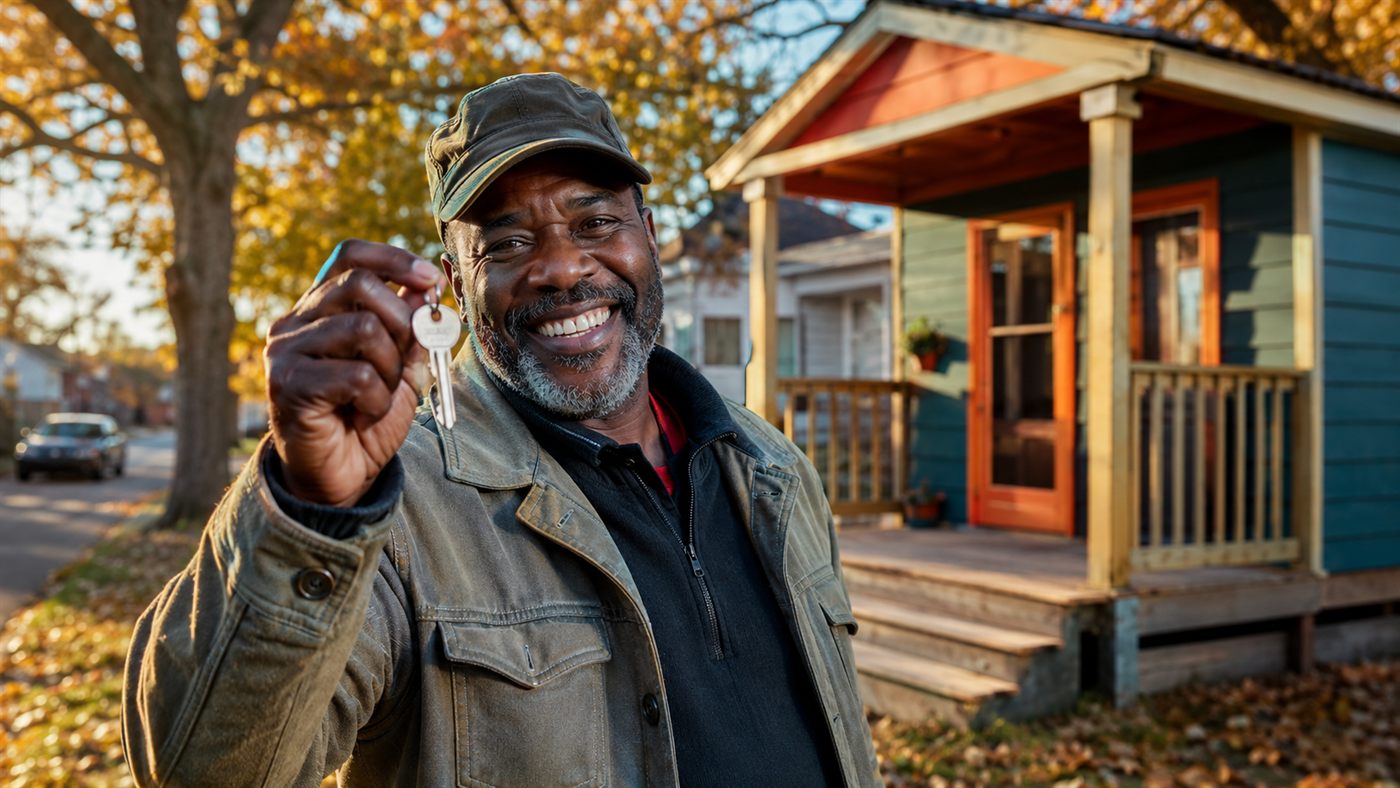

The Tiny Homes Detroit project by Cass Community Social Services reversed the shelter logic: the low-income resident pays rent, takes care of the house as their own, and ends the cycle with the property in their own name
A village of tiny houses in Detroit is doing what no traditional shelter has managed: turning tenants who once lived on the streets into homeowners with registered deeds. In December 2025, according to Cass Community Social Services, resident DeAngelo signed the deed to his own house and became the 3rd owner in the community, with 2 other neighbors scheduled to receive the document in 2026. The rule is simple and revolutionary: those who stay 7 years in the house and in the program get the opportunity to keep the property.
How did a social organization fund this? The answer lies in the project design: 25 tiny houses built in a real neighborhood in Detroit, rented at a symbolic price to low-income people, with the rent serving not as an end, but as a probationary stage towards ownership.
The 7-year rule that changes the fate of rent
The heart of Tiny Homes Detroit is the clock. According to Cass Community Social Services, any resident who stays in the house and in the program for 7 years receives the opportunity to become the owner of the property. Rent stops being money that evaporates every month and becomes a trail with a deed at the end.
-
Brazilian Factory in Ivoti Produces 500 Modular Steel and Fiberglass Concrete Homes Following 2024 Floods, Securing $13 Million Contract

-
Brazilian Startup Develops Recycled Plastic Bricks, Cutting Construction Costs by 40% and Speeding Up Building by 90%

-
Tarcísio Opens New São Paulo Metro Line After 18-Year Wait, Offering Free Rides at 6 Stations and Aiming to Cut Commute to 23 Minutes for 633,000 Daily Passengers
-
Facing a housing shortage, Hong Kong uses prefabricated concrete modules to construct a 12-story public building with the help of massive cranes and trucks.


This inversion matters because it tackles the blind spot of housing programs: the exit. The shelter and transitional housing return the person to the market without any assets. Here, the cycle ends with a real asset in the resident’s name, something that can be inherited, sold, or used as collateral, the first step of wealth that many of these families have ever had.
What the Microhouse Village Looks Like Inside
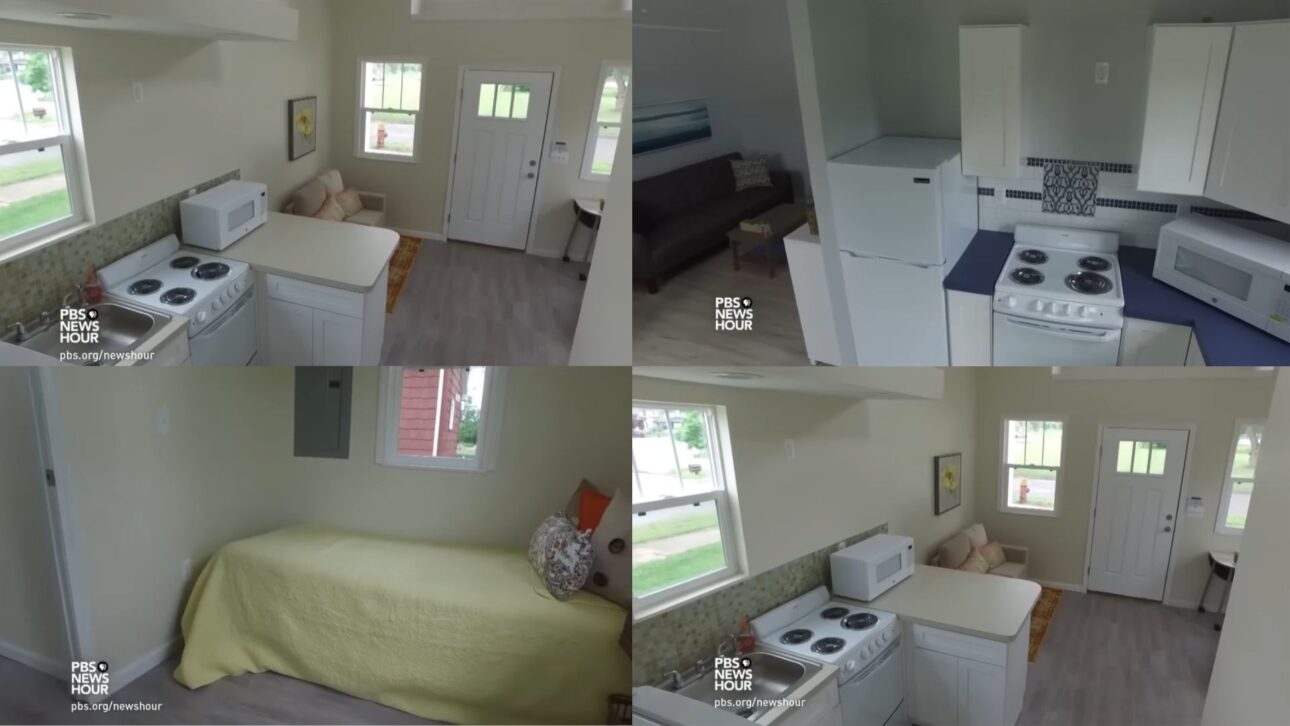
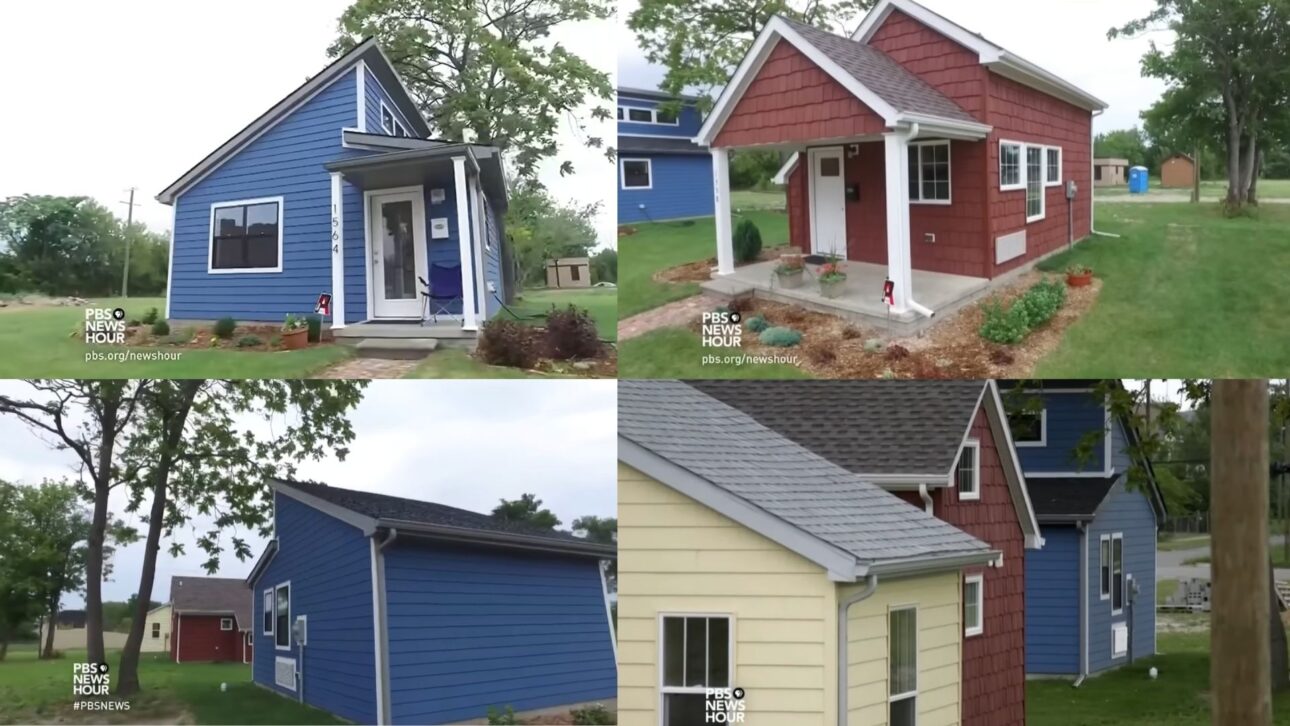
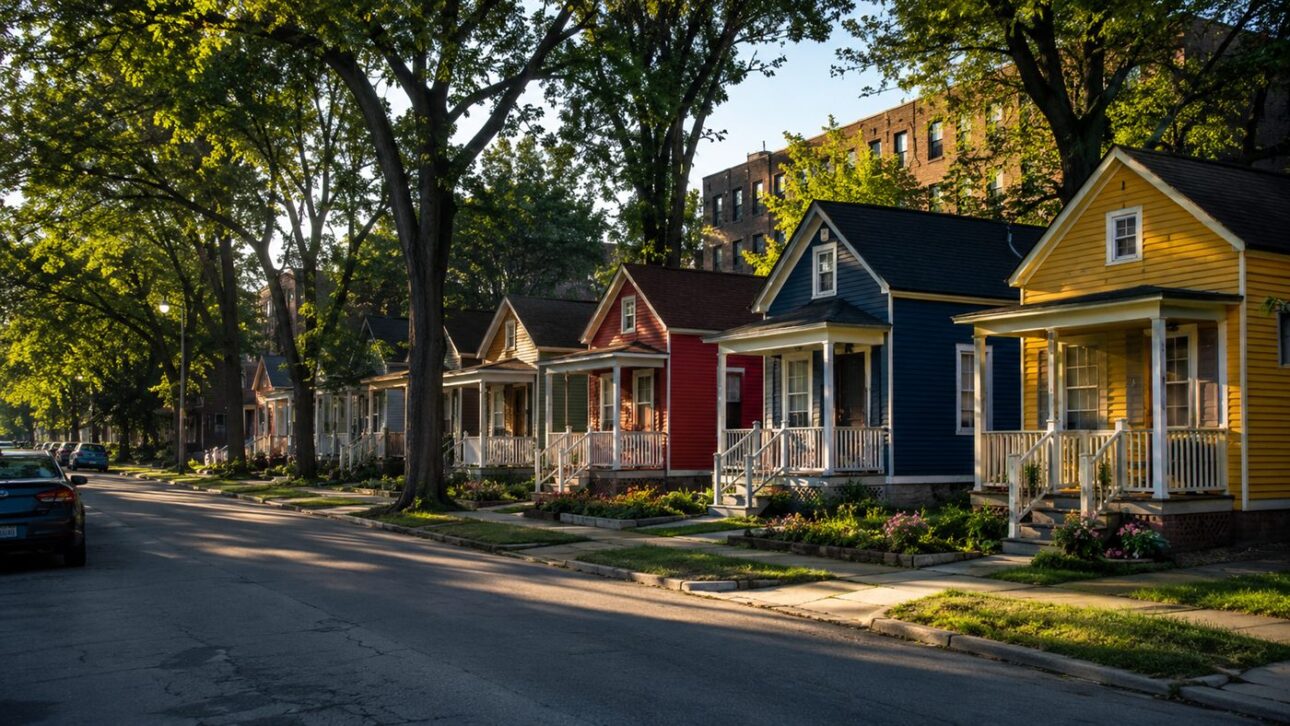
The complex is not a trailer park. According to Cass Community Social Services, there are 25 different microhouses built in Detroit, with areas ranging from 250 to 400 square feet, equivalent to about 23 to 37 square meters. Each house has its own design, its own foundation, and its own address, on a real street.
According to the Great Lakes Echo, the village is located near the historic Boston-Edison district, a well-established neighborhood in Detroit. The choice is strategic: instead of pushing the vulnerable population to the industrial outskirts, the project weaves the microhouses into the existing urban fabric, with transportation, commerce, and services nearby.
Who Can Live in the Village
The entry filter is social and transparent. According to Cass Community Social Services, the residents include people who were homeless, those who have left the prison system, the elderly, and young people who aged out of the foster care system without family, all qualified by low income. The program mixes different profiles from door to door, avoiding the ghettoization of a single audience.
This mix has a practical function. A housing complex composed solely of former street dwellers concentrates the same challenges in one block; the coexistence of the elderly, low-income workers, and young people starting over dilutes the stigma and creates the neighborhood network common to any area.
DeAngelo, the 3rd Name in the Deed Line
The program moved from theory to practice in December 2025. According to Cass Community Social Services, DeAngelo signed the deed for the house he lived in on the 26th of that month and became the 3rd homeowner in the community, with 2 other residents scheduled to receive their documents throughout 2026. Five deeds in the hands of former low-income tenants prove that the promise of 7 years was not just marketing.

Each signed deed has a domino effect within the village. For those in year 3 or 4 of the program, seeing a neighbor become an owner turns the abstract rule into a concrete goal, and it is this horizon that sustains permanence, care for the property, and the stability that the project requires.
Phase 2 is already under construction
The model did not stop at the first wave. According to Cass Community Social Services, the organization is building phase 2 of the project. The expansion is the ultimate test: it shows that the first round was successful and that there is a queue of people ready to enter the second.
Replicating is the hardest part of any social experiment. Phase 2 takes advantage of what the first taught, from the design of the houses to the monitoring of residents, and turns a photogenic pilot project into a real housing policy, with scale growing year by year.
The background: homelessness is increasing in Michigan


The project advances against a high tide. According to the Great Lakes Echo, the homeless population in the state of Michigan increased by 8% in 2022 compared to 2021, jumping from 30,113 to 32,589 people. While state numbers worsen, Detroit’s microhouse village goes against the grain, converting social rent into assets.
The same survey by the Great Lakes Echo shows that the format is spreading across the state: there are microhouse villages under development in Grand Rapids, with 16 units planned, and in Flint, where a project for military veterans plans 4 houses in the first phase and another 22 by the end of 2026. The idea from Detroit has become a regional reference.
Why the deed is worth more than the roof

From an economic standpoint, the detail of ownership changes the nature of public and philanthropic spending. Transitional housing requires subsidy forever because the person leaves it as poor as they entered.
When the cycle ends in a deed, the subsidy buys a permanent result: a family with real estate assets, a positive equity account, and roots in a neighborhood. It’s the difference between paying rent for someone else’s stability and financing independence all at once.
This reasoning explains why the 7-year model attracts the attention of public managers. The cost per family is finite and known, the result is auditable in a registry office, and the property remains cared for because from day one the tenant treats it as a future owner.

There is also the effect on the surroundings. Detroit became known worldwide for its empty blocks and abandoned properties after the city’s industrial collapse, and each new occupied microhouse is one less lot off the market.
By turning tenants into owners, the project plants property tax contributors, local business consumers, and neighbors with a direct interest in street safety, exactly the fabric that emptied neighborhoods lost.
It’s urban regeneration done door to door, without spectacular demolition or billion-dollar megaprojects.
What Brazil Could Copy from Detroit
Brazil almost always discusses social housing in two separate boxes: social rent, which does not generate equity, and subsidized home ownership, which requires a massive fiscal input.
The Detroit arrangement suggests a third way: rent cheaply with a future ownership clause, conditioned on permanence and care, turning the very time of residence into forced savings.
In a village of microhouses with 25 units, Detroit proved that the design works even with the most difficult-to-reach audiences.
The question for Brazilian municipalities is direct: if 7 years of rent can end in a deed in the most battered city in the United States, what prevents such a pilot in the thousands of idle public lands in Brazil?