






 Portuguese
  Spanish


After 10 months of quarantine in Brasília, the seedlings donated by the Gulf country were delivered to 4 municipalities in the semi-arid region of Bahia, and a second batch of 10,000 date palms is already in line
Date production in Brazil took off with an unlikely sponsor: the United Arab Emirates. In July 2025, Embrapa delivered the first 110 date palm seedlings donated by the Gulf country, which had arrived in Brazil in September 2024 and spent about 10 months in quarantine in Brasília, according to Embrapa. From the batch, 100 seedlings went to the interior of Bahia and 10 were planted in the gardens of the Palácio da Alvorada.
According to Agência Sertão, the project is tied to a $4 million agreement over 5 years with technology transfer, farmer training, and technical assistance, arranged with the Zayed Foundation and Al Foah Company from the Emirates. The declared goal is to transform the interior of Bahia into a date production hub, a fruit that Brazil currently imports almost entirely.
From Abu Dhabi to the hinterland: the journey of the 110 seedlings
The operation began with a rare diplomatic gesture in agribusiness: the United Arab Emirates donated to Brazil 110 date palm seedlings of 12 different varieties, according to Embrapa. It is not just any gift. The date palm is the heart of agriculture in desert countries, and elite commercial varieties are guarded as strategic assets.
-
The Day the Soviet Union Forfeited Against Chile, Leading to an Uncontested Goal and a Spot in the 1974 World Cup

-
New Law Highlights Salvador’s Role in Brazil’s Independence Day Celebrations on July 2nd
-
Coffee Grounds Find New Purpose Beyond Waste in Innovative Uses
-
Brazilian Entrepreneur Revives Used Cookware, Now Earning $10,000 Monthly at 41


The plants arrived in September 2024 and went straight to the Quarantine Station of Embrapa Genetic Resources and Biotechnology, in the Federal District, the official entry point for live plant material in the country. No foreign seedling touches Brazilian soil without passing through this sanitary funnel, designed to prevent the entry of exotic pests capable of devastating entire crops.
Ten months of quarantine: the invisible customs of Brazilian agribusiness
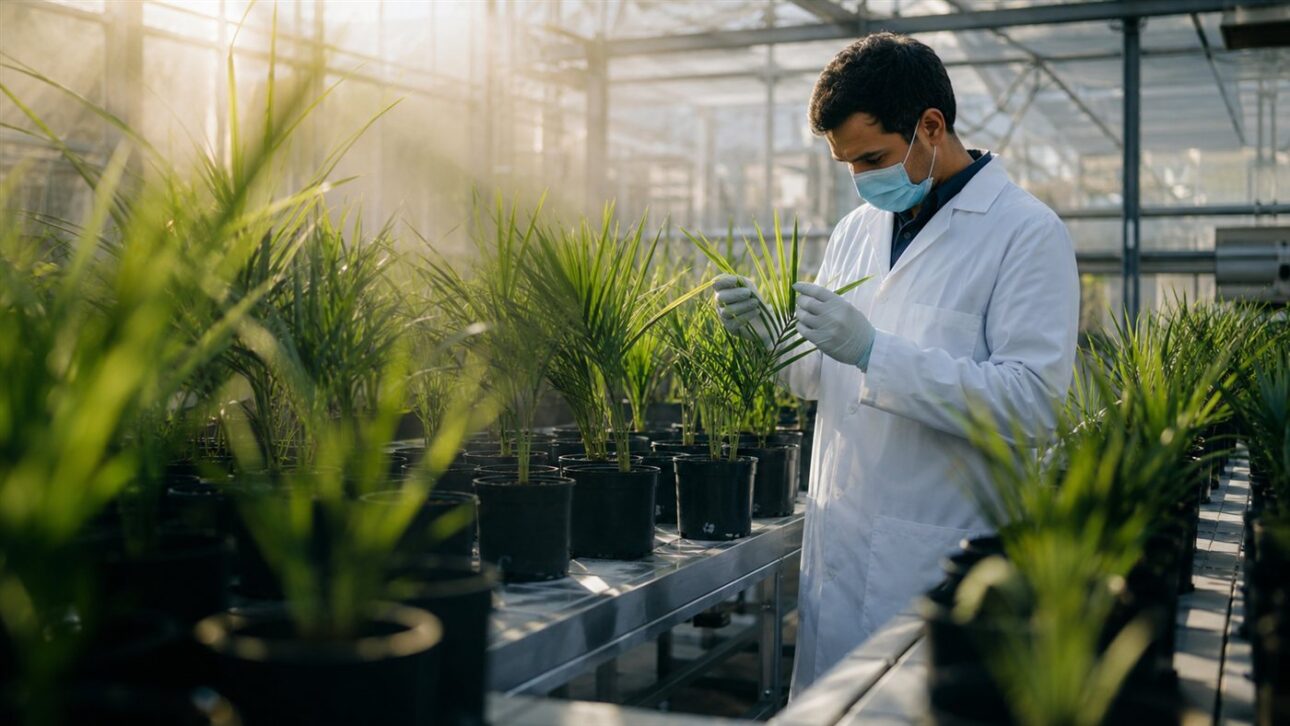
For about 10 months, the date palms were under analysis at the Embrapa center in Brasília, undergoing complete sanitary examinations before being released, according to Embrapa. The work involved researchers like Eloisa Belleza and Norton Polo Benito, who were responsible for the health of the batch.
This stage is invisible to the consumer, but it is what protects a sector that supports a large part of the national economy. A single exotic pest hidden in an imported seedling can cost billions in agricultural losses, and that is exactly why the desert’s symbol fruit spent almost a year under observation before meeting the sertão.
Four municipalities in Bahia and a surprise at the Palácio da Alvorada
Released from quarantine, the seedlings found a home. According to Embrapa, the 100 date palms destined for Bahia were distributed among the municipalities of Riachão das Neves, São Gabriel, Presidente Dutra, and Ipecaetá, initially prioritizing producers with already installed technological infrastructure and, subsequently, family farmers.
The other 10 seedlings had an unusual destination: the gardens of the Palácio da Alvorada in Brasília, planted under the care of the official residence administration. The fruit that traveled the world in a climate-controlled container now grows a few meters from the President of the Republic, a living business card of the partnership with the Emirates.
The $4 million agreement and the promise of an industry
The planting is just the first piece of a larger arrangement. According to the Agência Sertão, the agreement between Bahia and the Emirates provides for $4 million over 5 years, covering technology transfer, farmer training, and technical assistance, with participation from the Zayed Foundation and Al Foah Company, a major Emirati date sector company.
The package also includes the proposal to install a fruit processing industry on Bahian soil, with the potential to supply the Latin American market and, in the future, the North American market. The Secretary of Agriculture of Bahia, Pablo Barrozo, and the Director-General of the Bahia Agricultural Defense Agency, Paulo Sérgio Menezes, are leading the negotiations on the Brazilian side. The formalization of the agreement was designed to take place during COP 30 in Belém, putting the date in the spotlight of the planet’s largest climate conference.
The market size: imports that grew 450%
The Brazilian appetite for the fruit explains the rush. According to Agência Sertão, the consumption of dates in the country jumped 450% in the last decade, from 776 tons to about 4.3 thousand tons per year, a volume now almost entirely met by imports.
Every kilo of dates sold in the Brazilian market is, in practice, an imported kilo, making the fruit a perfect target for import substitution. If a fraction of the semi-arid region of Bahia enters commercial production, the money that currently travels to the Middle East and North Africa will circulate in the economy of the northeastern interior.
What the date palm requires and what it delivers
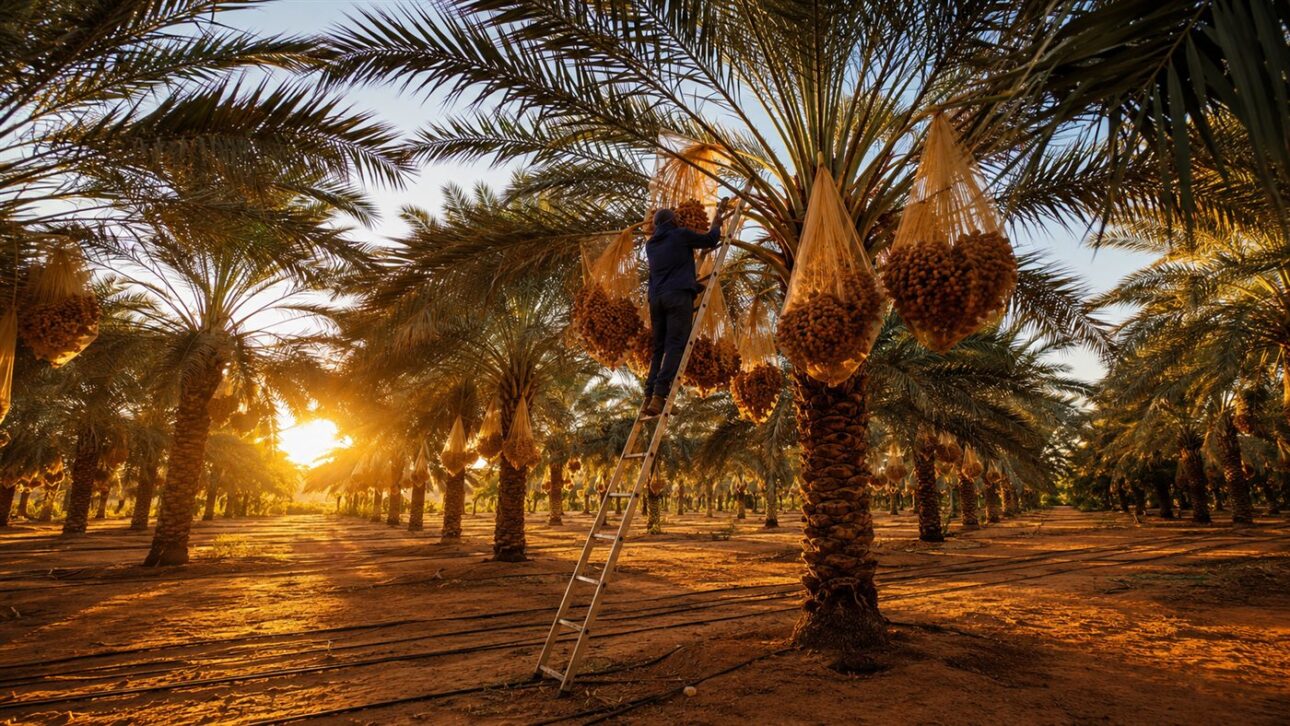
The technical sheet of the crop helps to understand the enthusiasm. According to Agência Sertão, the date palm can reach up to 30 meters in height, starts producing between 4 and 6 years after planting, and, when mature, delivers up to 70 kg of fruit per plant each year.
It is a long-cycle crop, the opposite of soybeans and corn that dominate the national agricultural calendar. In return, a well-managed date palm produces for decades, turning the orchard into a long-term asset. For the semi-arid producer, accustomed to subsistence crops, it is a complete change in economic logic.
Why the Bahian hinterland is the right address
The choice of Bahia was not a lottery. The dry climate, intense luminosity, and long droughts of the semi-arid region of Bahia reproduce, in a tropical version, the conditions in which the date palm thrived for millennia in the Middle East. What has always been treated as a climatic curse of the hinterland becomes, in this project, exactly the competitive advantage.
The logic is the same that transformed the São Francisco Valley into a world hub of irrigated fruit farming: matching a high-value crop with a climate that the rest of the country does not have. Date production enters this shelf of high-value bets per hectare, alongside grapes, mangoes, and other export fruits.
The second batch: 10 thousand seedlings in line
The batch of 110 plants is a pilot. According to Embrapa, a second batch with 10 thousand date palm seedlings is already under review by the Ministry of Agriculture, awaiting sanitary approval to repeat the quarantine and distribution process.
This second batch is what separates the symbolic experiment from true commercial farming. Ten thousand date palms planted on a scale, with an Emirati technological package and structured technical assistance, form the minimum base of a production hub capable of competing for the shelves currently occupied by imported fruit.
What is needed for date production to reach the Brazilian table
Between the seedling in the ground and the fruit at the market, there are years of management, irrigation, pollination, and learning. The commercial-scale production of dates in Brazil is only expected to appear when the first plants reach maturity, starting from the second half of the decade, and success will depend on whether the Arab technical package adapts to the soil and the rainfall regime of the backlands.
Meanwhile, the project continues to add pieces: a billion-dollar agreement in reais on the industrial front, seedlings in quarantine, municipalities preparing the soil, and a diplomatic showcase set up. If the Arab desert turned dates into an economic empire, what prevents the Brazilian semi-arid region from repeating the recipe? Leave in the comments: would you bet on dates from the backlands?


