






 Portuguese
  Spanish
 4 min of reading
  2 comments


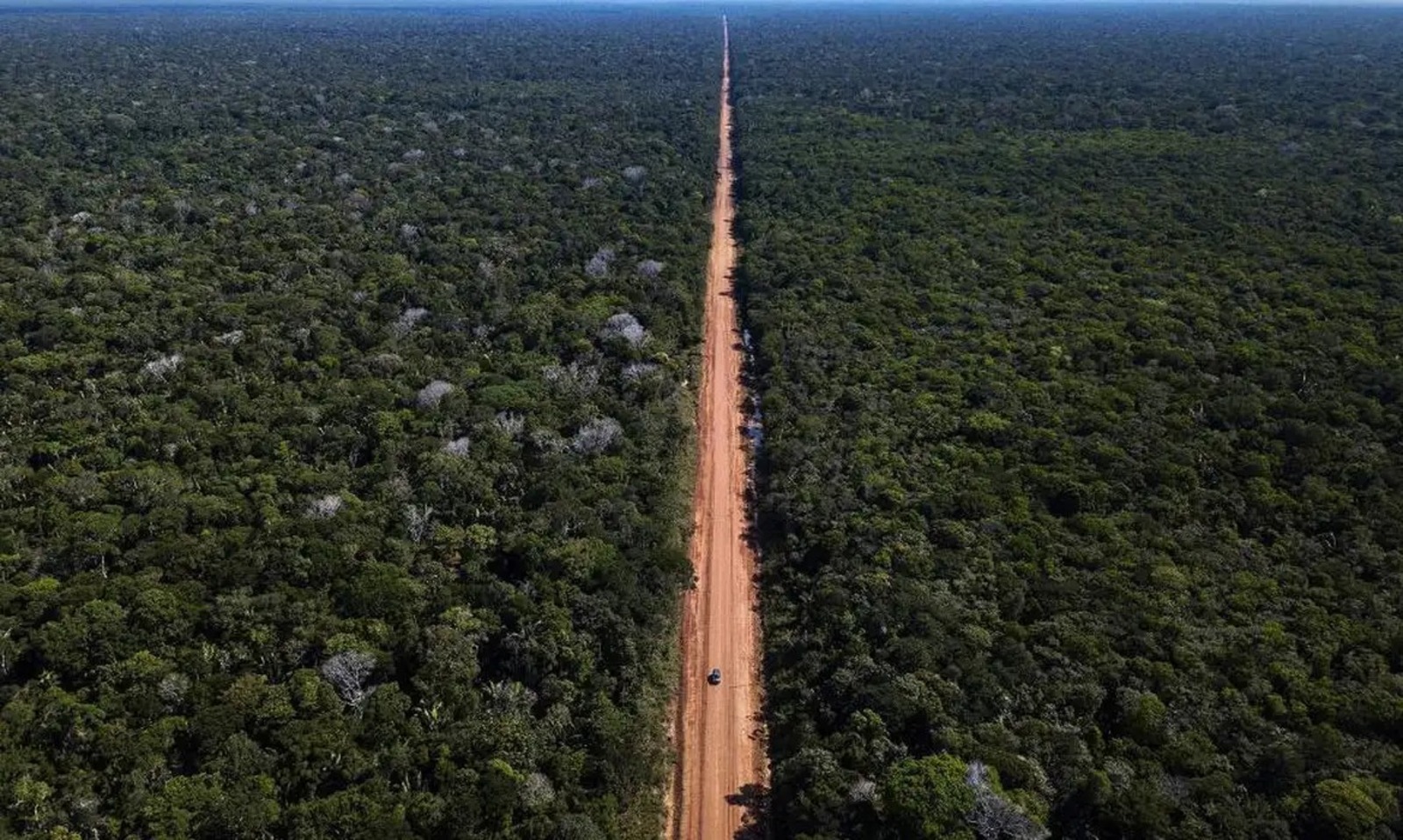


The Paving of BR-319, Between Manaus and Porto Velho, Divides Environmentalists and Politicians by Putting at Risk Essential Forests for the Formation of Rain That Supply Large Agricultural Regions and Cities in the Country
BR-319, a highway of nearly 900 kilometers connecting Manaus to Porto Velho, is the stage for a dispute that spans generations. Built in the 1970s, the road is the only land connection between the Amazon and the rest of Brazil, but more than half of its length remains unpaved.
During the rainy season, the muddy stretches turn into mud pits, making the journey practically impassable.
While entrepreneurs, politicians, and residents push for complete paving, scientists and environmentalists are sounding the alarm.
-
Brazilian Joins Homeownership Consortium, Faces Decade of Dual Payments Totaling $141,000, Surpassing Traditional Mortgage

-
Land Rover to Halt Production in July, Putting 371 Jobs at Risk, as Chinese Automaker Negotiates to Convert Factory to 100,000 Vehicles Annually by 2027

-
Mexican Pest Threatens U.S. Cattle Herds at Historic Lows, Potentially Boosting Brazilian Beef Exports as Burger Prices Soar

-
Brazilian Freight Bill Progresses in Congress with $5,000 Minimum Wage, 70% Advance Payment, and Fines Up to $1 Million, as Agriculture and Industry Warn of Rising Costs and Legal Uncertainty


The fear is that the project will accelerate deforestation in one of the most preserved areas of the Amazon Rainforest, as reported by journalist Bernardo Esteves in a piece published in the magazine piauí, after traveling the highway in June.
The Invisible Role of the Forest and the “Flying Rivers”
The risks highlighted by specialists go far beyond the loss of trees. Studies show that the forests near BR-319 are fundamental for the water balance of other regions of the country.
The group led by meteorologist Marina Hirota from the Federal University of Santa Catarina identified that trees within a 100-kilometer radius of the highway generate about 242 trillion liters of rain each year — the equivalent of 5% of all precipitation produced by the Amazon.
This volume of vapor, carried by the so-called “flying rivers,” feeds rain systems that reach the Cerrado, the Pantanal, the Pampa, and the Atlantic Forest.
Without this flow, agricultural regions and urban centers in the Midwest, Southeast, and South could suffer drastic reductions in rainfall.
Direct Impact on Large Cities
Biologist Philip Fearnside, a researcher at the National Institute of Amazonian Research (Inpa) for nearly fifty years, emphasized to piauí that the impact of the road goes beyond the Amazonian frontier.
He recalls that states like Mato Grosso do Sul, Paraná, São Paulo, and Rio Grande do Sul receive a significant portion of the rain formed from the vapor generated by the forest cut through by BR-319.
“The area of BR-319 is important for the recycling of water that even supports the city of São Paulo,” Fearnside stated.
The researcher also recalled that the São Paulo capital faced severe water crises in recent years, caused by rainfall shortages and declining reservoir levels.
A Risk That Goes Beyond the Forest Borders
In addition to local consequences, deforestation caused by paving could push the Amazon toward the so-called tipping point — a stage in which the forest loses its ability to regenerate and transforms into a degraded savanna.
This would have a direct effect on Brazil’s climate goals, making it difficult to meet commitments made under the Paris Agreement.
The increase in carbon emissions resulting from the destruction of the forest would compromise not only the country but also the global effort to limit global warming to less than 2 °C above pre-industrial levels.
Political Dispute and Obstacles in Licensing
For decades, the Brazilian Institute of the Environment and Renewable Natural Resources (Ibama) refused to authorize the paving of BR-319.
The agency understood that the entrepreneurs did not present evidence that the work would not cause significant damage to traditional communities and the local ecosystem.
This position changed during the government of Jair Bolsonaro. With then-Infrastructure Minister Tarcísio de Freitas — now the governor of São Paulo — the project was classified as a national priority.
In 2022, Ibama granted a preliminary license for the paving, contrary to internal technical opinions.
The decision, however, did not last long. Shortly after, the Federal Court annulled the authorization, citing process flaws and lack of environmental guarantees.
Since then, the issue remains in judicial dispute, with no prospect for resolution.
New Attempt for Consensus Among Ministries
At the end of last year, representatives from the Ministry of the Environment, the Ministry of Transport, and the Civil House reached an agreement for conducting a strategic environmental assessment.
The goal is to map all possible impacts of the paving of BR-319 and propose protective measures for the forest and its inhabitants.
Despite this institutional advancement, there is still no scheduled date for the completion of the study or for the disclosure of results. The impasse, therefore, continues.
Meanwhile, BR-319 continues to divide opinions and symbolize the Amazonian dilemma between economic progress and environmental conservation.
What is at stake is not only the future of the road but also the climatic and water balance of the entire Brazilian territory.
With information from Folha Piauí.





Sou amazônia, moro nessa região e sei a dificuldade de locomoção nessa região, na época da covide tivemos uma amostra do quanto é importante um ligação por estrada, muitas mortes teriam sido evitadas se tivéssemos uma estrada trafegavel, para os cientistas mercenários que sempre inviabilizam qualquer projeto em áreas que seja do interesse de outros paises ou seja uma área que seja do interesse de outros países, esses cientistas ganham pra inviabilizar qualquer projeto nacional deixando essa região a disposição dos governos que lhes pagam gordas quantias através de ongs, tenho dois pontos de vista, o primeiro, essa rodovia já foi asfaltada no passado, e não houve o tal desmatamento da floresta que tanto é alardiado hoje, e o segundo é por que todo o mundo quer sacrificar os moradores daqui, em prol da destruição que eles causaram em seus países e estados, não somos responsáveis pela destruição das florestas do planeta destruíram tudo em nome do progresso, e agora somos responsáveis por não faltar chuvas em determinados estados, que cada governo cuide em reflorestar seus estados e nos deixem viver em paz sem interferência de ongs, cientistas, justiça, governos e outros que se achem donos da Amazônia, pro mais sou favor que nos separemos do Brasil e sejamos independentes!
É um **** mesmo.