






 Portuguese
  Spanish




Discovery of Roman Road Beneath Central Manchester May Change Understanding of the City’s Past and Its Ancient Settlements
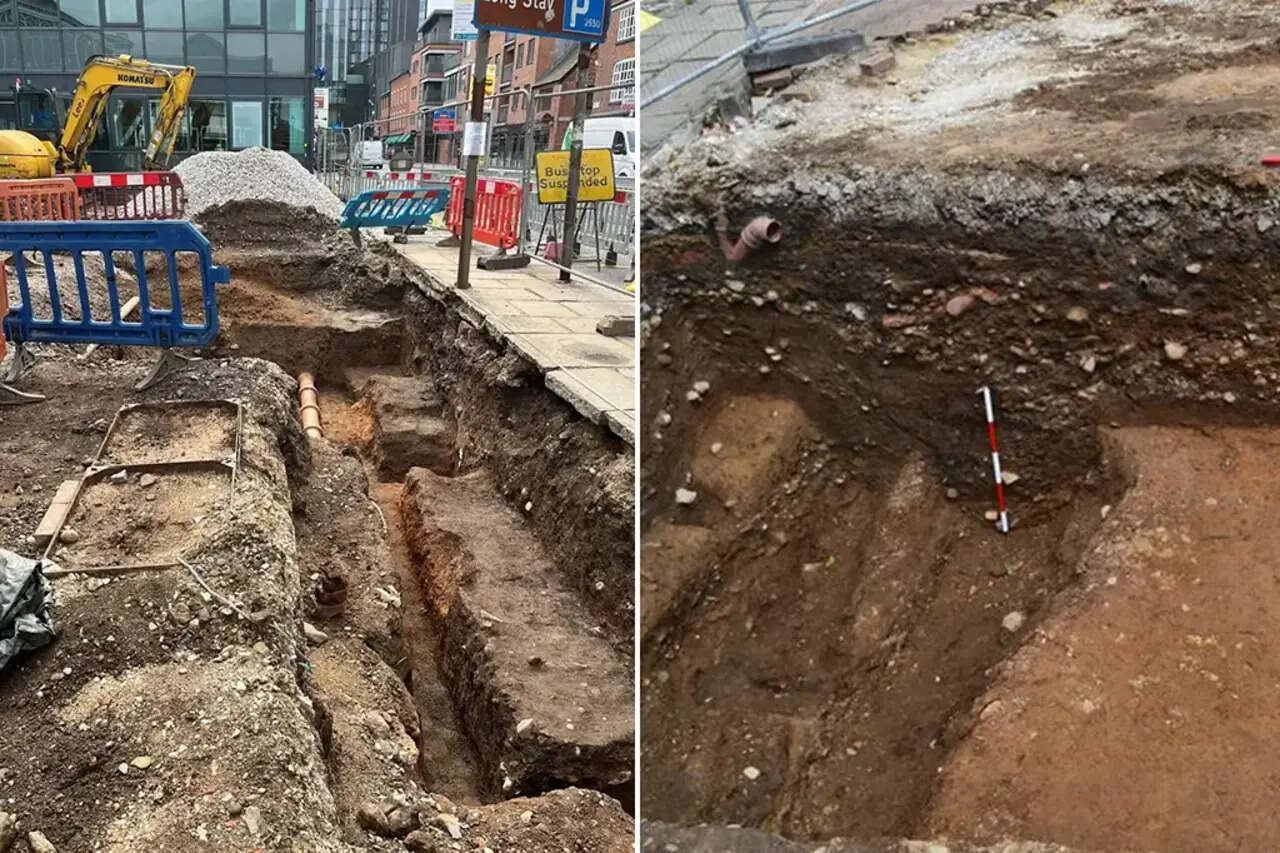
Archaeologists have uncovered a road from the time of the Roman Empire just beneath the center of Manchester, England.
The road was revealed during excavations carried out by Civic, in partnership with OBI Property, on behalf of the developer Allied London.
For researchers, this could be one of the most significant discoveries about the city’s Roman history in recent decades.
-
Brazilian Researcher Develops Protein Supplement from Tilapia Waste, Combining Innovation and Sustainability with Economic Potential

-
Women in São Paulo Unknowingly Tracked by Coin-Sized Tags Hidden in Cars and Belongings, Raising Stalking Concerns
-
Near a $750 million AI data center in Brazil, a resident’s well runs dry, leaving her unable to afford the $25,000 needed for repairs.

-
16-Year-Old from Brazil’s Sertão Wins Young Scientist Award for AI Predicting Rainfall with 94.5% Accuracy to Aid Farmers


The road was located just 40 centimeters from the surface, beneath the busy Liverpool Road, near Castlefield.
Made of compacted gravel, the structure surprised with its excellent state of preservation. In addition to the road, archaeologists found fragments of domestic pottery and decorative glass from both local and imported sources.
According to those responsible for the excavation, the road shows several layers of repair. This suggests that it was used for centuries, possibly from the end of the 1st century B.C. to the beginning of the 4th century A.D.
The evidence supports the hypothesis of the existence of a vicus – a Roman civil settlement – in the area surrounding the road.
Strong Connections to the City’s Roman Past
The road may have been the main northern exit route from the ancient Roman fort of Mamucium, built around 78 A.D. This fort was close to the excavated site.
Other excavations conducted in the 1970s and 1980s had already suggested the presence of Roman structures in the region, but the new discovery brings more concrete evidence.
For archaeologist Graham Mottershead from Civic, this find is the most significant in Castlefield in over 20 years. Ian Miller from the Greater Manchester Archaeology Advisory Service was also impressed by the discovery.
He stated that it is the “best Roman archaeology” seen in the city center in over two decades.
Previous Excavations Connect with the New Find
The current excavation adds to others conducted south of the site in recent decades. Researchers believe the new road may help connect different areas of the ancient Roman settlement in Manchester.
The hope is that the discovery will allow for a new interpretation of previous finds, revealing details about the constructions outside the fort’s walls.
The objects found will undergo analysis and, after that, are expected to be displayed to the public. For Ollie Cook, director of Civic, the historical value of the discovery is immense.
He stated that the collected material will greatly expand knowledge about Roman Manchester and emphasized the importance of cultural heritage in the development of cities.
The Importance of Roman Roads
The discovered road is part of an extensive network built by the Romans in the province of Britannia starting in 43 A.D.
For about 400 years, the Roman Empire constructed approximately 3,200 kilometers of roads in the region. These routes connected forts, ports, and administrative centers.
Roman military engineers were responsible for the constructions. The roads were made with stones and gravel, and had drained edges and elevated platforms known as agger.
This engineering allowed for the use of the routes throughout the year.
Even after the Romans left in 410, many of these roads continued to be used during the Middle Ages.
They were only replaced in the 18th century with the creation of turnpikes, which were public roads with tolls managed by private companies.
Strategic Route
In the case of Manchester, the newly discovered road likely served as an exit to the north. It would have been part of an early phase of Roman expansion into the interior of Britannia.
At that time, the roads aimed to connect military bases in cities like York, Chester, and Lincoln.
The good preservation of the road offers a unique opportunity to study how the roads connected with civilian settlements near military garrisons. And all this, now, in the heart of one of the largest cities in the UK.
With information from Super Interessante.





Um descoberta arqueológica, é sempre importante trazendo mais informações,sobre nosso passado.
Bela e educativa matéria, parabéns .