






 Portuguese
  Spanish


Historical Decision Surprises Industry Experts
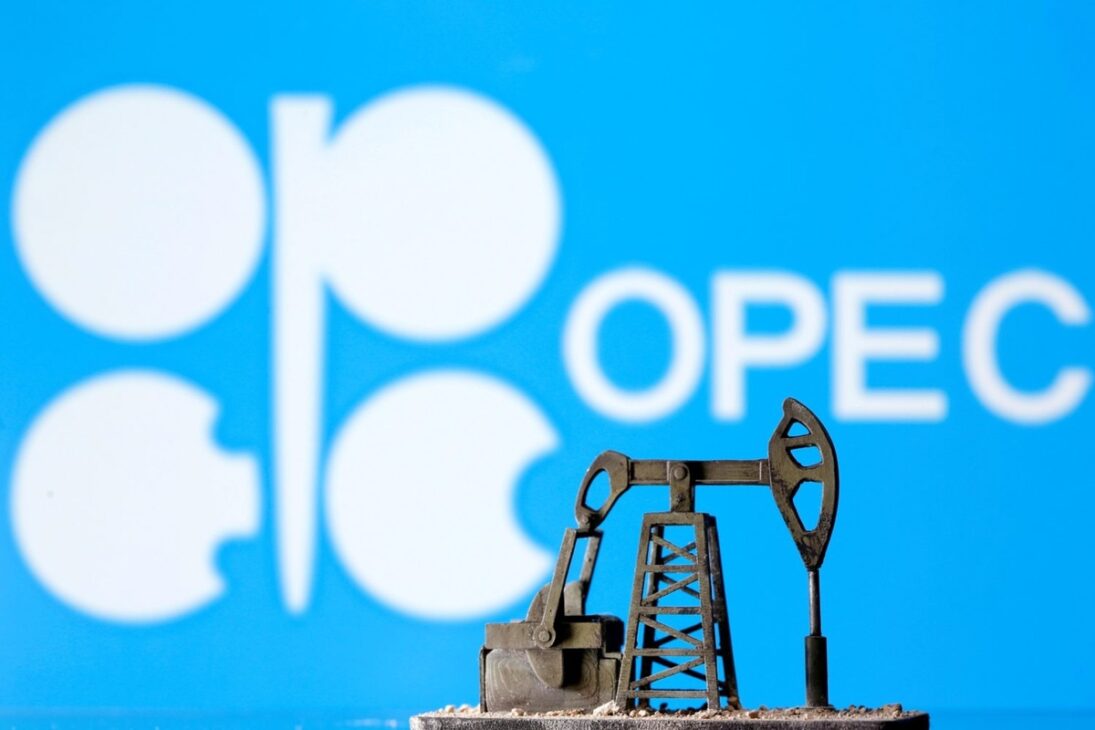
Saudi Arabia, Russia, and six other countries announced on September 7, 2025, that they will increase oil production by 137,000 barrels per day starting in October.
The decision was confirmed by the Organization of the Petroleum Exporting Countries and allies (OPEC+). This measure advanced the previously set schedule by one year and took analysts by surprise.
The majority expectation was for the current quotas to be maintained, but the unexpected change indicated a significant strategic repositioning for the global energy sector.
-
Oil production grows in Rio, but reserve replacement raises a warning sign

-
Petrobras is expected to complete the drilling of the Morpho well in the Foz do Amazonas in August 2026, the first well in the Equatorial Margin, an oil frontier that the ANP estimates at more than 30 billion barrels and could redraw the map of Brazil.

-
Oil returns to the center of concerns with tension between the US and Iran

-
IEA reduces forecast for global oil demand in 2026 after impacts of the Middle East crisis



Recovery Strategy and Immediate Market Impact
Since April 2025, OPEC+ had changed its strategy and initiated a movement to recover market share. The decision strengthened the group’s position.
Historically, the organization used production cuts to sustain prices. Now, however, it began to gradually expand its supply as a way to maintain competitive space.
In recent months, Saudi Arabia, Russia, Iraq, the United Arab Emirates, Kuwait, Kazakhstan, Oman, and Algeria added 2.2 million barrels per day to the market.
The cycle could return up to 1.65 million additional barrels gradually, depending on the evolution of international demand.
- The increase was officially announced in a statement on Sunday, September 7, 2025.
- The expectation is that supply will be adjusted according to market conditions.
- Experts indicate that the message sent is more relevant than the immediate volume.
Pressure on Prices and Risks for Brent Quotation
Although global demand typically falls in the fourth quarter, the decision represents a significant political and economic gesture. The change in strategy may strongly influence the market.
Analysts from Rystad Energy, such as Jorge León, highlighted that OPEC+’s production limits and compensation mechanisms will restrict the immediate impact of the announcement.
Still, the signal may push oil prices below $60. This worries investors and authorities monitoring the global energy balance.
On the Friday before the announcement, Brent closed just above $65 per barrel. The decision increased the expectation of volatility in the coming months.
War in Ukraine and Diplomatic Pressures
The international context weighs heavily on the decision. Russia, pressured by sanctions and the war in Ukraine, faces limitations in expanding its sales.
Washington and European allies have increased diplomatic and trade pressures. In August 2025, the U.S. government announced new tariffs on Indian products linked to Russian oil imports.
Additionally, in September, the White House reported that Donald Trump had reinforced to European leaders the need to cut Russian oil imports.
Hungary and Slovakia were cited as examples of resistance to the embargo. This situation creates barriers for Moscow to fully benefit from OPEC+’s expansion.
Expectations for the Coming Months and Market Reaction
Although the decision anticipates an advance, experts believe that implementation will be gradual. Technical and political factors should limit the immediate impact of the measure.
The market, however, is already reacting to the expectations. The message conveyed by OPEC+ is clear: the group does not intend to relinquish its global share.
This posture, although risky, may lead to a short-term drop in prices. However, it also tends to reposition producing countries at more competitive levels for 2026.
The scenario remains subject to uncertainties related to the war in Ukraine, U.S. pressures on Russian oil, and the evolution of global energy demand.
Thus, the coming months promise to be decisive for measuring the reach of the decision and its reflections on the global energy sector balance.







Be the first to react!