






 Portuguese
  Spanish


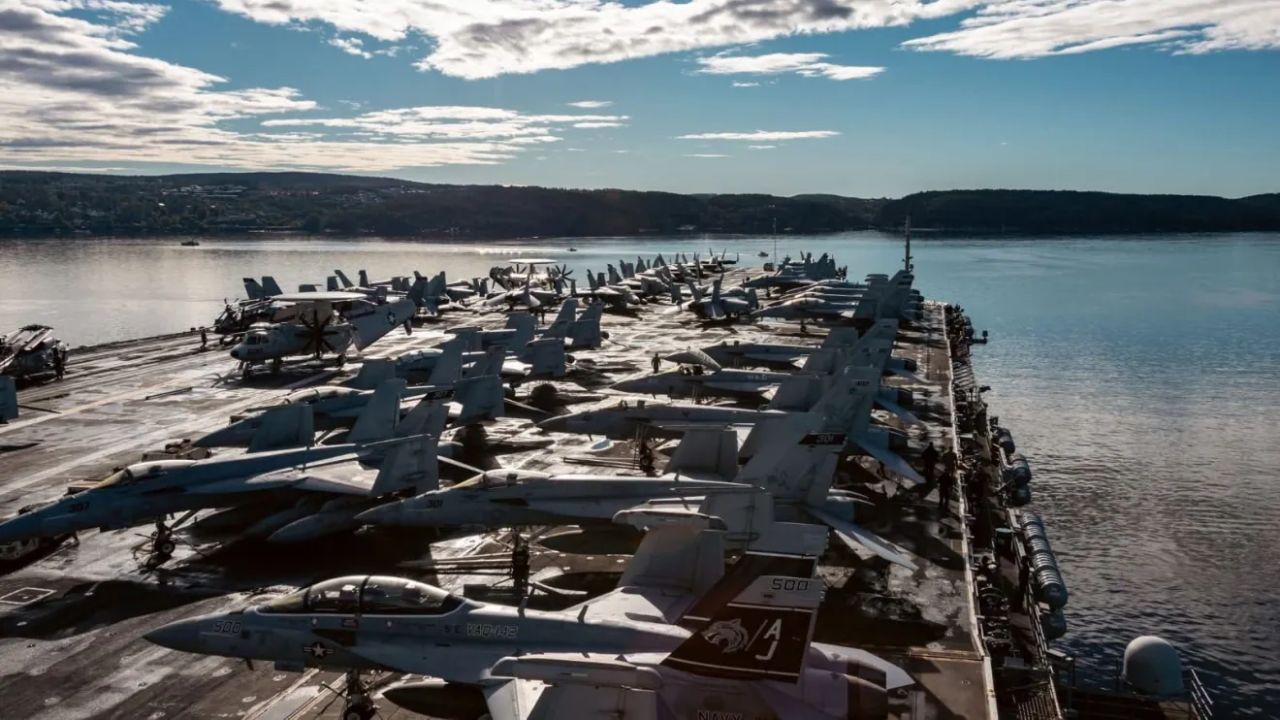

The Largest Aircraft Carrier in the World, USS Gerald R. Ford, Leads Fleet in Operation Against “Narcoterrorism,” According to the Pentagon.
The Pentagon announced on Friday (24) the deployment of the USS Gerald R. Ford strike group, considered the largest aircraft carrier in the world, to the Caribbean region. The information, confirmed by CNN, indicates that the mobilization follows an official directive to combat “narcoterrorism” and dismantle “Transnational Criminal Organizations” (TCOs) operating in the region. While the exact location where the ships will be positioned has not been disclosed, the presence of the nuclear vessel represents a significant increase in U.S. military capability in the Western Hemisphere.
This reinforcement of American forces, however, raised immediate doubts about the real intentions of the Trump administration in the area. According to investigations by CNN, while the White House publicly claims that the military presence is part of a campaign to combat drug trafficking, President Donald Trump has also been actively considering attacks within Venezuela. This movement would be part of a broader strategy aimed at weakening Nicolás Maduro’s government, raising political tension in the region.
The Firepower of the USS Gerald R. Ford
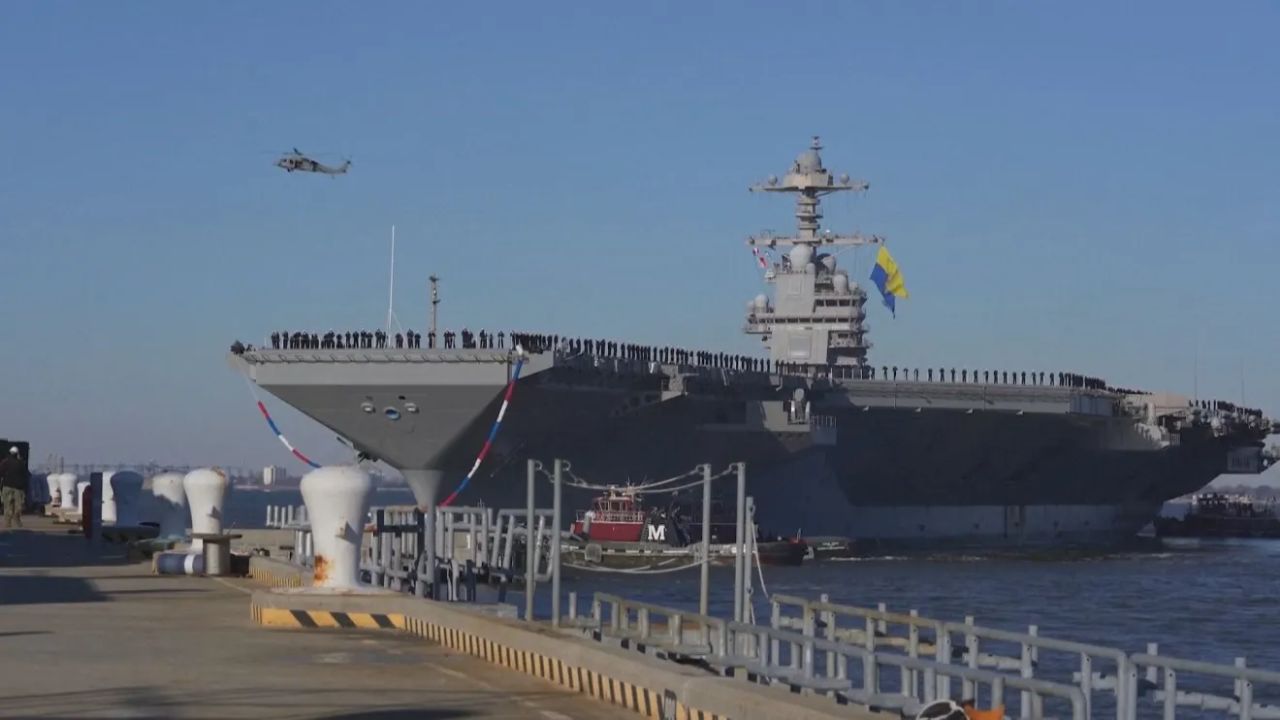
The USS Gerald R. Ford (CVN-78) is not only the largest aircraft carrier in the world by displacement and size; it is a floating fortress with nuclear propulsion and cutting-edge technology. According to U.S. Navy specifications, the vessel is designed to accommodate more than 75 military aircraft. This includes a variety of combat planes, such as the F-18 Super Hornet, as well as electronic warfare and surveillance aircraft, like the E-2 Hawkeye, which serve as the “eyes” of the battle group.
-
Chinese Nuclear Submarine Launches Simulated Warhead Missile in Pacific, Heightening Regional Tensions Amid Naval Drills with Russia Near Qingdao; New Zealand and Papua New Guinea Warn of Persistent Chinese Military Presence

-
Ayatollah Ali Khamenei’s Funeral Draws 15 to 20 Million in Tehran, Calls for Revenge Against Trump After Joint Israel-U.S. Attack

-
U.S. Establishes Permanent Embassy in Jerusalem, Reigniting International Debate Over Israel’s Capital
-
The world has nearly 12,000 nuclear warheads, with the majority held by the United States and Russia; see the figures for China, France, and the United Kingdom.


In addition to its air capability, the aircraft carrier has a robust defensive arsenal, including medium-range surface-to-air missiles, such as the Evolved Sea Sparrow Missile (ESSM), used to neutralize threats like drones and hostile aircraft. The strike group also consists of crucial support ships: the Ticonderoga-class guided missile cruiser Normandy and the Arleigh-Burke-class guided missile destroyers (Thomas Hudner, Ramage, Carney, and Roosevelt). These vessels have surface-to-air, surface-to-surface, and anti-submarine warfare capabilities.
The Official Justification vs. the Venezuelan Context Venezuelan
The formal justification for the operation was detailed by Sean Parnell, chief spokesman for the Pentagon. According to him, the action was taken following the directive to dismantle Transnational Criminal Organizations and combat narcoterrorism. Parnell argues that the presence of the strike group enhances the capacity of U.S. forces to “detect, monitor, and dismantle illicit activities and actors that compromise the security and prosperity of U.S. national territory and our security in the Western Hemisphere.”
However, CNN reported that the anti-drug operation may serve as a pillar for a more aggressive strategy focused on Venezuela. The White House, under Trump’s leadership, has maintained a hardline stance against Nicolás Maduro. The presence of the largest aircraft carrier in the world in the region is interpreted by analysts as a maximum pressure tool, with the possibility of military attacks within Venezuela being actively considered by the administration, according to reports obtained by the network.
Logistical Challenges and Response Time
Despite the announcement of its deployment to the Caribbean, the immediate mobilization of the fleet to Caribbean waters faces a considerable logistical challenge. As reported, the strike group was recently operating in European waters. The USS Gerald R. Ford, specifically, docked near the port of Split, Croatia, on October 21.
The distance between the Mediterranean Sea, where the fleet was, and the Caribbean exceeds 8,000 kilometers. This means that, even sailing at operational speed, the strike group will take days to cross the Atlantic, reach the designated area, and be fully prepared to launch any combat or intensive monitoring operations. Transit time is a crucial factor in assessing the urgency of the mission declared by the Pentagon.
The movement of the largest aircraft carrier in the world to the Caribbean is a clear show of U.S. strength. But what is your opinion on the actual motivation? Do you believe the main focus is truly the fight against drug trafficking, as the Pentagon claims, or do you see this action as a direct political maneuver against Venezuela? Leave your analysis in the comments.







