Portuguese
  Spanish


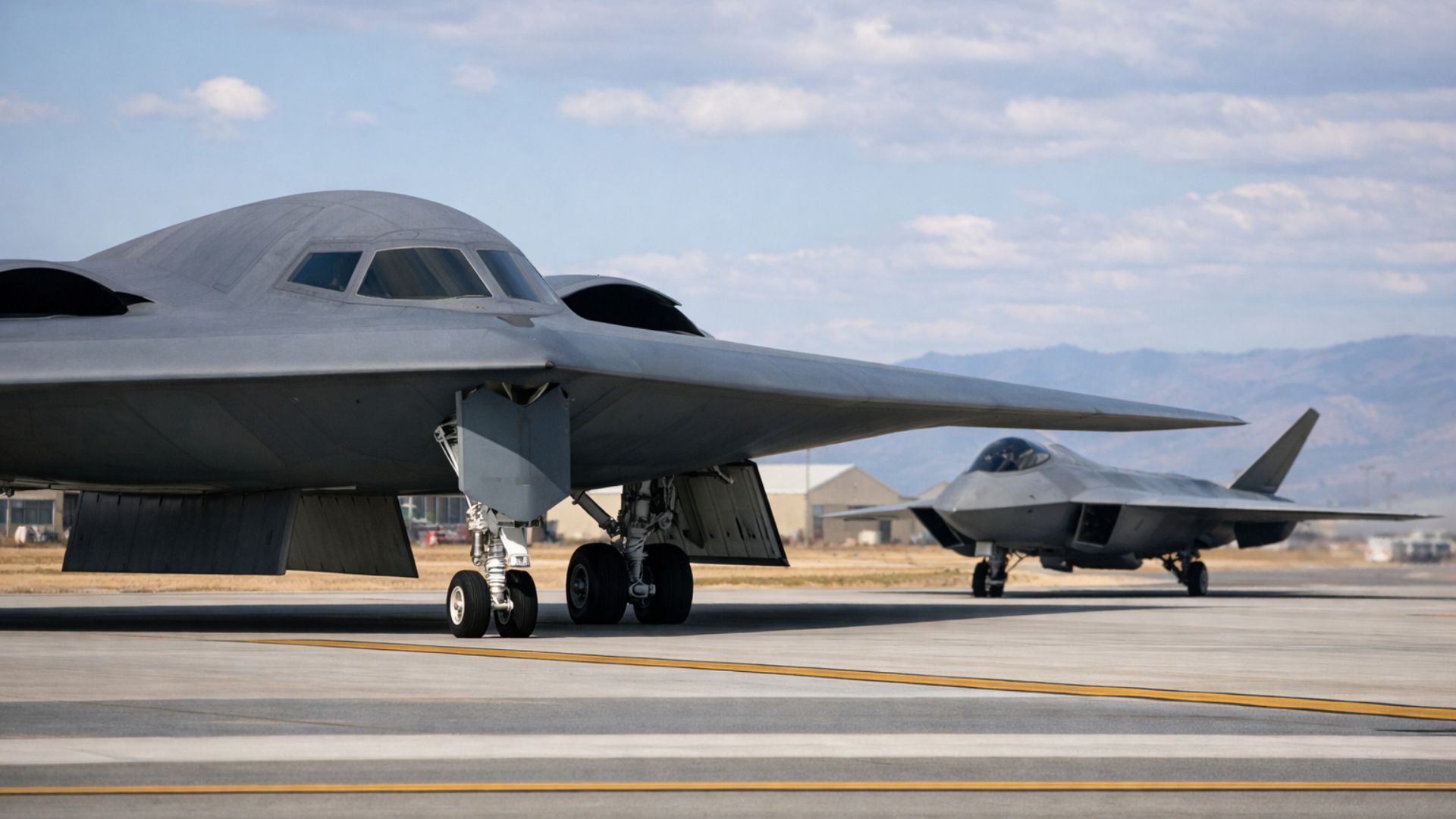

Strategic Study Forecasts Need To Expand United States Aircraft Fleet To Around 500 Sixth-Generation Aircraft, Among Fighters And Stealth Bombers, In Order To Sustain High-Intensity Operations Against China In The Indo-Pacific And Maintain Penetration Capacity In Highly Defended Environments.
The United States Air Force may need to raise its future combat and air superiority fleet to around 500 sixth-generation aircraft to sustain operations in the Indo-Pacific during a high-intensity conflict against China, according to a report by the Mitchell Institute for Aerospace Studies.
The document proposes a combination of 300 F-47 fighters, linked to the Next Generation Air Dominance (NGAD) program, and 200 B-21 Raider stealth bombers, to enhance penetrating strike capability and keep strategic targets at continuous risk, even in heavily protected areas.
Current USAF Plans And Scale Difference
The recommendation contrasts with public signals already attributed to the Air Force regarding the initial purchase size, which would be at least 185 F-47 and around 100 B-21, totaling 285 units, a level considered limited for prolonged warfare.
-
Engineers Develop Fridge-Sized Machine to Produce 95-Octane Synthetic Fuel from Air and Water, Aiming to Sustain Combustion Engines Without Oil

-
Two-Armed Robot Uses AI to Reassemble Destroyed Pompeii Frescoes, Solving an “Impossible” Puzzle
-
New Law in Brazil Requires Breaks for Type 1 Diabetes Management at Work, School, and Public Exams

-
Scientists Confirm “Greening” of Antarctica: Ice on the World’s Coldest Continent Turns Green as Mosses Multiply Over Tenfold in Four Decades


With fewer stealth and long-range aircraft available, the study estimates that the United States would tend to adopt a more conservative operational posture, both to preserve scarce resources and to manage maintenance, training, and unavailability issues, which would increase the risk of losing momentum.
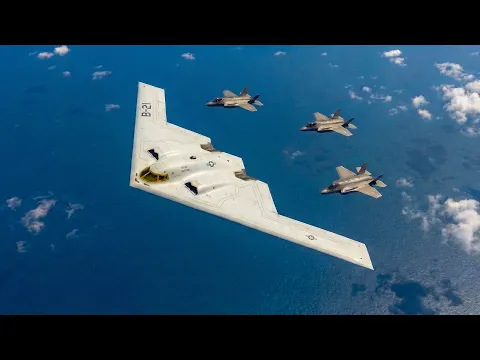

The analysis associates this problem with a dynamic of small fleets, where few platforms, no matter how good, cannot generate the necessary sortie volume to sustain constant pressure, nor absorb significant attrition without rapidly reducing total combat capability.
Chinese Challenge And A2/AD Environment In The Indo-Pacific
The authors describe that the combination of the Chinese area denial and anti-access (A2/AD) network and the geography of the Indo-Pacific favors the creation of operational sanctuaries, where forces can protect themselves under layers of air defense and long-range strikes.
In this scenario, the proposal is that stealth platforms capable of entering contested airspace, operating with extended range, and launching large internal munitions loads play a central role in reducing the advantage of those operating under cover of advanced defenses and long logistical lines.
The report also argues that overly relying on stand-off attacks, made from outside the highest threat areas, may reduce the number of weapons employed per combat pulse and limit the ability to rapidly dismantle integrated defense systems, even if it reduces losses in the short term.
Role Of The F-47 And B-21 In The New Generation Of Combat

The F-47 is presented as the manned sixth-generation fighter that is to succeed the F-22 in the air superiority mission, emphasizing greater combat radius, stealth, and the ability to operate in network with other assets, including unmanned aircraft.
The B-21 Raider is treated as the core of the future long-range stealth bombing force, with features designed to penetrate integrated defenses for decades, combining low observability and data fusion systems for mission planning and reducing exposure to threats.
In advocating for the expansion of the B-21, the authors criticize the logic of purchasing according to the available budget limit, rather than operational necessity, as it would delay modernization and make it difficult to restore deep strike capability.
The text states that the survival of the B-21 would increase when operating alongside F-47 and collaborative aircraft, forcing the adversary to deal with more complex formations and disperse defensive assets against varied targets, such as decoys and unmanned platforms.
Collaborative Drones And Current Fighters As Interim Measure
The study recommends accelerating acquisitions of fifth-generation and modernized models, citing the F-35 and F-15EX as interim measures to preserve combat capability while the sixth generation does not reach scale, as well as reinforcing investments in collaborative unmanned aircraft.
In the assessment presented, these unmanned aircraft should increase, not replace, piloted planes, because their effectiveness depends on the ensemble and mode of employment, rather than just adding new vectors to the inventory, especially in high-threat operations.
The report also mentions that the Air Force itself faces difficulties in maintaining the inventory size while retiring old aircraft, and suggests that cuts and delayed modernization have compressed combat capacity, worsening the mismatch against the growing aerial mass in the region.
Budgetary Debate And Strategic Priorities
Bringing the fleet to something close to 500 advanced aircraft tends to intensify the debate in Washington, as it involves high costs, industrial limits, and choices between programs, while part of the strategic discussion pressures for more unmanned systems and solutions that reduce dependence on exposed bases.
Still, the authors argue that cutting-edge technology without sufficient mass does not deliver sustained presence, and point out that the country would need to secure resources to accelerate the maturation and production of the B-21 and F-47, as well as increase annual fighter purchases.
If the study’s thesis is correct and the capacity equation depends on both scale and quality, what would be the acceptable balance point between investing in manned stealth platforms, expanding collaborative drones, and maintaining current fleets without losing readiness in the Indo-Pacific?