





 Portuguese
  English
  Spanish
  3 min of reading
  0 comments


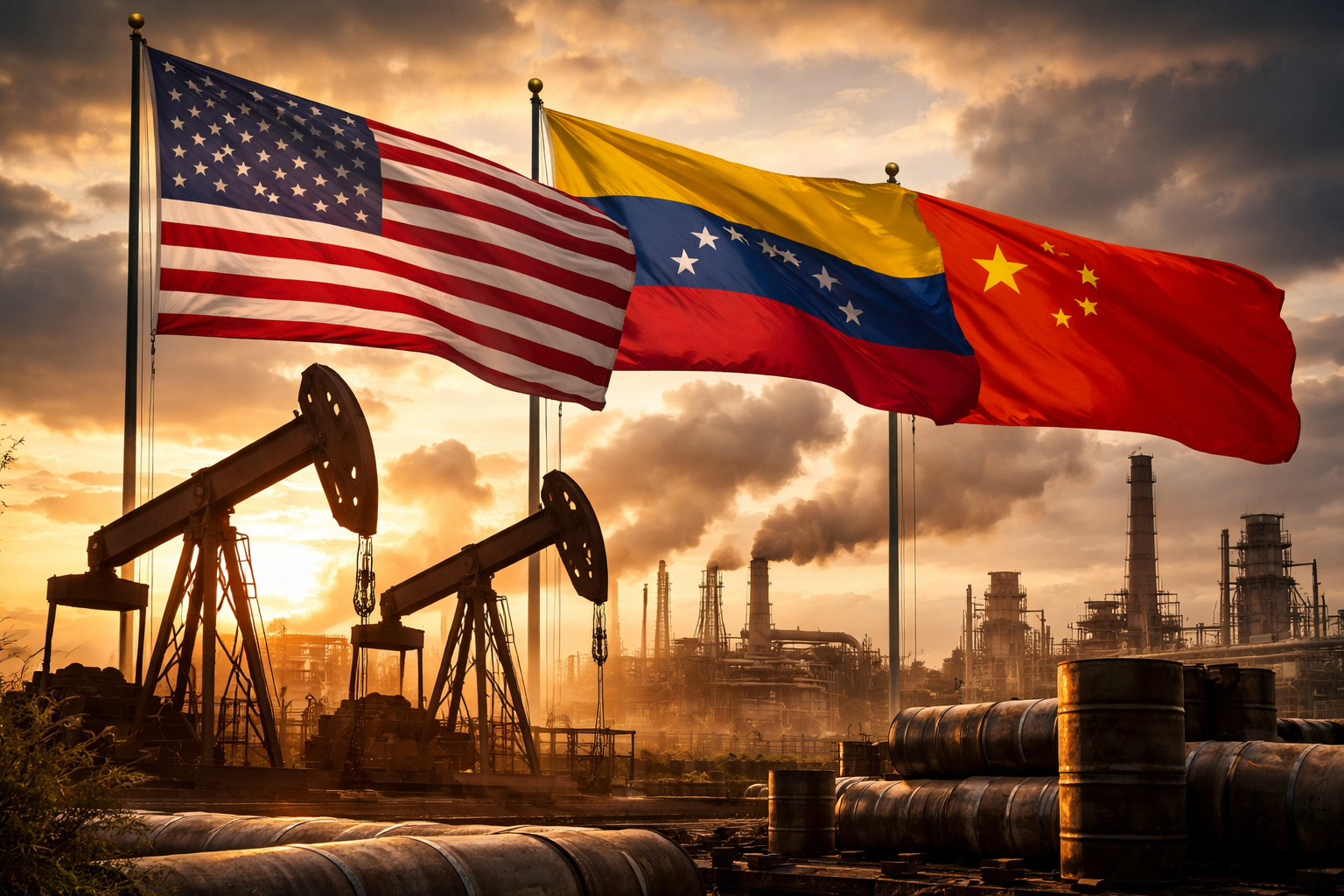
Understand How Access to Venezuelan Oil and Production in Guyana Redraw, in the Short and Medium Term, the Strategy of the United States, While China and Europe Evaluate Cautious Responses.
Since 2024, with the resumption of U.S. access to Venezuelan oil, the regional energy landscape has been reassessed. Initially, however, there is no expectation of immediate advancement in U.S. intentions on the continent. This is because, in the medium term, the supply is already sufficient to meet U.S. strategic interests.
Furthermore, the production already secured in Guyana, led by ExxonMobil, complements this balance. Thus, the combination of Venezuela and Guyana reduces the need for new direct offensives in the oil and gas sector in the Americas. Consequently, the focus tends to shift to other economic and commercial fronts.
In this context, although oil remains central, pressure may grow in parallel strategic sectors. Especially, rare minerals and critical supply chains come into focus, areas where China has expanded its presence over the past decade. Therefore, the geopolitical dispute may intensify outside the traditional energy axis.
-
Kia emerges with the “ugliest pickup truck in the world”: even with a 2.2 turbo diesel engine with 210 hp, 4×4 traction, a capacity of 3.5 tons, and a goal of 20,000 annual sales, the Tasman sells only 320 units and becomes a problem for the brand in Australia.
-
Kia emerges with the “ugliest pickup truck in the world”: even with a 2.2 turbo diesel engine with 210 hp, 4×4 traction, a capacity of 3.5 tons, and a goal of 20,000 annual sales, the Tasman sells only 320 units and becomes a problem for the brand in Australia.
-
Country ‘tears’ the sea with 340-meter underwater tunnels under the Atlantic to capture saltwater and build a megaproject capable of producing up to 100 million liters of drinking water per day in West Africa.
-
Country ‘tears’ the sea with 340-meter underwater tunnels under the Atlantic to capture saltwater and build a megaproject capable of producing up to 100 million liters of drinking water per day in West Africa.
International Repercussions and Strategic Reactions
Meanwhile, Europe observes the movement with caution. In light of tensions with the United States, exacerbated since 2022 by the war in Ukraine, the European reaction tends to be restrained. Although there are public condemnations, the likelihood of incisive practical actions remains low.
At the same time, China emerges as the actor with the most maneuverability. On one hand, Beijing can formally condemn the actions, increasing diplomatic and international political pressure. On the other hand, there is the possibility of a more assertive stance, taking advantage of an environment of heightened global tensions.
In this case, Taiwan appears as a sensitive point. Historically, the issue holds a central place in Chinese foreign policy. Thus, a more unstable international environment could be interpreted as a strategic window, although no concrete actions have been announced so far.
Sufficient Energy Supply and Short-Term Limits
Therefore, in the short and medium term, the available oil supply reduces incentives for aggressive movements in the American continent. In effect, access to Venezuelan oil, combined with Guianese production, meets the immediate energy needs of the United States.
Moreover, energy sector specialists, consulted for market analyses in 2024 and 2025, highlight that the current repositioning is more political than operational. Thus, deep structural changes tend to occur gradually, not abruptly.
In summary, the scenario points to a strategic reorganization, in which oil and gas remain relevant, but the competition expands to critical minerals and commercial influence. Meanwhile, Europe and China observe, calculate risks, and adjust their narratives, without immediate large-scale responses.
In light of this delicate balance, the question that remains is: will global competition remain contained or open the door for bolder moves in the coming years?

Credit: Rodrigo Leite, Professor of Finance and Managerial Control at Coppead/UFRJ






Be the first to react!