






 Portuguese
  Spanish
  6 min of reading
  1 comment


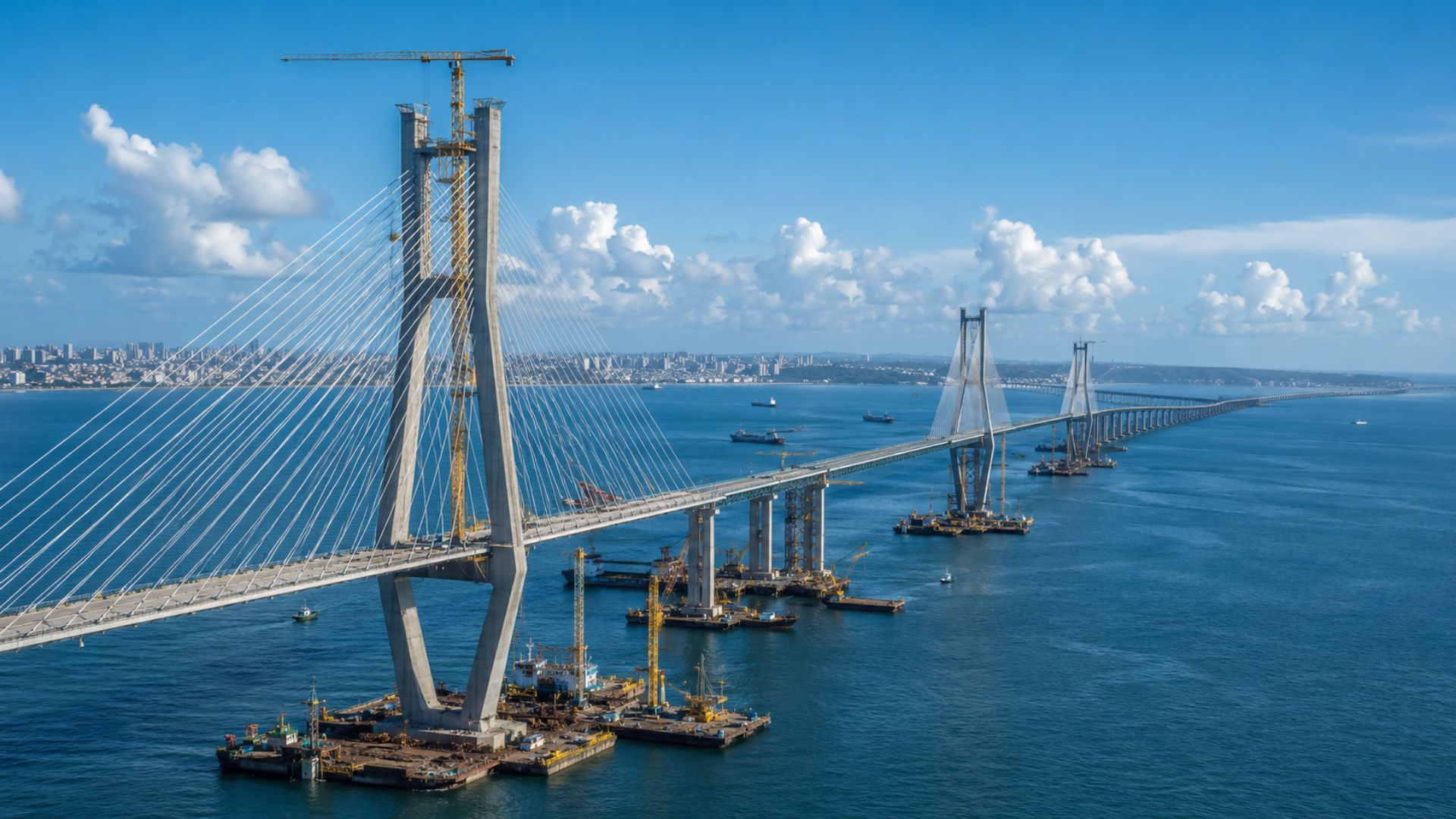


The crossing that today takes about an hour by ferry, plus queues, should drop to something between 10 and 15 minutes. Promised for more than six decades, the construction begins with the foundations in June, with a central span as tall as a 28-story building to allow ocean liners and oil tankers to pass underneath.
With unprecedented technology brought from China, Bahia will build a 12.4-kilometer bridge over the Baía de Todos-os-Santos, which will be the largest over the sea in Latin America. The project, a partnership with Chinese engineering giants, will connect Salvador to Ilha de Itaparica and promises to shorten trips by up to 250 kilometers, after decades of waiting for a connection that has been promised for more than 60 years.
It’s important to clarify right from the start: the Salvador-Itaparica Bridge will be the largest crossing over a body of water, that is, over the sea, in Latin America, and not the largest bridge on the continent in total length. That title, in absolute length, still belongs to the Rio-Niterói Bridge, which is 13.29 kilometers in total, although much of it is over land. The one in Bahia, on the other hand, will have practically all of its structure over water.
A project promised for more than 60 years
The connection between Salvador and Itaparica is an old dream of the people of Bahia, discussed for more than six decades without coming to fruition. Currently, those who need to make this journey depend on the ferry boat system, which involves about an hour of navigation, plus queues that can vary from one to three hours on busy days, making the journey slow and tiring.
-
Instead of plastering the wall, Argentine architects left ordinary bricks exposed, without traditional mortar, without finishes, without paint, and created a perforated pavilion that looks like an art installation.

-
Prefabricated wooden house surprises in Spain with 132 m², two floors, up to four bedrooms, and a price starting from 45,751 euros, while the version with insulation for living can reach 80,059 euros without assembly, installation, and architect included.

-
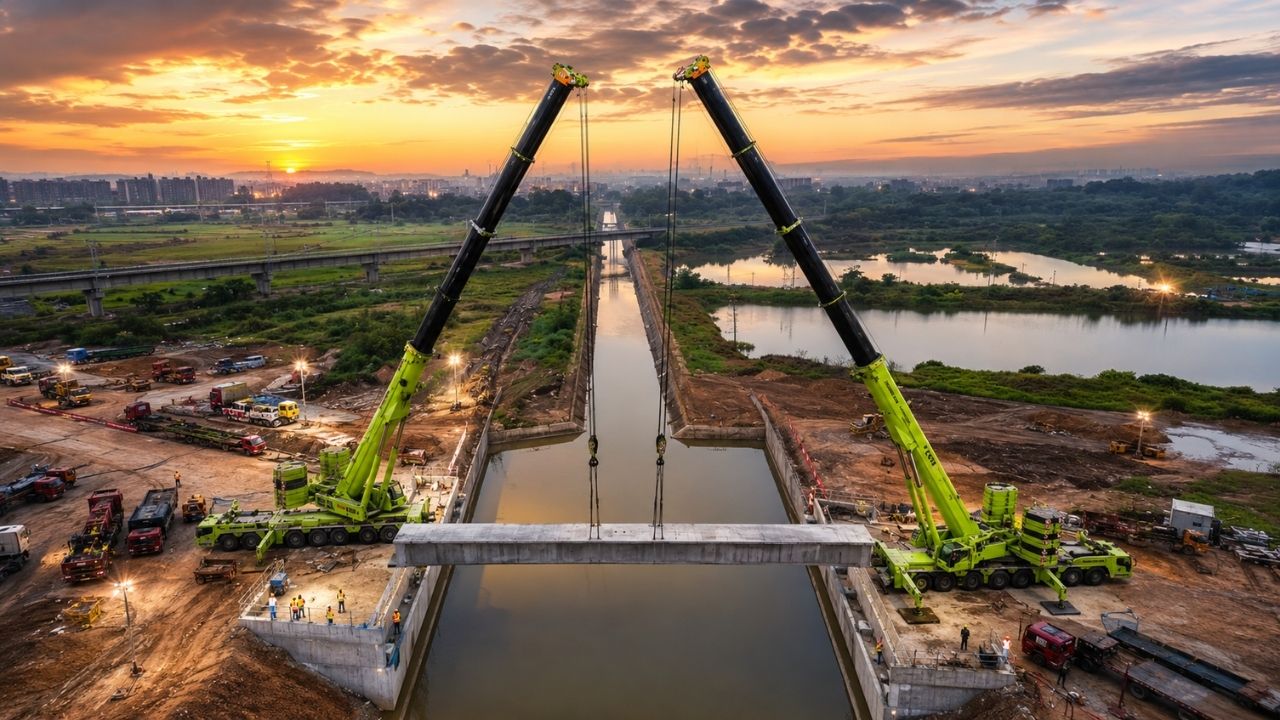
China builds a bridge over a river in just 24 hours using two 650-ton Zoomlion cranes, 9 beams of 125 tons, and a convoy of over 100 km with trailers, counterweights, and heavy trucks in synchronized operation during the early hours.
-
Man builds house with concrete made from recycled paper and attracts attention in Portugal; named Porta do Caracol, the home features solar panels, a vertical garden, and a pool with natural filters.



With the new bridge, the expectation is that this same crossing will be made in just 10 to 15 minutes by car. In addition to bringing the capital closer to the island, the structure will create a direct corridor to the Recôncavo Baiano and the south of the state, connecting important federal highways and significantly reducing distances, which should transform the region’s logistics and tourism.
The Chinese technology behind the bridge


The major novelty of the project is the unprecedented technology in Latin America brought directly from China. A ship loaded with 44 containers and more than 800 tons of equipment departed from the Asian country to Bahia, carrying the necessary material to set up a temporary platform at the bottom of the bay, a resource that drastically reduces the need for support vessels during construction.
The project is managed by the Ponte Salvador-Itaparica concessionaire, formed by the Chinese state-owned companies China Communications Construction Company, CCCC, and China Railway Construction Corporation, CRCC, which won the international auction for the venture. CCCC, in particular, is among the largest construction companies in the world and participated in some of the most impressive bridges of today, providing technical support to the Bahian project.
The numbers of the megaproject
The data on the bridge is impressive in scale. It will span 12.4 kilometers over the water, with a cable-stayed section of about 900 meters and a central span approximately 85 meters high, equivalent to a 28-story building, designed to allow the passage of large ships, such as cruise ships and oil tankers, under the structure. The construction is expected to consume hundreds of thousands of cubic meters of concrete.
Regarding the investment, there is variation among sources, but the amount approved by the Court of Auditors of the State of Bahia in 2025 was around R$ 10.4 billion to R$ 11 billion, although some portals cite higher figures. The project is made possible by a public-private partnership, with financing participation involving the Union, BNDES, and the BRICS bank, and the concession is expected to last about 35 years, including the construction period.
When the bridge will be ready

It is important to understand at what stage the project really is. According to the schedule of the Court of Auditors of the State, the foundations of the bridge officially begin in June 2026, marking the effective start of construction after years of studies, soil surveys, and mobilization of sites. The most visible phase, with the structure advancing over the sea, is expected to take shape in the following years.
The official forecast is about five years of construction, with delivery estimated for June 2031. The assembly will be carried out on different fronts, starting from Itaparica, the center of the bay, and Salvador, to accelerate the schedule. In addition to the bridge itself, the project includes new roads and tunnels in Salvador, a 22-kilometer expressway on the island, and the duplication of road sections, forming a complete road system.
Impact for millions of people
The social reach of the project is large. According to the concessionaire, the bridge is expected to directly benefit about 10 million people in 250 municipalities, expanding access to regions that currently depend on maritime transport and reducing historical mobility inequalities in the state. During construction, about 7,000 jobs are expected to be created, with priority given to local labor.
Beyond the numbers, the project symbolizes the deepening of relations between Brazil and China in strategic infrastructure projects. The Asian country has been involved in various fronts in Brazil, and the partnership in the largest bridge over the sea in Latin America reinforces this presence, while also promising to boost the economy of Bahia and open new opportunities for regional development.
China in other Brazilian projects
The bridge in Bahia is not the only front where China has been collaborating with Brazilian infrastructure. Recently, the Transnordestina railway project received about 33.9 thousand tons of rails directly from the Asian country, reinforcing one of the largest logistics projects in the Northeast, with advanced works in Ceará and under implementation in Piauí.
The Transnordestina is considered strategic for the flow of agricultural and mineral production in the region, with a direct impact on economic development and connection with the main export corridors. Along with the Salvador-Itaparica Bridge, it shows how Chinese technology and investments are intertwining with major projects in the country, especially in the Northeast, in projects aimed at mobility and logistics.
The Salvador-Itaparica Bridge represents a milestone for Brazilian engineering and for Bahia, promising to transform the lives of millions of people and shorten distances that have depended on ferry boat queues for decades. Built with unprecedented technology brought from China and classified as the largest crossing over the sea in Latin America, the project symbolizes both the advancement of national infrastructure and the growing weight of the partnership between the two countries. It remains to be seen if the deadlines will be met until the expected delivery in 2031.
And you, what do you think of this megabridge that will connect Salvador to Itaparica with technology brought from China? Do you believe the project will be completed on time and transform Bahia as promised? Leave your comment, tell us if you’ve faced the ferry boat queues in the region, and share the article with those interested in major projects, engineering, and infrastructure in Brazil.







A milestone worth marking. I take the ferry across to Salvador most weeks, so I see first hand how hard that daily crossing is for the people who depend on it. An hour on the water plus the queues. Ten or fifteen minutes by bridge is going to change lives here, not just journeys.
What strikes me is how few people grasp the sheer amount of planning behind a project like this. You can’t just announce a bridge and have it standing two years later. Six decades of promises, years of studies, soil surveys, international tendering, financing through the Union, BNDES and the BRICS bank. And because it’s political, half the room will only ever see the negative in it. But the teams working to make this happen are doing something genuinely historic for Bahia.
I’ve been involved on Itaparica for over ten years now, and it’s quite something to watch it go from a distant dream to foundations actually beginning in June. The island won’t be the same place five to ten years from now.