






 Portuguese
  Spanish


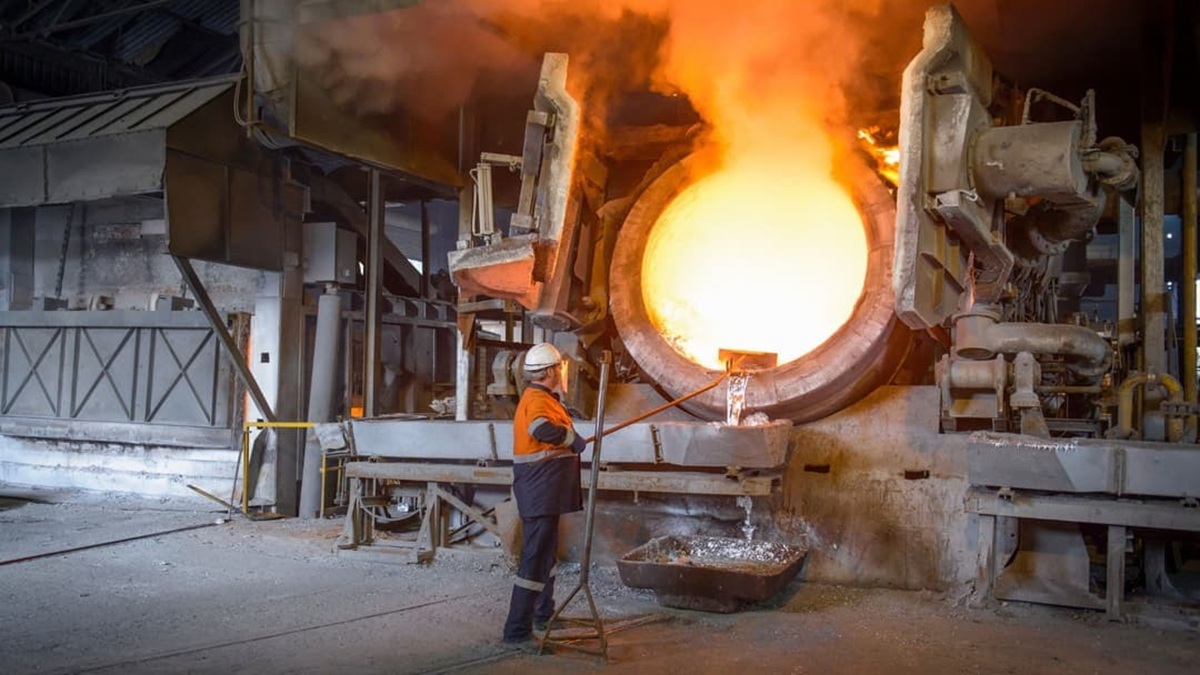


With a Capacity of 500,000 Tons Annually, Including 20,000 Tons of High-Purity Aluminum for Defense, Project in Inola, Oklahoma, Receives US$ 500 Million from the Office of Clean Energy Demonstrations and Seeks to Reduce Imports That Totaled 5.46 Million Metric Tons in 2024.
The United States has announced the construction of the largest aluminum smelter since the 1980s, with a capacity of 500,000 tons per year, in Inola, Oklahoma, as part of a strategy to reduce imports that totaled 5.46 million metric tons in 2024.
Largest Factory Marks Recovery After Historic Decline in Production
The new facility will be built by Century Aluminum, a U.S.-based producer, according to a press release. The project represents the first primary aluminum smelter in the country since 1980 and is part of the federal policy to revive industrial production.
At its peak, 33 American smelters produced over 5 million tons of aluminum per year. Currently, only four facilities remain, producing 683,500 metric tons, increasing external dependence.
-
Nigeria Dumps 120 Million Tons of Sand into Atlantic to Build Massive City with 8.4 km Sea Wall for Protection Against Ocean Waves and Erosion

-
German Engineer Developed Diesel Engine Running on Vegetable Oil Decades Before Electric Cars Became Popular; Can This Forgotten Idea Work in 2026?

-
James Webb Telescope Uncovers Unexpected Clues on Mysterious Moon, Potentially Redefining Planetary Origins

-
$1.5 Billion Sleipnir Vessel Transforms Ocean into Floating Construction Site with 12 Hybrid Engines and Capacity to Lift 20,000 Tons


U.S. aluminum imports reached 5.46 million metric tons in 2024. This situation reinforced the government’s decision to strengthen the domestic supply chain of critical minerals.
Industrial Process and Expected Capacity
The largest factory will have a capacity to produce 500,000 tons of aluminum per year. Of this total, 20,000 tons will be allocated to the production of high-purity aluminum for defense applications, according to the announcement.
A smelter extracts pure aluminum from oxide known as alumina. The process is electrolytic and occurs at temperatures of up to 980 degrees Celsius, equivalent to 1796 degrees Fahrenheit.
The alumina is dissolved in a heated bath. When the electric current flows through the system, pure aluminum deposits at the bottom of the container. The material is then siphoned off, purified, and transformed into alloys or other products.
Century Aluminum already operates four smelters, three in the United States and one in Iceland. The new facility will expand domestic production capacity and consolidate the company’s position in the industry.
Investment of US$ 500 Million and International Partnership
Last year, the Office of Clean Energy Demonstrations awarded US$ 500 million to Century Aluminum to boost the construction of the largest primary factory since 1980. The funding integrates federal initiatives aimed at energy transition and industrial security.
In addition to public funding, Century Aluminum has partnered with Emirates Global Aluminum, which will finance part of the billion-dollar investment needed for the project in Oklahoma.
According to U.S. Secretary of Energy Chris Wright, the project reflects President Trump’s commitment to revitalize the industrial base and reduce dependence on foreign suppliers.
Wright stated that the joint venture demonstrates how economic policies encourage global companies to partner with American firms, build in the United States, and create well-paying jobs.
Impact on Industrial Policy and Supply Chain
The construction of the largest factory in Inola is presented as a direct result of federal policy to bring back industrial production to American soil and safeguard the supply of critical minerals.
Aluminum is valued for its lightness, corrosion resistance, mechanical strength, thermal conductivity, and malleability. These properties allow for applications in the aerospace industry, consumer goods, energy distribution, and packaging.
Despite high demand, the U.S. has few bauxite reserves, the ore from which aluminum is extracted. Therefore, they have historically relied on imports to supply the domestic market.
With the new strategy, the country plans to process aluminum domestically rather than increase external purchases. The plan also includes developing recycling methods to reinforce the supply chain.
The largest factory in Oklahoma symbolizes this structural change in industrial policy. The project comes at a time of high external dependence and seeks to reverse a decline that began after the 1980s.
The decrease from 33 smelters to only four active units marked a significant transformation in the sector. The new expected capacity of 500,000 tons per year partially alters this scenario.
By including 20,000 tons of high-purity aluminum for defense annually, the project also meets strategic demands. The measure integrates efforts to strengthen national productive autonomy.
The investment of US$ 500 million, combined with international financing, reinforces the strategic nature of the initiative. The largest factory represents a milestone in American industrial policy directed at primary aluminum production.
With the future operation in Inola, the country expands its internal capacity and signals a change in how it deals with critical minerals. The stated goal is to reduce external dependence and stimulate domestic manufacturing.
The project consolidates the role of Century Aluminum, which already operates four smelters. The new unit is expected to expand national production in a context of high demand.
The construction of the largest primary factory since 1980 occurs amid a declared policy of industrial revitalization. The government claims that the initiative will strengthen jobs and supply security.
By resuming investments in smelters, the United States seeks to respond to a scenario of high imports and reduced domestic capacity. The new plant marks an attempt to rebalance this historical picture.


