Portuguese
  Spanish


At the top of Mount Lifos, over 2,500 meters in central Anatolia, the fortress gathers about a kilometer of walls, towers, and cisterns. The site has not yet been fully excavated, and there is no date or certainty about who built it, which keeps the mystery standing.
Every year, when the snow melts in the Anatolian mountains in Turkey, a monumental fortress reappears atop Mount Lifos. Located over 2,500 meters above sea level, the structure spends months hidden under the ice and reappears surrounded by walls and unanswered questions. Archaeologists and historians try to understand who built it, for what purpose, and why they erected everything in one of the most inaccessible points of the region.
According to Revista Oeste, the site has not yet undergone complete excavations, but it already reveals an impressive scale. Aerial images and preliminary surveys indicate walls, defensive towers, cisterns, and internal buildings spread over an area exceeding 74,000 square meters. The position, near Mount Erciyes, is strategic, although access remains extremely difficult to this day.
The extreme location atop Anatolia
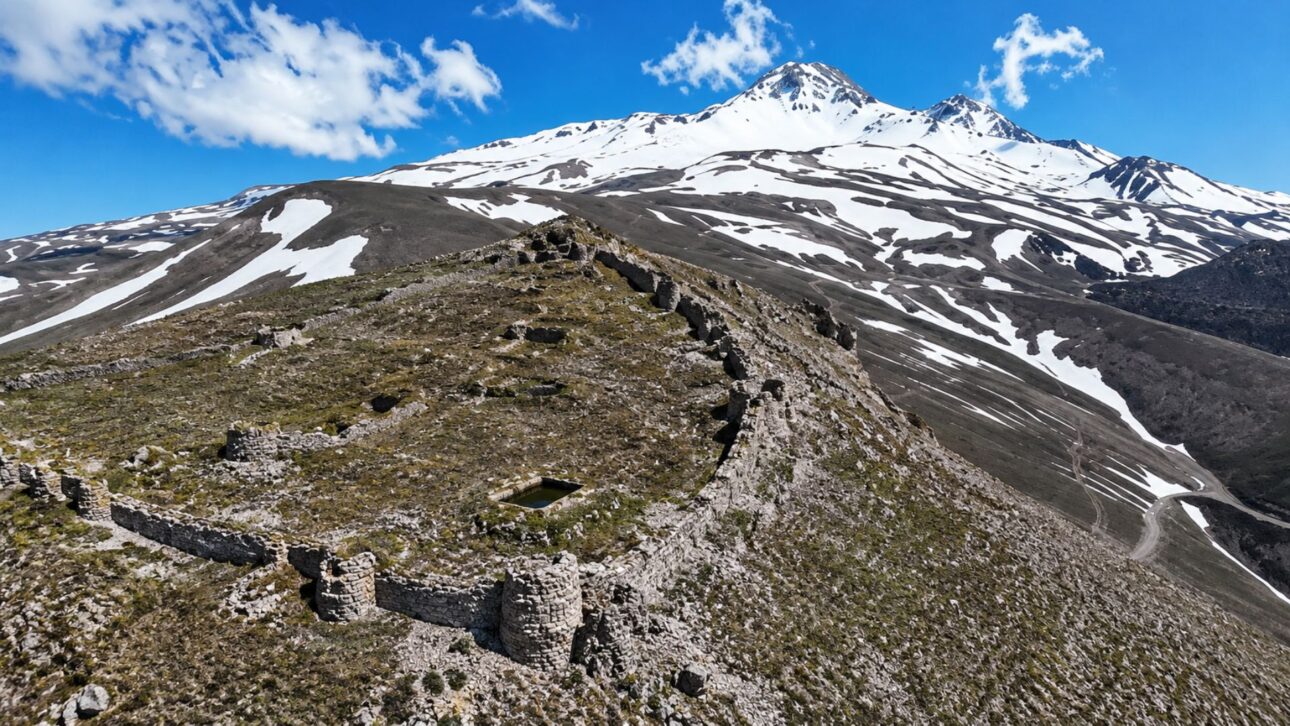
According to Revista Oeste, the complex occupies a strategic position near Mount Erciyes, an ancient volcano that had great cultural and religious significance for the peoples of Cappadocia.
-
Off-Duty Firefighter Rescues Three Children Trapped Under Overturned Boat in Brazilian Lake

-
Workers near the Vatican uncover lead pipe revealing Emperor Caligula’s name and site of his opulent garden from nearly 2,000 years ago

-
Workers renovating a playground in northern England uncover 176 World War II bombs buried underground; training artifacts still contained explosives.

-
Brazilian Architect Transforms Waste into Sustainable Homes with Solar Power and Rainwater Systems for 40 Years



The altitude, above 2,500 meters, is striking in itself.
Even more remarkable is the difficulty of getting there.
According to the publication, even today reaching the site requires facing mountainous terrain and weather conditions that can be severe for much of the year.
Not surprisingly, the structure spends months covered by snow and only reappears when the ice melts, in a cycle that repeats every season.
What the preliminary surveys revealed
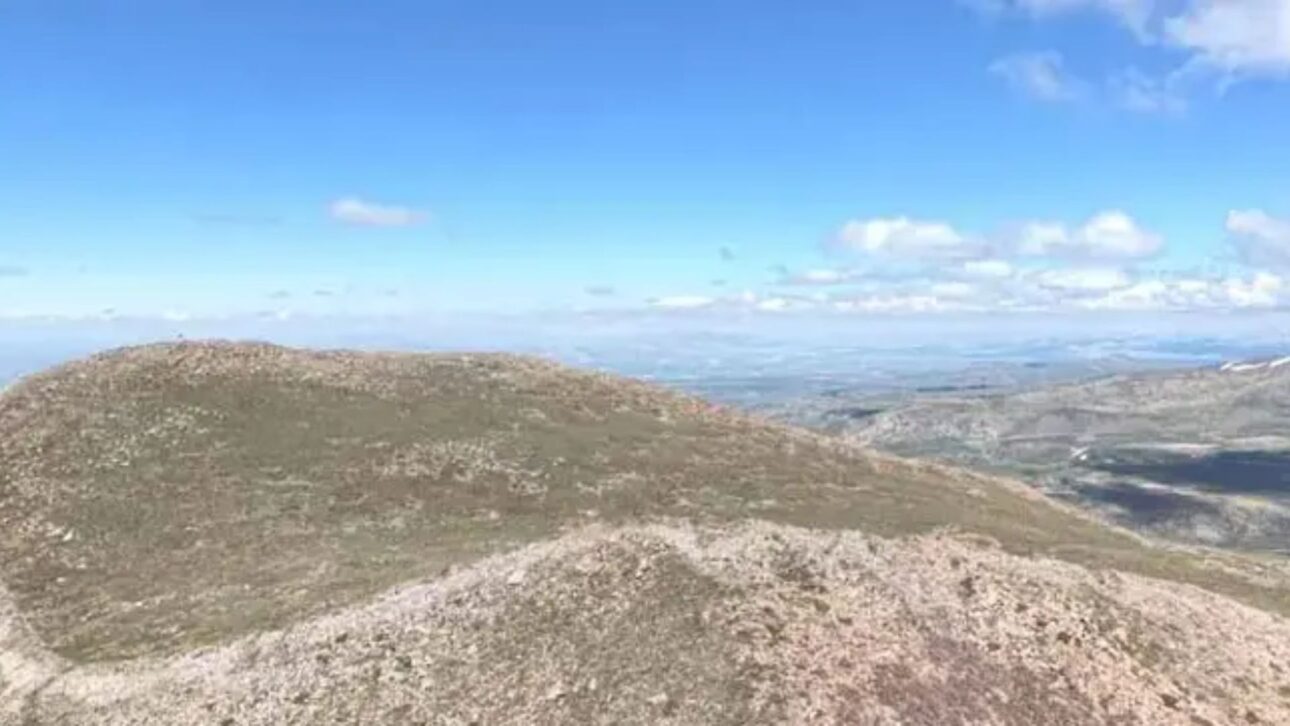
Even so, according to Revista Oeste, aerial images and initial surveys have already revealed a set of constructions that surprises with its organization, more sophisticated than imagined for such a remote place.
It is worth remembering that these data are preliminary and still depend on field confirmation.
The remains point to a large and well-planned fortress.
Among the identified elements are walls approximately one kilometer long, defensive towers along the perimeter, cisterns for water storage, and various internal buildings scattered throughout the terrain.
In total, according to the publication, the complex exceeds 74,000 square meters, reinforcing the impression that something large and enduring existed there.
The hypotheses for choosing such a high peak
One of the questions that most intrigues specialists is why build so high.
Raising a fortress of this size on a mountain would require, according to Revista Oeste, enormous resource investment and a very strong motivation from those who built it.
It is not just any construction, and this makes the location even more enigmatic.
There are some factors that may help explain the decision.
Among the possibilities raised are the symbolic proximity to the gods, according to ancient beliefs, the privileged position to observe the region, the natural protection offered by the steep slopes, the religious importance of the mountains in Asia Minor, and the cultural connection with Mount Erciyes.
These are hypotheses, not conclusions, as definitive evidence is still lacking.
An enigma without a known date or author
Despite its grandeur, the fortress remains surrounded by doubts.
According to Revista Oeste, there is no precise date for the construction, nor definitive evidence about who its creators were.
Some scholars suggest that the place may have been an important religious center linked to the worship of ancient deities, possibly associated with Zeus, but this is an assumption that still needs to be tested.
The cisterns and fortifications support another hypothesis.
For researchers, these elements indicate constant occupation and a firm organization, which raises the possibility that priests, administrators, and guardians may have lived permanently on the mountain.
While new research is pending, the fortress of Mount Lifos remains among the greatest archaeological mysteries of Anatolia, according to the publication.
The case of Mount Lifos combines two irresistible ingredients, a monumental construction and the absence of answers.
Every time the snow melts, the fortress reappears to remind us that there is still much to discover about who occupied those mountains and why.
Without complete excavations, however, all that exists are clues and hypotheses, and it is precisely this that keeps the mystery alive.
And you, what explanation do you think is most likely for a fortress built at more than 2,500 meters altitude? Do you believe it was a religious center, a defense point, or something else? Leave your guess in the comments, with respect for different opinions, and share this article with those who love history and archaeology.