






 Portuguese
  Spanish


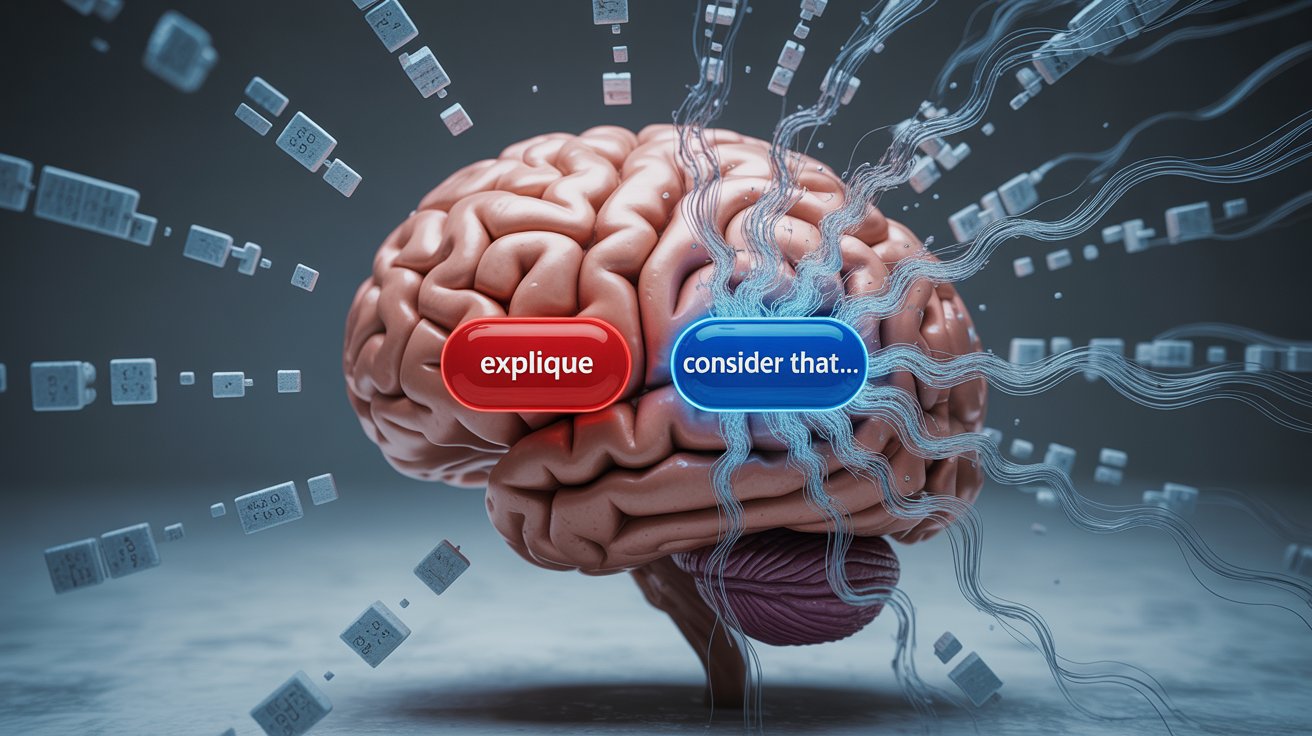


Have You Ever Felt That ChatGPT Answered Superficially, Repetitively, or Even Too Obviously? If So, Know That the Problem May Not Be with the Artificial Intelligence Model, But with the Way You Structured Your Question.
There is a word, quite common, that thousands of users use every day when starting their commands — and that, without realizing it, activates the AI’s “automatic mode.” The result? An impersonal, predictable, and poorly strategic text.
This word is “explain”.
Simply asking ChatGPT to “explain” something puts it in an encyclopedic position: it starts to return generic definitions, as if it were reciting an entry from Wikipedia. And while this works for quick or school-related questions, it’s far from being the best path for those seeking more creative, applicable, and context-aligned answers.
-
AI Customizes Burgers for Individuals and Impresses in Blind Test with Over 100 Participants, Matching or Surpassing Fast-Food Chains’ Approval Ratings

-
AI Revolutionizes Digital Entrepreneurship by Enabling Lean Startups and Rapid Scaling

-
The ‘tsunami’ of investments directed at Artificial Intelligence (AI) and semiconductor companies, which prioritize security and more predictable profits, has been a determining factor in the declining trajectory of Bitcoin.

-
Samsung eyes strategic chip factory in South Korea and could shake up the global AI landscape with advancements in HBM memories and advanced packaging.


What to Do Instead of “Explain”?
The solution is simple, but it requires a change of approach. The secret lies in providing context, taking on a role, or proposing a challenge right at the beginning of the prompt.
Here are some practical examples:
- Instead of: “Explain how to increase productivity in a home office”
Use: “I am writing a practical guide on productivity for those working from home. What strategies would you suggest, based on data, high-performance habits, and common distractions?” - Instead of: “Explain what artificial intelligence is”
Use: “Consider that you are a university professor explaining artificial intelligence to beginner business students. How would you present the concept in a simple and relevant way?” - Instead of: “Explain the difference between fixed and variable income”
Use: “Act as an investment advisor explaining to a client who has never invested before. What is the practical difference between fixed income and variable income?”
Why Does This Work?
AI models like ChatGPT have been trained with billions of examples of human language — and that includes forums, books, tutorials, and a lot of generic content. When you just say “explain,” the system tends to revert to the most common and neutral pattern it knows.
On the other hand, when you insert a scenario, an audience, or a practical need, the AI starts to seek more creative and personalized pathways. This not only improves the quality of the response but also makes the content more applicable to your goal.
Tips for Structuring More Powerful Prompts
- Start with a role: “You are a project manager with 10 years of experience…”
- Provide a real context: “I am putting together a presentation for a sales team…”
- Present a specific challenge: “I want to convince my team to adopt a new tool…”
- Define the format of the response: “Break down the explanation into three topics, with practical examples…”
Avoiding the verb “explain” at the beginning of your prompts may seem like a small detail, but this adjustment makes all the difference. By proposing richer scenarios and clearer objectives, you activate what is best in artificial intelligence: its ability for adaptive reasoning, contextual creativity, and strategic delivery.
If you want to turn AI into a real ally — whether for studying, working, or making decisions — start by changing how you converse with it.
Replace “explain” with “imagine,” “consider,” “act as” — and watch ChatGPT show what it is truly capable of doing.





Gostaria de mais exemplos de prompts para IA , como para elaborar a construção de uma casa por exemplo.
Gulf restaurant shaadi serves food service workers.