Portuguese
  Spanish


The new phase of Nvidia reorganizes the race for AI infrastructure and places South Korea at the center of global technological expansion
Nvidia has closed strategic agreements in South Korea to expand its artificial intelligence infrastructure, in a move that reinforces the global race for data centers, advanced chips, and cloud services. The partnerships involve the SK Group, controller of SK Hynix and SK Telecom, and aim at creating AI factories focused on processing advanced systems. The first unit is expected to start operating in 2027, according to information released, based on company announcements. The advancement occurs during the visit of Jensen Huang, Nvidia’s CEO, to the Asian country, where the company seeks to expand its presence in one of the world’s main technological chains.
Strategic partnerships strengthen Nvidia’s presence in Asia
Nvidia’s move occurs at a time of strong demand for infrastructure capable of supporting artificial intelligence applications. The SK Group appears as a central partner because it brings together companies with direct involvement in semiconductors, telecommunications, and digital services. SK Hynix plays a significant role in supplying advanced memories used in high-performance systems, while SK Telecom is expected to contribute with cloud services and connectivity. The combination of these sectors allows the partnership to advance through different stages of the AI chain, from physical components to large-scale processing platforms.
AI factories expected to start operating from 2027
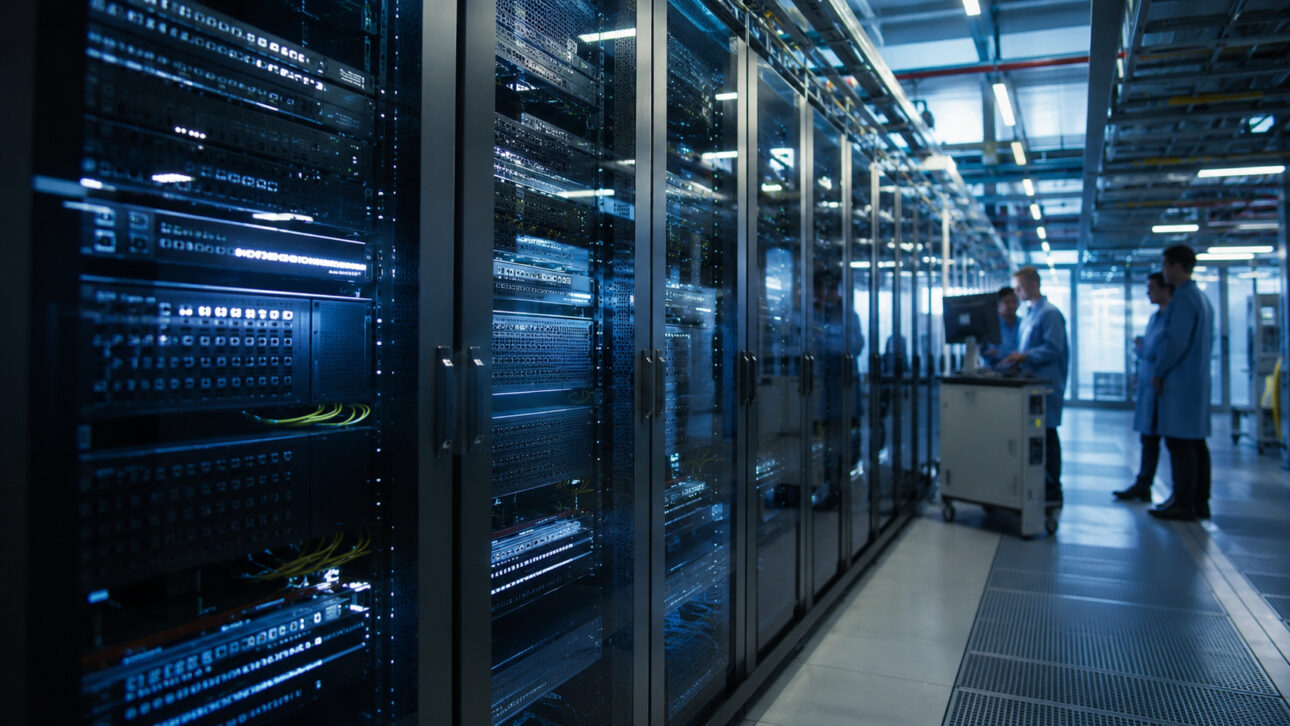
The first AI factory planned in the agreements is expected to begin activities in 2027. The project is part of a broader strategy by Nvidia to create specialized computational structures capable of training, processing, and delivering services based on artificial intelligence. These environments function as large processing centers, bringing together servers, chips, software, and storage systems. The proposal is to offer computational capacity to companies that depend on advanced technology to operate AI models.
-
The ‘tsunami’ of investments directed at Artificial Intelligence (AI) and semiconductor companies, which prioritize security and more predictable profits, has been a determining factor in the declining trajectory of Bitcoin.

-
Samsung eyes strategic chip factory in South Korea and could shake up the global AI landscape with advancements in HBM memories and advanced packaging.

-
ChatGPT reveals which human job it would choose if it could really work
-
Massive use of AI could ‘cut’ jobs. A frightening prediction was made by the CEOs of the two largest companies in the sector, Sam Altman (OpenAI) and Jensen Huang (Nvidia), who even coined the expression “Job Apocalypse.” However, with an eye on the appreciation of their respective stocks, they softened their rhetoric.


International expansion broadens the reach of new agreements
The plans are not limited to South Korea. Nvidia also intends to use the model as a basis for expansion into other markets in Asia and Europe, expanding its international network of technological infrastructure. The strategy accompanies the growth of artificial intelligence use in companies, governments, and digital platforms. The demand for large-scale processing pressures the technology sector and increases the need for new specialized data centers. With this, Nvidia strengthens its position in a market that increasingly depends on computational capacity.
SK Group gains prominence in the new phase of artificial intelligence
The involvement of SK Group reinforces the importance of South Korea in the global technology chain. SK Hynix already operates in an essential area for AI systems, while SK Telecom has a structure focused on connectivity and digital services. The partnership with Nvidia integrates these assets into a broader infrastructure proposal. This alignment creates conditions to accelerate cloud, processing, and data center projects prepared for artificial intelligence applications.
Agreements indicate the advancement of global AI infrastructure
The initiative shows how the expansion of artificial intelligence depends on investments in physical structures, not just software or digital platforms. AI factories emerge as a central part of this movement because they concentrate processing capacity aimed at complex systems. Nvidia uses this concept to describe data centers prepared to produce artificial intelligence services at scale. South Korea, in turn, gains relevance by bringing together companies capable of operating in different parts of this chain.

The future of Nvidia’s AI factories
The agreements signed in South Korea indicate that the competition for artificial intelligence infrastructure is expected to intensify in the coming years. The first unit scheduled for 2027 will be observed as an important stage in Nvidia’s international expansion. The advancement may also influence new investments in data centers, cloud, and semiconductors in other markets.
Do you believe that AI factories will be decisive in determining which countries and companies will have more strength in the next phase of global technology?