






 Portuguese
  Spanish


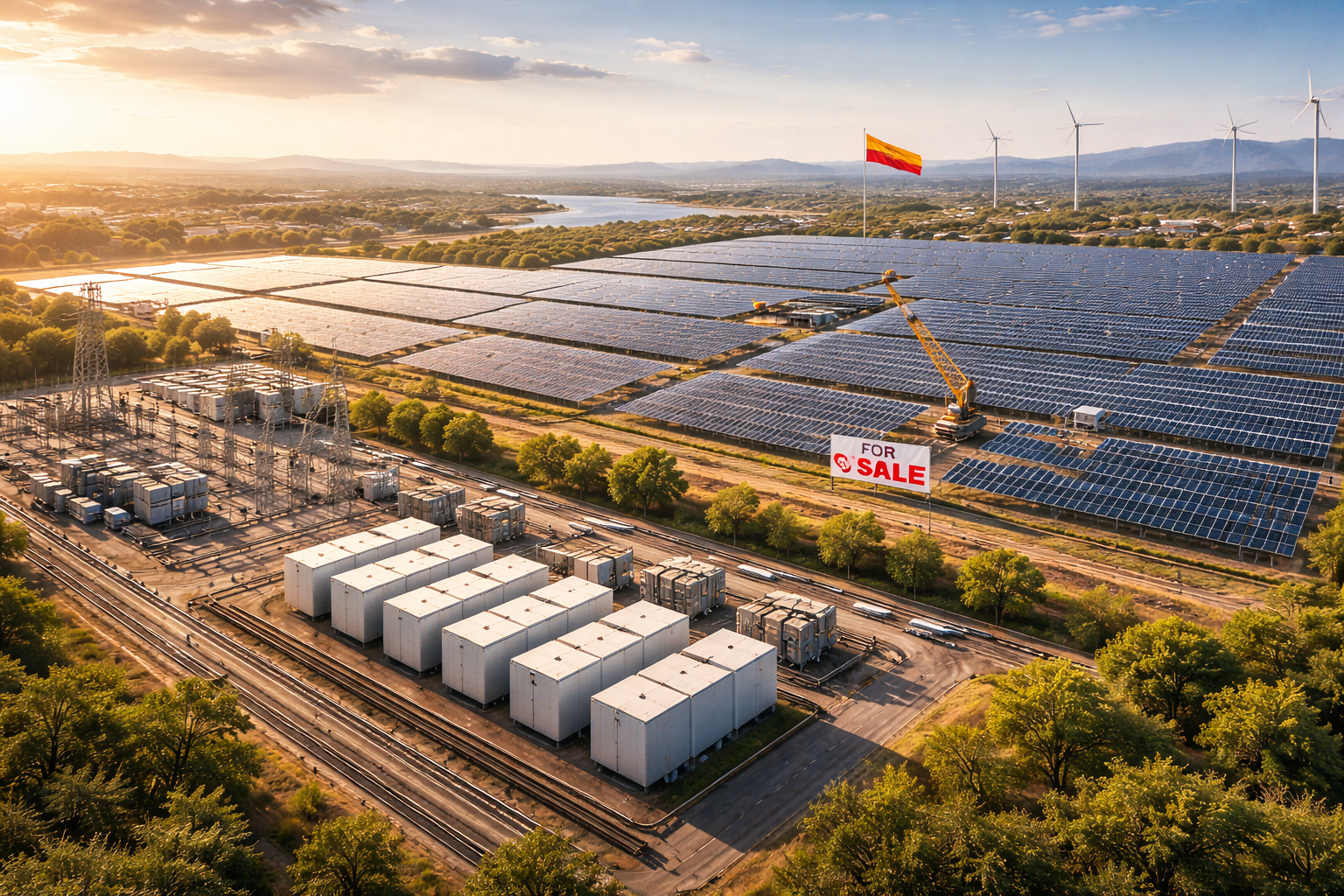


In recent years, solar energy has become one of the pillars of Spain’s energy transition. Driven by public policies, climate goals, and technological advances, the country has witnessed a rapid expansion of photovoltaic capacity. However, as supply grew intensely, the market began to face a new challenge: excess generation during certain periods of the day.
As a direct consequence, electricity prices in the wholesale market experienced significant declines. At times, according to data from the Spanish electricity system operator, values approached zero. In light of this scenario, less efficient projects lost economic attractiveness, forcing producers to reassess strategies and, in many cases, sell assets.
Thus, what once symbolized accelerated growth has marked the beginning of a phase of structural adjustment in Spain’s solar sector.
-
Petrobras to Double Natural Gas Supply in Northeastern Brazil with New Investment

-
Petrobras Approves $1.2 Billion Refinery in Brazil to Produce Aviation Fuel and Diesel from Plants
-
Petrobras Secures $2.2 Billion Contract to Build and Operate Four Support Vessels for Brazil’s Offshore Oil Fields
-
Oil production grows in Rio, but reserve replacement raises a warning sign



The Rapid Expansion of Solar Energy in Spain
Historically, Spain has always presented favorable natural conditions for solar energy. High radiation incidence, large available areas, and a consolidated electrical infrastructure created an environment conducive to investments. According to the Spanish government, especially after 2018, the country began to accelerate the installation of solar parks at an unprecedented pace.
In addition, the reduction in the costs of photovoltaic panels made projects more accessible. This way, national and foreign investors began to compete for space in one of Europe’s main renewable markets.
Over time, however, the expansion ceased to be gradual. In certain periods, installed capacity grew faster than the system’s ability to absorb that energy. As a result, a scenario of excess supply was formed during hours of peak solar incidence.
Therefore, the success of the expansion ended up creating a new type of pressure on the electricity market.
Price Decline and Impact on Projects
As solar production increased, electricity prices began to reflect this abundance. According to the Red Eléctrica de España, photovoltaic generation reaches concentrated peaks during certain hours, especially at noon. At those moments, supply exceeds demand, pushing prices down.
As a consequence, older or less efficient projects began to lose profitability. Plants with higher operational costs or less favorable contracts started to face difficulties in maintaining positive margins.
Furthermore, the depreciation of prices directly affects the market value of assets. In many cases, investors choose to sell projects before larger losses accumulate. Thus, the excess of solar energy inaugurated a season of discounts in the sector.
In this way, the market enters a phase of natural selection, where only the most efficient projects can maintain competitiveness.
Asset Sales and Strategic Repositioning
In light of this new context, solar energy producers have begun to adopt defensive strategies. According to industry analysts, companies with weaker portfolios are seeking buyers for plants that no longer deliver the expected returns.
On the other hand, large energy groups are taking advantage of the moment to acquire assets at lower prices. Companies like Iberdrola and other European players are spotting consolidation opportunities in a market that is maturing.
Thus, the movement of sales represents not only fragility but also reorganization. The sector is beginning to prioritize scale, technological efficiency, and the ability to adapt to new market conditions.
Consequently, solar energy in Spain ceases to be a field of indiscriminate growth and begins to require more sophisticated planning.
The Role of Batteries in the New Solar Scenario
In light of the price decline, energy storage emerges as a strategic alternative. Producers are turning to battery systems to store electricity generated during excess periods and sell it when demand rises.
According to the Spanish government and reports from the electricity sector, investing in batteries has become a priority to maintain the economic viability of many solar parks. By allowing greater flexibility, storage reduces dependence on instantaneous market prices.
Additionally, batteries contribute to the stability of the electrical system. They help to smooth out peaks in generation and consumption, reducing the need for production cuts, known as “curtailment.”
Thus, storage becomes a central element of the financial and operational sustainability of solar projects.
A Typical Adjustment of Expanding Markets
Although the current scenario generates uncertainties, it is not unprecedented. Historically, sectors that grow rapidly go through adjustment cycles. In the case of Spanish solar energy, the excess supply signals that the market has reached a new stage of maturity.
According to renewable energy experts, this process tends to correct distortions, stimulate innovation, and strengthen more efficient projects. Over time, the integration of batteries, smart grids, and new contract models should rebalance prices and margins.
Furthermore, the electrification of the economy, including transportation and industry, may increase the demand for clean electricity. Thus, part of the current excess may be absorbed in the coming years.
Therefore, the price decline does not signify the end of solar energy but rather a transition to a more sophisticated phase.
Solar Energy and the Future of the Spanish Market
Even with the current challenges, solar energy retains a strategic role in Spain’s electricity matrix. According to the government, the country remains committed to decarbonization goals and emission reductions, ensuring long-term space for renewable sources.
In this context, the ongoing adjustment tends to strengthen the sector. More resilient projects, combined with storage and efficient management, are expected to lead the next growth cycle.
Thus, the excess of solar energy inaugurates not a crisis but a reconfiguration of the market, where efficiency, technology, and planning will define winners and losers.
As it navigates this phase of discounts and reorganization, Spain establishes itself as a living laboratory for the European energy transition, showing that the advance of renewables also requires constant adaptation and long-term strategic decisions.


