






 Portuguese
  Spanish
  4 min of reading
  0 comments


More Than 1.4 Billion Barrels Of Oil Are Parked At Sea Due To Sanctions Against Russia, Iran And Venezuela, Creating A Global Surplus That Pressures Supply, Distorts The Market And Keeps Brent Stabilized Even In The Face Of Excess.
The international market for oil is experiencing a moment of strong contradiction. Although supply is increasing, prices remain relatively stable.
At the same time, ships loaded with sanctioned barrels sail without a clear destination, reinforcing a scenario of uncertainty.
This entire movement reveals a new dynamic: the oil stored at sea is shaping price behavior more forcefully than traditional flows.
-
Oil production grows in Rio, but reserve replacement raises a warning sign

-
Petrobras is expected to complete the drilling of the Morpho well in the Foz do Amazonas in August 2026, the first well in the Equatorial Margin, an oil frontier that the ANP estimates at more than 30 billion barrels and could redraw the map of Brazil.

-
Oil returns to the center of concerns with tension between the US and Iran

-
IEA reduces forecast for global oil demand in 2026 after impacts of the Middle East crisis
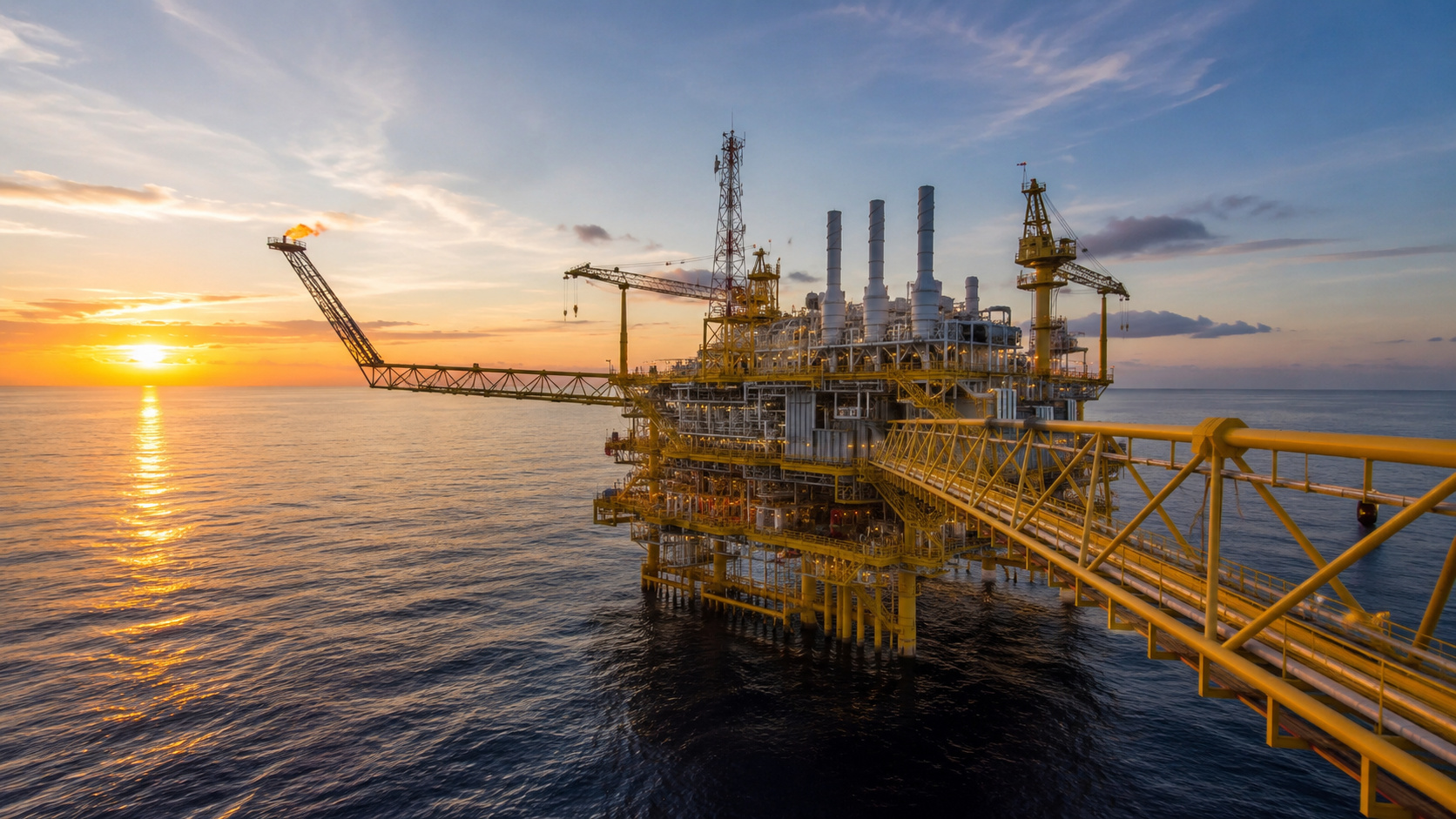


According to recent data, the volume of oil “on the water” has already surpassed 1.4 billion barrels.
This is a significant increase, 24% above the average recorded between 2016 and 2024. And, although part of this accumulation comes from large traditional producers, another portion — even more sensitive — is linked to countries under international sanctions.
Oil Surplus Grows While OPEC+ And Independent Producers Boost Supply
To understand the expansion of this global stock, one must observe the widespread increase in production. According to Vortexa, there was a 16% annual jump in the volume exported by large producers.
Furthermore, OPEC+ has been reversing cuts that limited supply, increasing pumping. At the same time, countries outside the cartel are also reinforcing their presence. Brazil, Guyana, and the United States are ramping up their exports and adding new cargoes to the market. As a result, the available oil is advancing consistently.
However, this is not the only engine of accumulation. The scenario becomes even more complex when shipments from Russia, Iran, and Venezuela — countries facing restrictions imposed by major powers — are taken into account.
The volume of oil coming from sanctioned nations has increased rapidly. The barrels referred to as “dark” — for traveling without clear information on origin or destination — grew 82% in just one year. In the last three months, this pace has intensified.
Geopolitics explains part of this imbalance. India and China, historically the two largest buyers of Russian oil, have reduced new purchases since the United States sanctioned Lukoil and Rosneft in October.
In addition, Washington imposed new restrictions on a Chinese terminal in Shandong province, which received large volumes of Iranian oil.
Thus, even with high supply, selling has become more challenging. The sanctions do not prevent Russia and Iran from producing oil. However, they limit access to reliable buyers. Consequently, ships are left parked at sea, accumulating cargo without a definite destination.
Market Debates Whether Or Not To Account For Sanctioned Oil In Global Supply
The accelerated growth of this unmarketable oil places the market in a dilemma. The barrels that travel without buyers represent, today, about 15% of the global supply. This means they are too significant to be ignored.
On the other hand, experts argue that if major economies are unwilling to accept them, these volumes could be excluded from calculations of available supply.
This would deeply modify the current reading, especially given the tension between abundant supply and stable prices.
In the past, however, Russia managed to circumvent sanctions by creating a complex “shadow fleet,” capable of conducting transactions and transfers between ships to mask the origin of the oil.
During a recent visit to India, Vladimir Putin reiterated that the country is ready to provide “uninterrupted” shipments to the Indian market.
If Moscow can restructure its logistical chains, resupplying India and China with unsanctioned intermediaries, global demand for oil from sanctioned-free producers may drop. This tends to further pressure the price of Brent.
Why Is Brent Remaining Stable Despite Maritime Surplus?
Even with more oil available, Brent has remained between US$ 61 and US$ 66 per barrel over the past two months. The apparent stability, uncommon during periods of excess, has several explanations.
One reason is the Chinese strategy of bolstering its stocks. According to Rystad Energy, China has been sending about 290,000 barrels per day to storage units throughout this year. This practice serves as a “buffer,” absorbing part of the global surplus.
Additionally, Chinese authorities are concerned about possible disruptions in international supply. Therefore, they are increasing strategic reserves as a form of energy insurance. The impact of this decision is significant, as strategic stocks influence prices less than commercial inventories.
However, analysts warn that if this excess migrates from ships to onshore facilities, the market may suffer an immediate shock.
Just to illustrate, Rystad estimates that China has accumulated 97 million barrels this year. If half of that volume were to end up in OECD storage centers, like Cushing, Oklahoma, local stocks could reach 70 million barrels — a number close to what was recorded when WTI entered negative territory in April 2020.
At that time, operators had to pay buyers to take barrels, fearing a lack of space to store oil. The episode became a milestone in the sector.
Today, the scenario is different, but the logic remains: any sign that the excess on the water is migrating to land can cause the floor to collapse under prices.






Be the first to react!