Portuguese
  Spanish


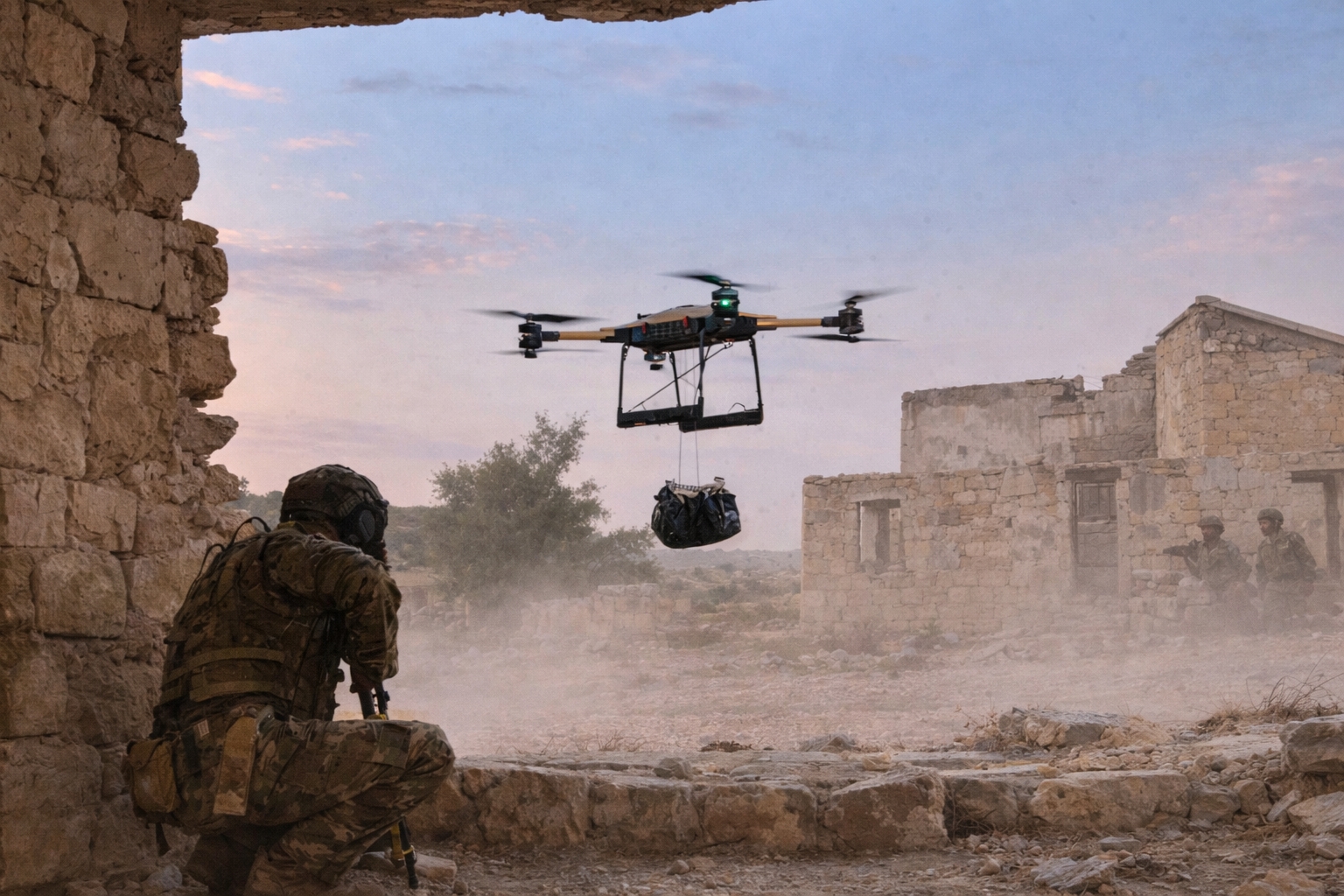

The United States Army Put the Autonomous Cargo Drone TRV-150 Under Formal Evaluation at Fort Stewart for Refueling Missions Under Threat, Measuring Performance and Mainly Integration with Training, Planning and Logistical Routines.
The United States Army is tackling one of the most sensitive areas of warfare: resupply. On February 12, 2026, at Fort Stewart (Georgia), military personnel put the autonomous cargo drone TRV-150 into action in a scenario that simulates real combat pressure, and the central question was not just “does it fly well?”, but “can this be integrated into the troops’ daily operations without becoming a laboratory experiment?”.
The logic behind this movement is simple and harsh: every resupply trip can become an unnecessary risk when the enemy has constant surveillance, long-range fire, and errant munitions.
TRV-150: Why This Autonomous Cargo Drone Got on the United States Army’s Radar
The TRV-150 was developed by the British company Malloy Aeronautics and is part of a line of electric aircraft of the eVTOL type (vertical takeoff and landing) designed for logistics. It is already operationally used by the United States Marine Corps and also by the Royal Navy, which calls the system T-150.
-
Engineers Develop Fridge-Sized Machine to Produce 95-Octane Synthetic Fuel from Air and Water, Aiming to Sustain Combustion Engines Without Oil

-
Two-Armed Robot Uses AI to Reassemble Destroyed Pompeii Frescoes, Solving an “Impossible” Puzzle
-
New Law in Brazil Requires Breaks for Type 1 Diabetes Management at Work, School, and Public Exams

-
Scientists Confirm “Greening” of Antarctica: Ice on the World’s Coldest Continent Turns Green as Mosses Multiply Over Tenfold in Four Decades


In practice, the technical package of the autonomous cargo drone delivers some very objective numbers:
- up to 150 pounds of payload (about 68 kg);
- approximately 43 miles per flight (69.2 km);
- speed close to 67 mph (107 km/h);
- missions lasting up to 36 minutes, varying with payload and conditions;
- route programmed by waypoints, with autonomous flight to the destination;
- delivery by landing at the designated point or air drop of the payload.
The proposal is quite straightforward: to deliver ammunition, rations, medical kits, and other critical items without forcing a team to expose themselves in a round trip on the road.
Fort Stewart on February 12, 2026: The Formal Evaluation That Went Beyond “Flying”
The exercise at Fort Stewart marked the formal evaluation of the system by the Army. Soldiers from the Multi-purpose Company, 6th Squadron, 8th Cavalry Regiment, 2nd Armored Brigade Combat Team, 3rd Infantry Division operated the equipment during the activity.
And here’s the most important point: the evaluators were not confined to flight metrics.
They observed how the teams planned missions, programmed routes, conducted launch and recovery procedures, and, mainly, how quickly the unit could integrate the drone into existing routines.
It’s this kind of detail that determines whether the technology becomes “real equipment” or just a pretty demonstration.
Cutting Convoy Risk: The Real Reason to Bet on Autonomous Cargo Drone
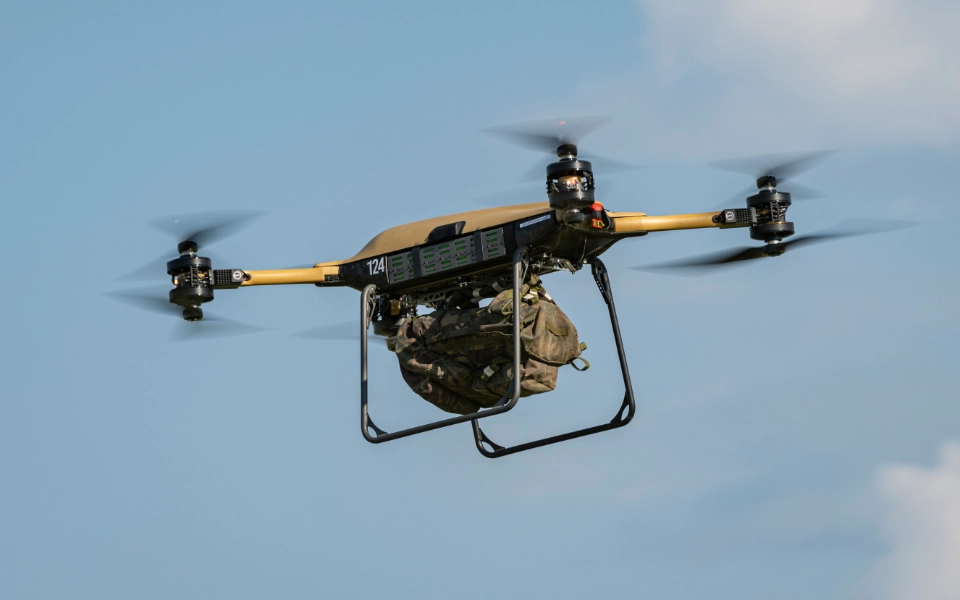
Ground convoys remain vulnerable to sensors, artillery, attack drones, and errant munitions.
Therefore, the logic of the United States Army is to reduce reliance on large road movements when the mission calls for something small and urgent.
Drones like the TRV-150 help precisely with that: smaller loads, more discreet deliveries, and fewer people exposed on the way.
And when modern doctrine pushes units to operate dispersed and at a fast pace, maintaining the logistical “pulse” without overstretching the supply line becomes a tactical advantage.
Integration and Training: What the Army Wants to Prove for Real
One thing is the drone working. Another is the squad being able to operate, maintain, and plan missions with it without slowing down operations.
This focus on people and process also appears in recent training exercises of the Army itself. In 2025, during Swift Response 25 (in Lithuania), leaders observed tests with the TRV-150 and other drones to deliver medical supplies, including a blood drop simulation (class VIII), aimed at increasing survival and delivery speed in contested environments.
And when the subject is time and risk, the input from those on the ground tends to be more convincing than any graph.
At an Army event about the TRV-150, operator Spc. Marvin Mazariego summarized the operational gain well: “The drone is able to travel far, dropping off our needs in minutes versus waiting hours…”. (U.S. Army)
TRV-150, Royal Navy and the “Proof Effect”: When the Ally Has Already Implemented the System
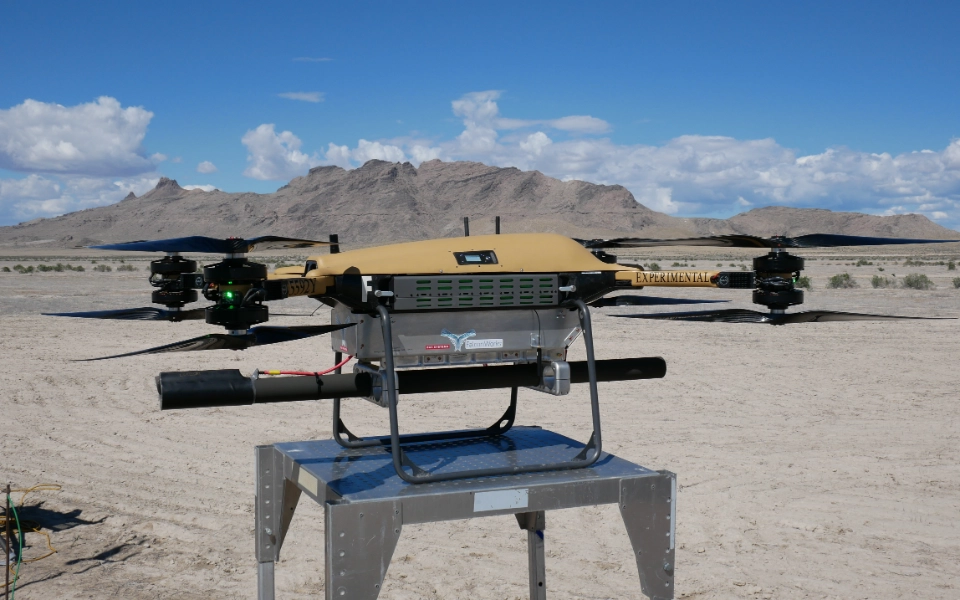
The fact that the Royal Navy has already advanced with the T-150 weighs in the debate, as it reduces the sense of “betting in the dark”.
In an official announcement, Neil Appleton (CEO of Malloy Aeronautics) described the operational release of the T-150 as a milestone and stated that, being multifunctional, it can support everything from resupply at sea to replenishment of ground troops and stated: “It’s a game-changer for the modern battlefield”.
This kind of validation helps the United States Army to compare the integration of the system at the brigade level and understand what needs to change in training, planning, and logistical coordination.
What the United States Army Wants to Conclude with the Autonomous Cargo Drone TRV-150
The message from Fort Stewart is clear: the discussion now is about real adoption, not just “point testing”. If the upcoming cycles confirm:
- consistent performance under the right conditions,
- operators capable of mastering the complete flow (plan–execute–recover),
- and smooth integration with logistical routines,
then the TRV-150 gains traction to become a common tool in the units, reducing risk and avoiding putting more vehicles on already congested roads.
Now I want to know from you: Do you think the Army will really transform refueling with the autonomous cargo drone like the TRV-150, or will this be limited to specific missions?
Leave a comment and, if it makes sense, share the article with someone who follows military technology in the United States.