






 Portuguese
  Spanish


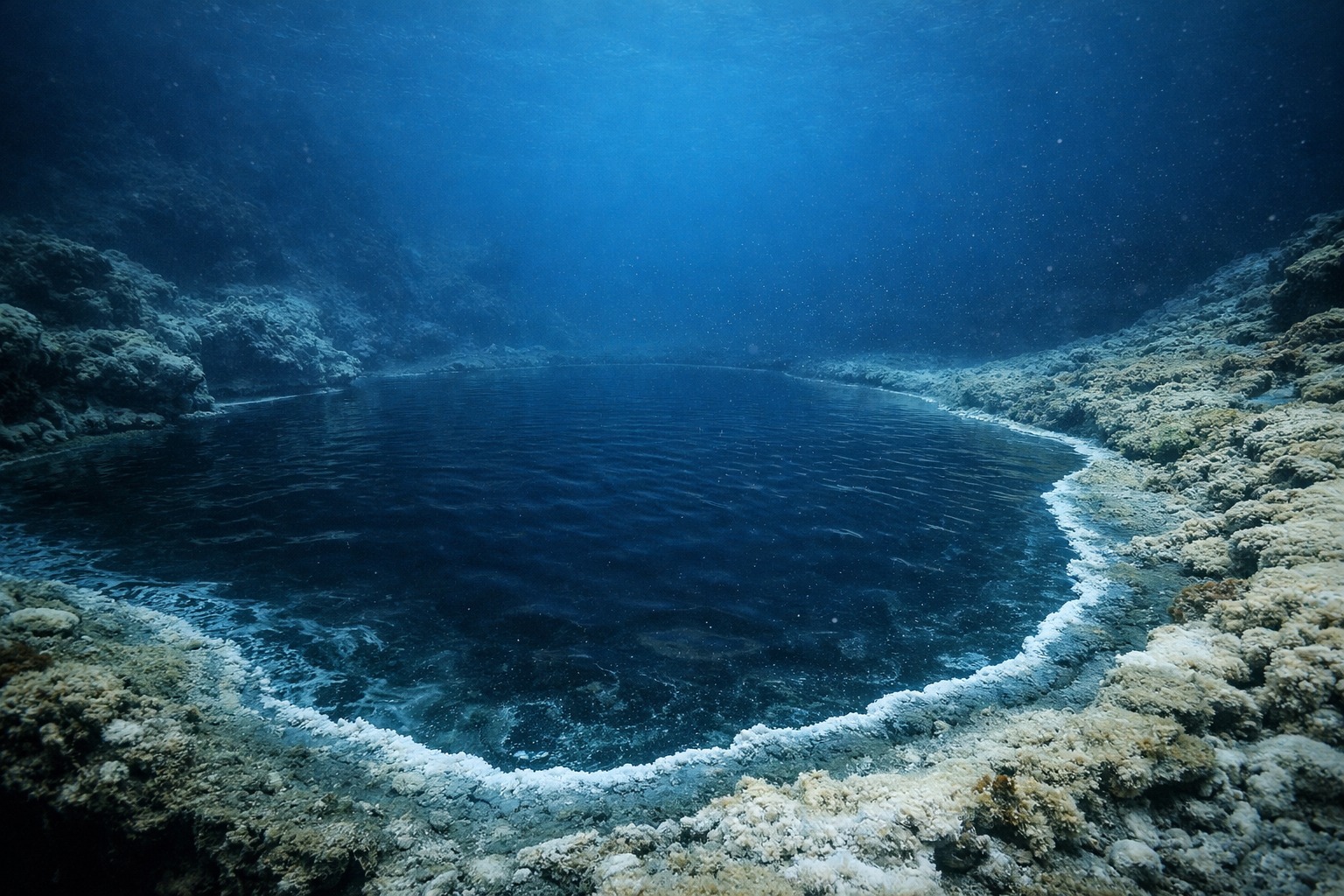


Brine Lake At The Bottom Of The Sea Forms An Environment Up To 10 Times Saltier Than The Ocean, Remains Isolated For Thousands Of Years And Reveals Extreme Conditions Without Oxygen In The Depths
A brine lake located at the bottom of the ocean draws attention for remaining isolated from the surrounding seawater for thousands of years, thanks to its density being up to ten times greater than that of regular ocean water and the presence of toxic compounds.
The existence of a brine lake at great depths challenges intuitive perceptions of water behavior.
Despite being submerged in the ocean, it maintains its own chemical boundary, as if there were an invisible liquid surface separating two distinct environments.
-
China Develops Custom 140-Ton Electric Mining Truck with 770 kWh Swappable Battery, Deploys 290 Units in Xinjiang’s Largest Zinc Mine

-
Meta to Launch Arena, a New Prediction App Targeting 3.56 Billion Users, Competing with Polymarket and Kalshi

-
Scientist Challenges Famous Human Evolution Theory, Argues Homo Sapiens Evolved Gradually Over Thousands of Years
-
15-Year-Old American Builds Ocean Generator with PVC Pipe and 3D-Printed Propeller for $12, Wins National Prize, Presents at White House, and Makes Forbes 30 Under 30 List




What Is The Brine Lake And Why Does It Remain Isolated At The Bottom Of The Ocean
The brine lake is a concentration of extremely salty water located on the seabed. Its composition has such high density that it prevents mixing with the surrounding ocean water, creating a clearly defined chemical boundary.
This difference acts as a natural barrier. Salinity can reach levels up to ten times higher than that of regular ocean water, which prevents any spontaneous integration between the two liquid masses.
In addition to the high salt concentration, these lakes may contain methane, sulfur, and ammonia. The chemical combination creates a zone considered lethal for many marine organisms that cross this submerged boundary.
Geological Formation Linked To Salt Deposits Buried Millions Of Years Ago
The origin of the brine lake is associated with massive salt deposits formed millions of years ago when ancient seas evaporated. Over time, these layers became buried beneath rocks on the ocean floor.
Geological movements cause the salt to rise and fracture the seabed. This process releases extremely dense brines, which sink due to their high weight and accumulate in natural depressions.
This creates stable submerged lakes for long periods. The density prevents dispersion and keeps the environment isolated from the rest of the ocean.
Extreme Environment Without Oxygen And With Toxic Gases
The environments created by a brine lake are among the most extreme on the planet. The total absence of oxygen and the presence of toxic gases make the interior uninhabitable for most marine species.
Fish and other animals that cross this boundary can die almost instantly due to the combination of high salinity and aggressive chemical compounds.
This transition zone is described as a type of “liquid glass,” where the surrounding water does not mix or dissolve easily. The visual separation can be perceived as a clear line on the ocean floor.
Scientific Curiosities And Impacts Of The Brine Lake For Research
The brine lake acts as a natural trap for animals crossing its edge. It can also preserve bodies intact for long periods due to the absence of oxygen and extreme chemical conditions.
Specific ecosystems arise on the shores of these lakes, formed by highly specialized organisms. Even without sunlight, some living beings manage to survive in conditions considered outside the norm.
These environments help researchers study extreme forms of life and broaden understanding of biological limits. The study of these sites reveals that Earth still holds nearly unknown regions.
They also serve as models for investigations into the possibility of life on other planets, where similar conditions may exist.
The analysis of these formations enhances scientific understanding of water, natural balance, and survival in adverse environments.
A video from the Top10 Channel, which has over 9.71 million subscribers and exceeds 246,000 views, presents scientific explanations about the phenomenon of the brine lake, highlighting differences in density, salinity, and chemical composition that sustain its existence.
At the bottom of the ocean, the brine lake remains a concrete example of how ancient geological processes still influence the current dynamics of the planet, revealing scenarios that contradict expectations and expand the known limits of life on Earth.
With information from O Antagonista.





