





 Portuguese
  English
  Spanish
  4 min of reading
  0 comments


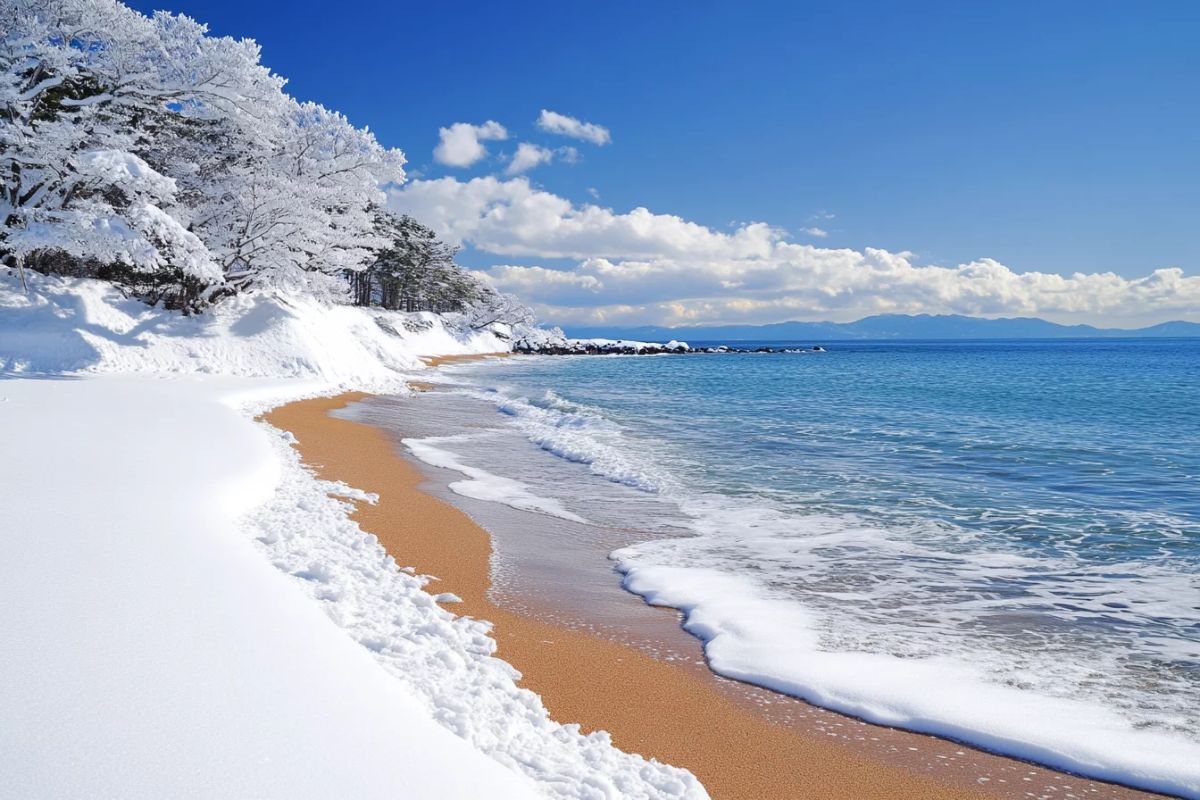
Snow and Sand Meet at the Seaside in a Rare Natural Spectacle, Forming a Surreal Landscape that Unites Winter and Summer in the Same Scene of Beauty and Absolute Silence
Few places on the planet manage to unite such striking contrasts as the San’in Kaigan Geopark, on the western coast of Japan. During winter, the landscape transforms into an almost surreal scene, where golden sand mixes with white snow that gently descends to the seaside.
The scene appears to be straight out of a dream, or a painting, and has enchanted photographers and travelers from around the world who seek to capture the rare encounter between Siberian cold and the visual warmth of Japanese beaches.
Although many associate the phenomenon with landscapes from the extreme north of the archipelago, San’in Kaigan is not in Hokkaido, but rather on the main continent, between the prefectures of Kyoto, Hyōgo, and Tottori.
-
A popular initiative forced Berlin to realize 440,000 recovered trees by 2027, green spaces and shaded benches within minutes of any home, and billions of euros reserved for reorganizing streets and urban drainage.

-
The rare city in the far north of Brazil that directly borders Europe, just by crossing a bridge

-
Copacabana Beach wakes up covered in waste after Shakira’s mega-show, and Comlurb removes an impressive 362 tons of trash in just a few hours in Rio.
-
Amsterdam declares war on meat, gasoline, and polluting travel ads on the streets and becomes the first capital in the world to cut advertising linked to high carbon emissions.




The confusion is understandable: the region’s climate is one of the coldest in Honshu, and the combination of coastal dunes and snowstorms creates the same frozen environment that characterizes the northern islands.
It was precisely this geographical uniqueness that led to the area being recognized as a Japanese Geopark in 2008 and elevated, two years later, to Global Geopark status by UNESCO.
An Encounter Between Sand, Snow, and Sea
The beauty of the phenomenon lies in the contrast. When cold air masses from Siberia cross the Sea of Japan, they form clouds filled with moisture that turn into snow upon reaching the coast. The result is a thin white layer over the dunes and cliffs, extending to the meeting with the waves. The coastline, covered in white and gold, seems to shine under the morning light.
It is at the Tottori Dunes, one of the most visited areas of the geopark, that the spectacle reaches its peak. These dunes, formed thousands of years ago by erosion and wind, are the largest in Japan and extend for nearly sixteen kilometers.
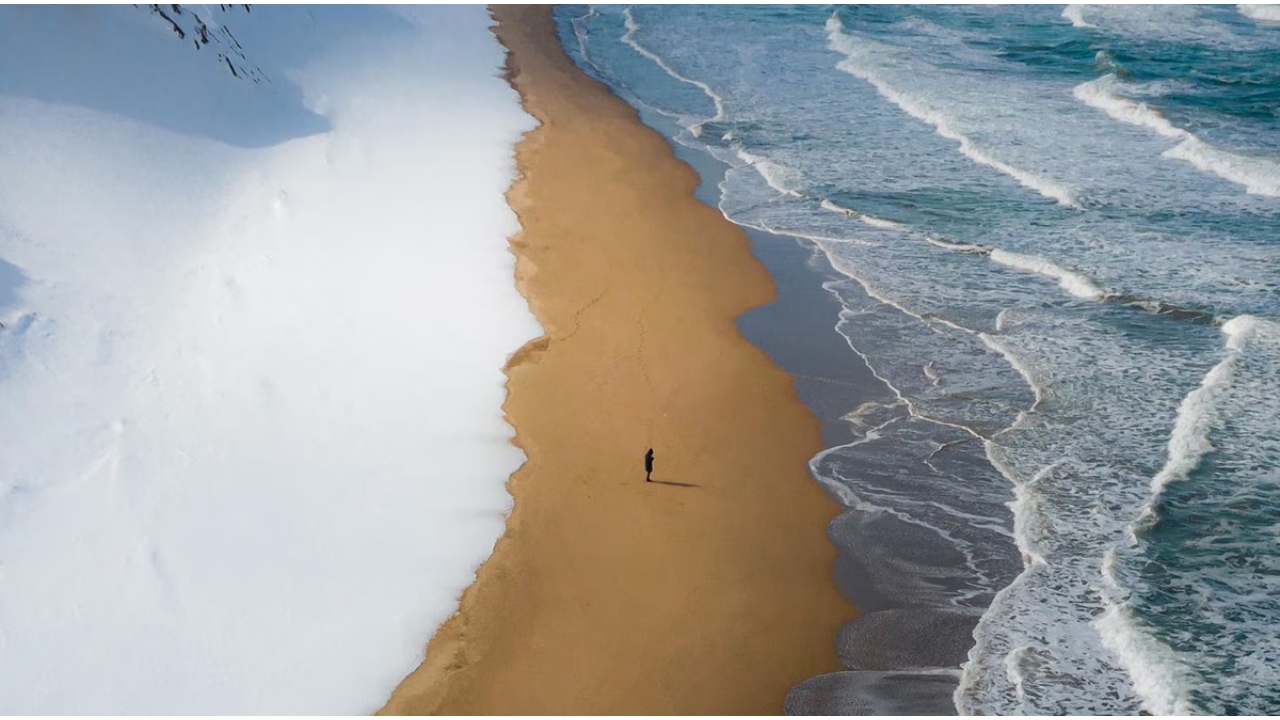
During winter, when temperatures fall below zero, the frozen sand takes on unusual textures and contours, transforming the area into a vast natural mosaic.
The phenomenon typically occurs between late January and early February when the cold is most intense. During this period, images of San’in Kaigan flood Japanese social media, going viral with captions that attempt to explain the inexplicable: a snow-covered beach in a country known for its cherry blossoms and volcanoes.
UNESCO describes the geopark as “an open book of Japan’s geological history,” and perhaps no page of this book is as poetic as this one, where nature plays with uniting winter and summer in the same frame.
The Territory Shaped by Time
The San’in Kaigan Geopark covers over 120 kilometers of coastline, from Cape Kyogamisaki in Kyoto to the coast of Hakuto Kaigan in Tottori. Within it lie mountains, cliffs, and valleys formed by the opening of the Sea of Japan over twenty million years ago.
This diversity of landscapes makes the park a true open-air laboratory, where ancient volcanic eruptions and ongoing coastal erosion processes are studied.
The sand of the dunes itself tells part of this story. Composed of minerals brought from nearby mountains and shaped by sea winds, it is a living testimony of the interaction between land and sea over the ages.
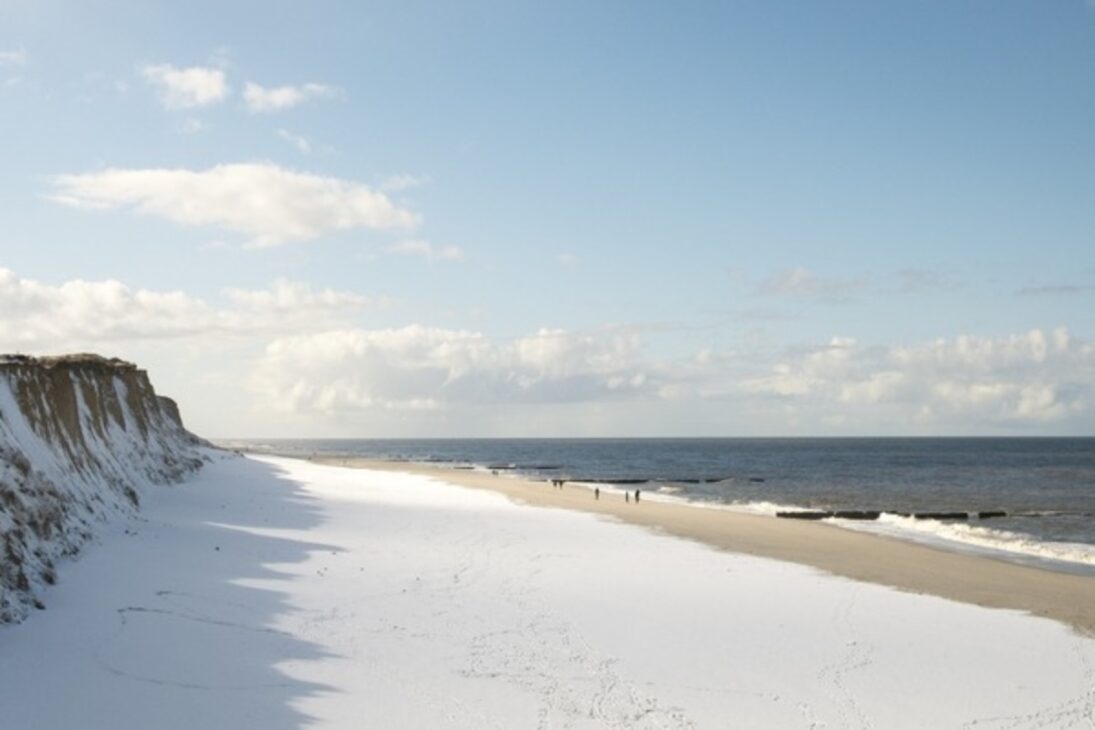
The presence of snow in this scenery is not just an aesthetic phenomenon, but a direct result of a geography that channels the cold winds from the north. In few places in the world is the combination of climatic and geological factors so perfect to create something like this.
At the same time, the geopark is home to communities that preserve ancient traditions related to fishing, pottery, and local cuisine. During winter, the region fills with aromas of crab and fresh fish, and visitors can warm their hands with typical dishes served in small inns.
This coexistence between the force of nature and daily Japanese life is an essential part of the charm of San’in Kaigan: it is not just about contemplation, but about experiencing the harmony between man and environment.
An Invitation to Contemplation
Visiting San’in Kaigan in winter is more than a trip: it is a sensory experience. The silence that dominates the snow-covered beaches is interrupted only by the sound of the sea, creating an almost spiritual atmosphere.
There are no crowds, nor the frantic pace of Japan’s big cities. Just the landscape, pure, cold, vibrant, inviting pause and reflection.
Getting there requires planning: the main entry points are the cities of Tottori and Kyoto, connected by regional trains and buses. During the colder months, it is advisable to check weather conditions and avoid driving on frozen roads.
Still, the effort is worth it. Few destinations in the world offer such an ephemeral and symbolic spectacle, capable of summarizing in a single image the delicacy and strength of Japanese nature.
San’in Kaigan is not just a geopark. It is a reminder that the Earth remains alive, in constant transformation. Beneath the snow and over the sand, time carves new shapes, and each winter renews the promise of an impossible scene, where the sea and the cold meet, and the impossible becomes real.








-

-

-

-

-

-

48 people reacted to this.