






 Portuguese
  Spanish


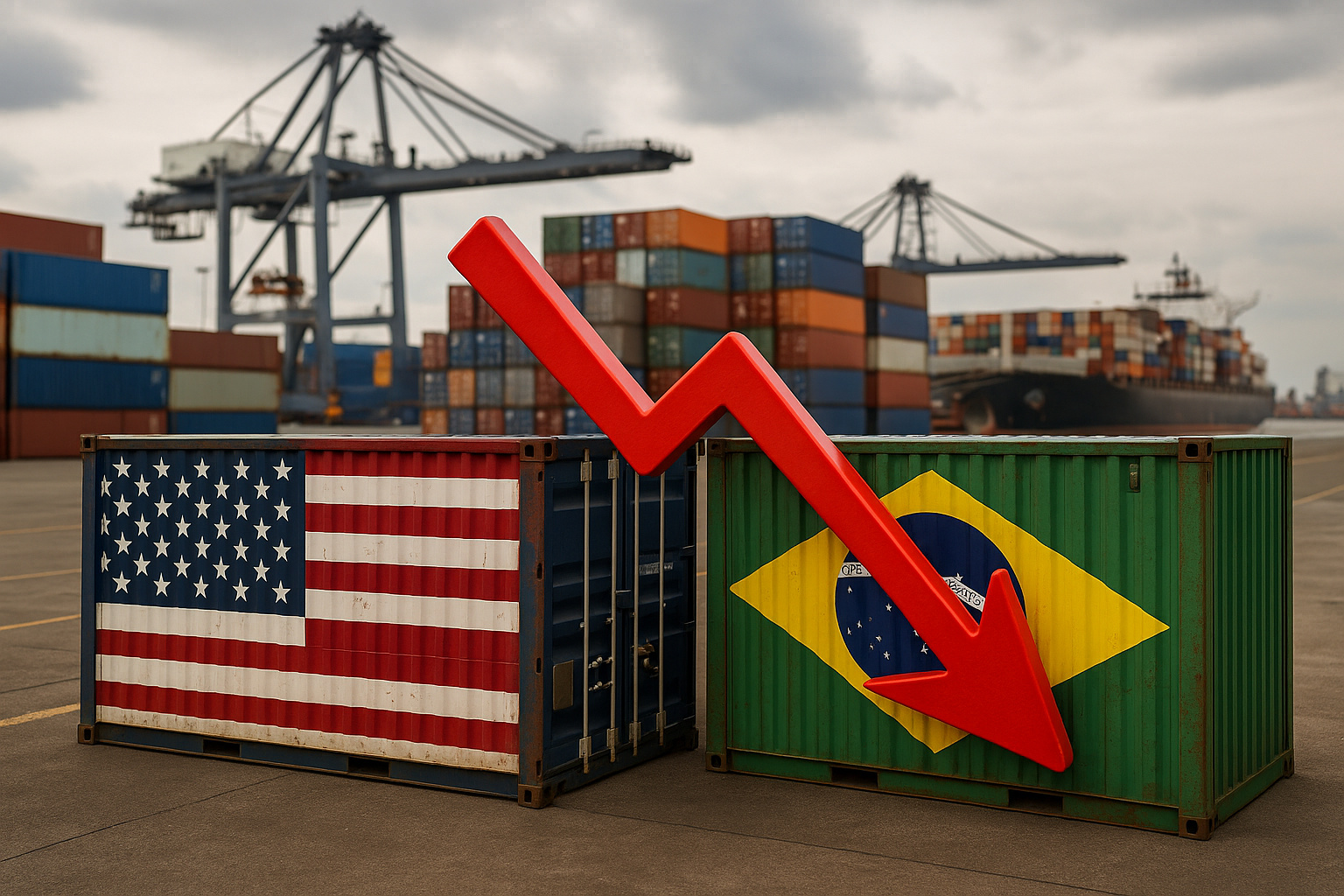
Brazil’s Sales to the United States Drop Significantly, Even After Tariff Removal, Revealing Changes in Bilateral Trade Behavior
Brazilian exports to the United States fell 28.1% in November, although the 50% tariff was removed in the previous month. Therefore, the decline caught the sector’s attention.
In November, Brazil exported US$ 2.662 billion to the American market. Still, in the same month of the previous year, the country had sent US$ 3.703 billion to the USA. The retroactive effect of the repeal, valid since November 13, did not prevent the drop.
Overall Exports, Official Numbers, and Trade Behavior
Total Brazilian exports grew 2.4% in November compared to the same month in 2024. However, performance for the USA followed an opposite trajectory.
-
Not even the end of the ‘roller coaster’ described by the price of Brent crude oil (the main global benchmark) – which jumped from a price of $72 to $120, then dropped to $76 per barrel – due to the recent peace agreement between the US and Iran, was enough to relieve the Brazilian economy from inflationary pressures.

-
European Union looks again at Brazilian seafood after a nearly 8-year ban and may unlock a coveted market for lobster, tuna, tilapia, and shrimp.

-
Japanese retro sneakers become a sales phenomenon, help Asics achieve record profits, and gain their own operation to target Los Angeles, Milan, and Seoul.
-
Weg is the Brazilian company most exposed to Trump’s tariff hike. The multinational manufacturer of industrial motors and equipment, headquartered in Jaraguá do Sul (SC), is racing against time to reduce the impact of the new U.S. taxation.




Exports totaled US$ 28.5 billion for the month. Although they slightly exceeded US$ 27.9 billion from November 2024, there was a 9.7% drop from October, when Brazil exported US$ 31.5 billion.
According to the Ministry of Development, Industry, Commerce and Services, the retraction for the USA happened even after the end of the tariffs implemented by the American government.
Growth of American Imports and Trade Imbalance
During the same period, Brazilian imports of products manufactured in the USA increased 24.5%, reaching US$ 3.834 billion.
A year ago, the value was US$ 3.078 billion, which, therefore, showed a significant advance.
From January to November, Brazilian exports to the USA fell 6.7%, reaching US$ 34.2 billion, while imports grew 12.7%, totaling US$ 42.1 billion. Thus, the balance recorded a deficit of US$ 7.94 billion for the period.
Products with Largest Export Declines
The reduction in sales primarily affected sectors with a high economic impact. Below are the items with the largest declines:
- Crude Oil: −66%
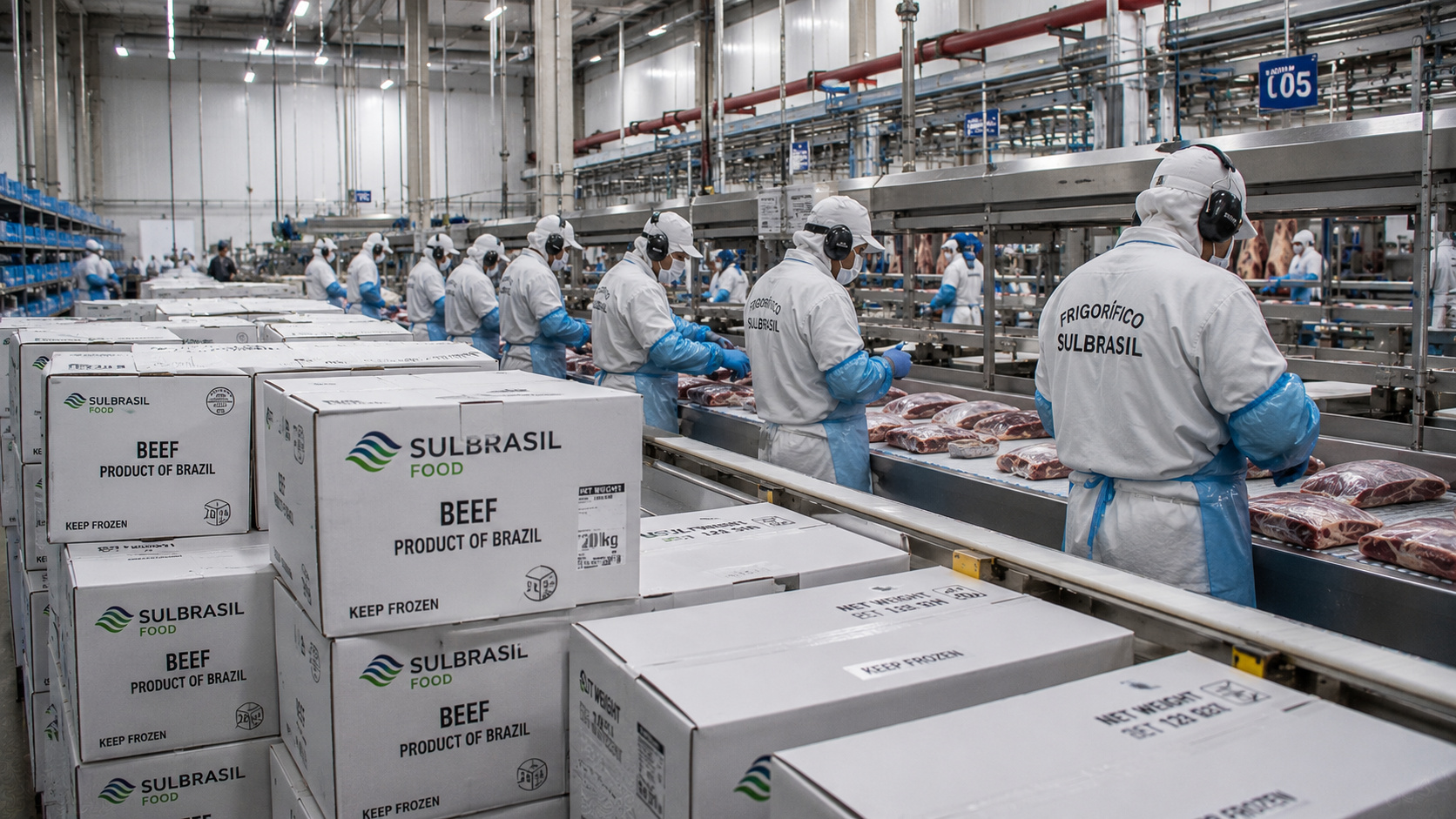
- Beef: −58.6%
- Unroasted Coffee: −55.6%
- Fruit or Vegetable Juices: −40.1%
- Cellulose: −31.4%
Additionally, Brazil also exported less to Argentina, Canada, Mexico, Africa, and the European Union. The declines ranged from 2.1% to 11.6%, depending on the destination.
China Advances as Main Destination for Brazil
Although sales to the USA have declined, exports to China grew significantly.
The increase was 41%, rising from US$ 5.8 billion to US$ 8.2 billion. The Asian country accounted for 29% of all Brazilian exports in November.
Segments That Boosted Monthly Results
Agriculture was the highlight of Brazilian exports.
The sector grew 25.8%. The Transformation Industry advanced 3.7%. However, the Extractive Industry fell by 14%.
Trade Balance Year-to-Date
From January to November, Brazil exported US$ 317.8 billion, an increase of 1.8% compared to the total from 2024.
Imports totaled US$ 259.98 billion, a rise of 7.2%.
Thus, the trade balance stood at US$ 57.8 billion, down 16.8% from the same period the previous year.
The current trade balance reached US$ 577.8 billion, up 4.1%.
End of Tariffs and Direct Impacts on Trade Flow
The tariff was ended in two phases.
On November 20 2025, Donald Trump removed 40% tariffs. A week prior, he had eliminated an additional 10% tariffs. Both decisions took effect retroactively to November 13.
The 50% tariff had started on August 6 2025, when the USA applied an additional 40% on the 10% extra tariffs imposed since April. Thus, products like meats, coffee, cocoa, sugar, tropical fruits, vegetables, fossil fuels, oil, and derivatives were affected.
Political Motivations and Justifications of the U.S. Government
According to the U.S. government, the tariffs responded to recent practices and actions from Brazil considered threats to national security, foreign policy, and the American economy.
Additionally, Brazilian court decisions involving big tech companies were mentioned as part of the political justifications for the tariffs.







Be the first to react!