






 Portuguese
  Spanish


During Interview at COP30, President Lula Claimed He Would Not Be “False and Lying” When Announcing the Oil Exploration Test in the Equatorial Margin After the Event, Reinforcing That the Authorization Is Limited to the Research Phase.
Amid the COP30, President Luiz Inácio Lula da Silva defended the announcement of the authorization for Petrobras to conduct exploratory tests for oil in the Equatorial Margin, in the State of Amapá. In an interview with foreign journalists in Belém (PA) on Tuesday (4), the president stated that he would have been “a false and lying leader” if he had waited for the end of the climate conference to make the decision public.
“If I were a false and lying leader, I would wait until after COP to announce,” Lula stated, reinforcing that the government seeks to act with transparency.
President Emphasizes That Authorization Is Only for Exploratory Research
During the press conference, the president made a point of highlighting that the authorization granted to the project does not mean the immediate start of oil and gas exploration in the region. According to Lula, the current permit is only for conducting tests and gathering geological information.
-
With a record production of nearly 3 million barrels per day, Petrobras resumes importing diesel in July, highlighting the bottleneck in Brazilian refining.

-
Qantas and Airbus Invest in Company Aiming to Convert Unsorted Household Trash into Jet Fuel

-
Brazil’s ANP Opens 86 New Oil Blocks in the Equatorial Margin, Expanding the Amazon River Mouth Frontier

-
OPEC+ Boosts Oil Supply by 188,000 Barrels per Day in July 2026, Leading to Price Drop from $112 to $89 per Barrel in Under Two Months
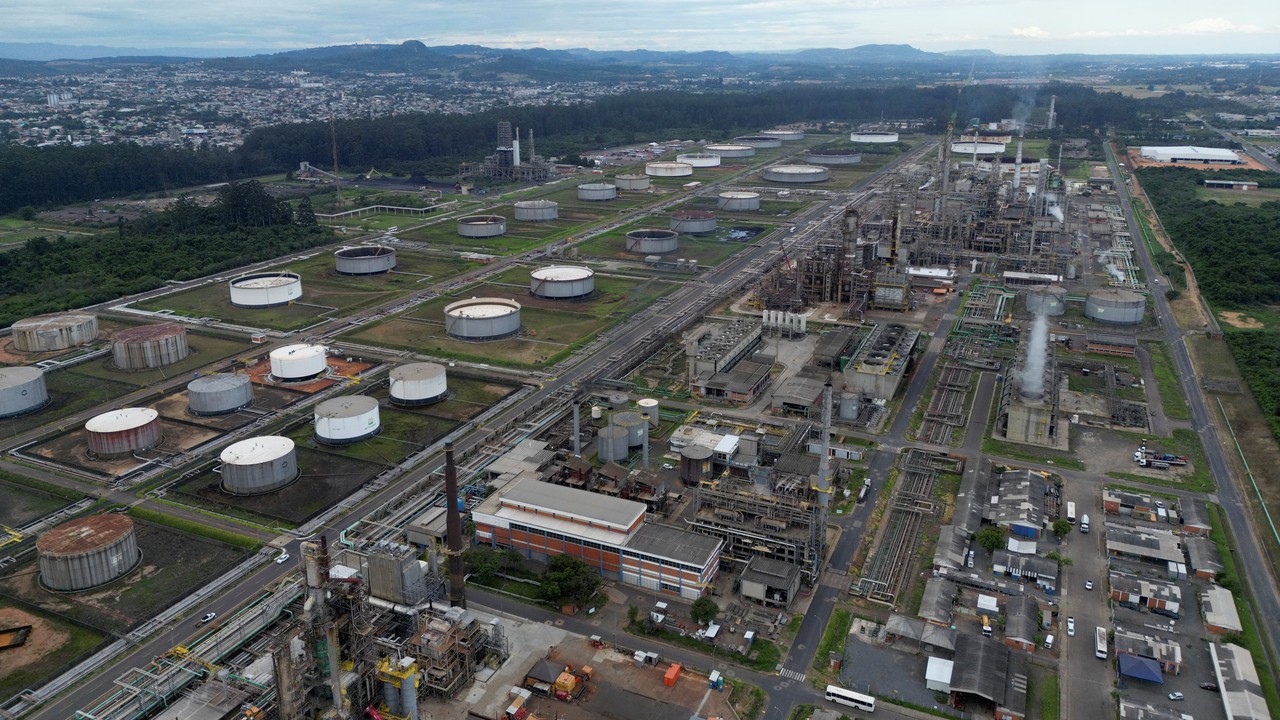



“We have authorization to do the test. If we find the oil that is believed to be there, we will have to start everything again to get a license,” he explained.
The government reinforces that if economically viable reserves are identified, a new environmental licensing process will be necessary before any extraction activities.
Equatorial Margin Is Seen as a New Frontier for Oil Exploration in the Country
The research area is located in the Amapá River Basin, which is part of the Equatorial Margin, a strip that extends from Rio Grande do Norte to Amapá. The location is considered one of Petrobras’s biggest bets to increase national oil production and has been termed the “new pre-salt” by experts, due to its energy potential.
However, the region is also environmentally sensitive, as it is close to Amazônica coastal ecosystems. This characteristic has generated concerns among environmentalists and local communities, who fear risks to marine biodiversity and impacts on populations that depend on coastal natural resources.
Environmentalists Criticize Decision and Point Out Contradiction with Climate Speech
The authorization for the oil test was granted by the Brazilian Institute of Environment and Renewable Natural Resources (Ibama) last month, and the operation is expected to last five months. During this period, Petrobras plans to conduct seismic analysis and controlled drilling to assess the existence of oil and gas on a commercial scale.
Despite technical guarantees, the decision sparked negative reactions from environmentalists, who see a contradiction between the pursuit of oil and the push for energy transition. According to them, the measure could undermine Brazil’s image as a global leader in environmental defense and in policies to combat climate change.
These criticisms gain even more strength due to the fact that the announcement comes just before COP30, an event in which the country intends to highlight its leadership role in the international climate agenda and in the expansion of renewable sources.
Exploration at the Amazon River Mouth Reinforces Dilemma Between Economy and Sustainability
The debate over oil in the Equatorial Margin exposes the dilemma faced by Brazil: balancing economic growth and environmental commitment. The federal government argues that responsible exploration, accompanied by technical rigor and new environmental licenses, is compatible with sustainability objectives.
Meanwhile, environmental organizations insist that betting on fossil fuels in the midst of a climate crisis contradicts the global effort of decarbonization. Therefore, the discussion should remain at the forefront during and after the COP30, which will take place in Belém on November 6 and 7.








