Portuguese
  Spanish


Developed From Excess Solar Energy on Agricultural Roofs, the Electric Tractor Created by a Swiss Family Reached Mass Production After Years of Testing, University Cooperation and Technology Adaptation, Becoming the First Fully Electric Model Manufactured at Scale in Europe
In Küssnacht am Rigi, Switzerland, Rigitrac AG has begun mass production of the SKE 40, an electric tractor with 6 hours of autonomy, developed since 2018, intended for municipalities and vineyards, integrating rural solar energy and clean mobility.
The SKE 40 model represents the first electric tractor produced en masse in Europe, resulting from a process that started in 2018 with the development of a functional prototype. The initiative arose from the need to utilize excess electricity generated by solar panels installed on agricultural roofs.
Electric propulsion allows operation in the field without smoke or noise emissions, a relevant feature for sensitive urban and rural environments. The equipment was designed for use close to people, animals, and residential areas, maintaining performance compatible with specific tasks.
-
Fiat Strada Becomes Top Seller in June, Surpassing Onix, Polo, Hilux, and T-Cross with 107 HP Engine and 732 km Range.

-
Suitcase-sized hydrogen engine spins at 25,000 rpm, nearly doubling the efficiency of conventional cars and replacing exhaust smoke with water vapor

-
1983 Chevrolet Runs Over 100,000 km Without Gasoline, Powered by Wood Chips, Reaches 125 km/h in Airport Test

-
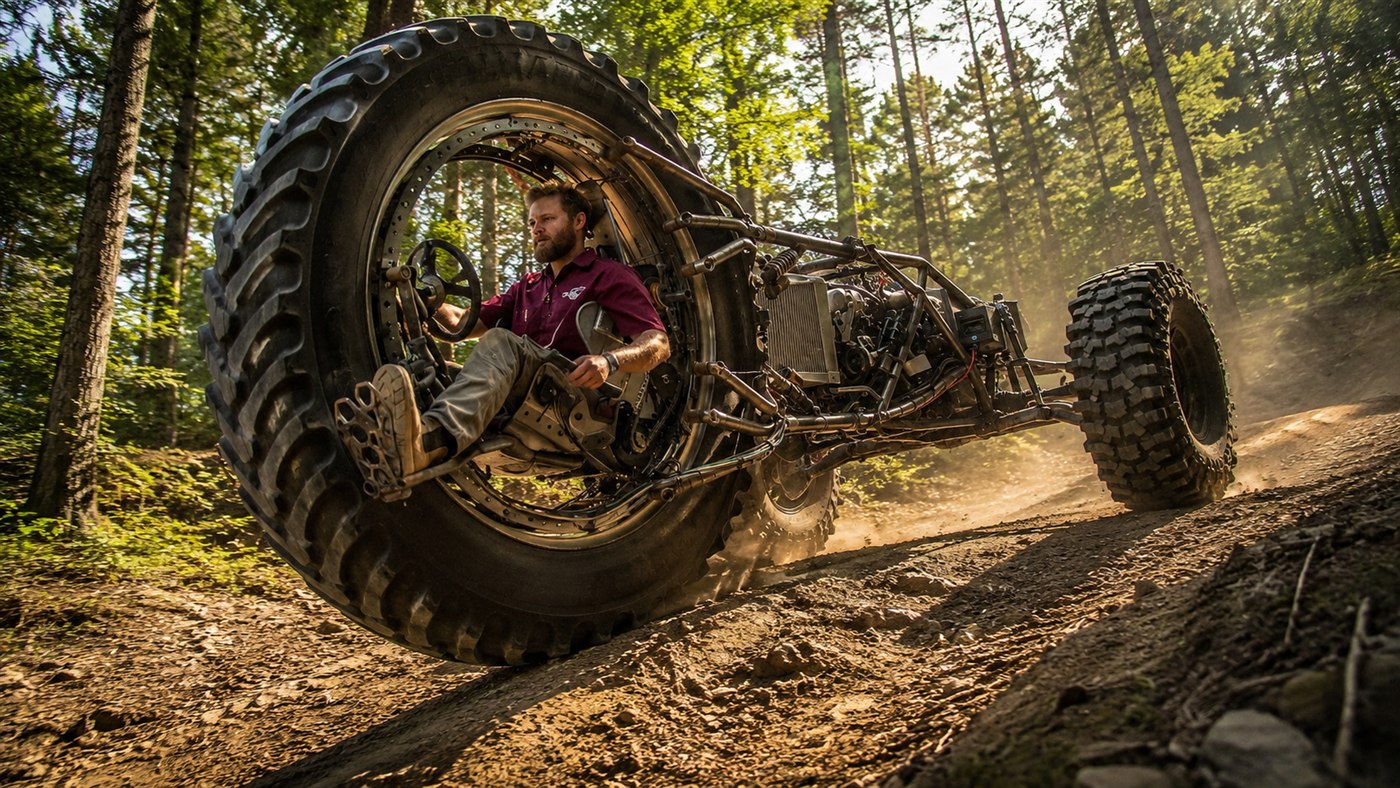
Workshop Converts Giant Tractor Tire Tricycle into a Three-Wheel Drive Hybrid with 36,000-Watt Electric Motor Capable of Climbing Hills



The battery autonomy of the SKE 40 reaches 6 hours of continuous work, catering to activities such as urban cleaning, park maintenance, horticulture, vineyards, and winter municipal services. Charging can be done directly from existing solar systems.
The mass production of the tractor is considered a European milestone for consolidating electrification in a segment that has historically depended on diesel. Municipalities and agricultural properties are the first users of the equipment in different regions.
Technical Development and Academic Collaboration Since 2018
The first prototype of the electric tractor was developed in 2018 in collaboration with the University of Dresden. At that time, several essential components were not commercially available in the European market, necessitating joint development with specialized suppliers.
Battery management systems and electric drive components needed to be designed, tested, and reworked repeatedly under real agricultural use conditions. The process involved failures, successive adjustments, and restarting technical stages along the way.
This effort resulted in a functional and viable machine for sustainable manufacturing, without relying on ready-made imported solutions. The accumulated learning allowed structuring a production line capable of meeting growing demand in a standardized manner.
Academic collaboration played a central role in adapting electric technologies to agricultural environments, characterized by dust, moisture, thermal variations, and long operational shifts in open fields.
Family Structure and Organization of Rigitrac AG
Rigitrac AG has maintained its family business profile since its founding by Sepp Knüsel in the 1970s. Currently, the management is led by Theres Beutler-Knüsel, who has been at the helm for ten years.
The operational structure involves direct participation from the director’s mother and sisters in areas such as purchasing, communication, human resources, and accounting. Approximately 45 people make up the company’s total workforce.
This organization supports a project that connects engineering, agriculture, and energy transition, keeping strategic decisions concentrated within the founding family. The management model favors technical continuity and alignment with long-term objectives.
The central vision consists of integrating local renewable energy with agricultural and municipal machines, utilizing resources already installed on rural properties and reducing dependency on imported fossil fuels.
Practical Applications, External Markets and Operation in Different Climates
The SKE 40 was designed for specific tasks and not to replace large agricultural tractors. Its power is directed towards operations in reduced spaces, common in European agriculture and daily municipal management.
The low noise level allows for nighttime use in cities, while the absence of emissions improves working conditions in the field. These features increase the acceptance of the equipment by operators and public administrations.
The Swiss electric tractor is already operating in countries such as Norway, Denmark, and Austria, facing diverse climatic conditions. There are reports of usage on snow-covered roads and in specialized crops in Central Europe.
The presence in external markets indicates that the electrification of heavy and light machines is starting to transcend national borders, establishing itself as a viable solution in different operational and climatic contexts.
Institutional Recognition and Implications for Clean Mobility
The international journey of the SKE 40 coincided with receiving the Watt d’Or 2026 award, granted by the Swiss Federal Department of Energy. The award was given in the category of mobility with energy efficiency.
Although it does not include financial reward, the recognition provides visibility and credibility with government agencies, agricultural cooperatives, and authorities responsible for public procurement. The award reinforces the tractor’s position in the sector.
The 2026 edition will be the last before the program is ended due to budget cuts. The context adds symbolic value to the award received by Rigitrac AG.
The institutional recognition signals that energy innovations can emerge outside large urban centers, stemming from practical needs identified on farms and mountainous regions.
Projections, Energy Self-Sufficiency and Next Generation
The SKE 40 is aligned with the trend of energy self-sufficiency in rural properties, allowing farms to utilize electricity generated by solar panels or small wind turbines to power their own vehicles.
This local energy cycle reduces operational costs and emissions simultaneously, already being implemented on various properties in Switzerland and Germany. The solution is no longer conceptual and is becoming part of the productive routine.
The Knüsel family is working on developing a larger version of the tractor, aimed at more demanding tasks. The announced goal is to advance to segments where diesel still dominates widely.
In the next two years, the company plans to expand electrification to heavy-duty work, maintaining the logic of integrating local energy production with direct use in agricultural and municipal machines.