






 Portuguese
  Spanish
  6 min of reading
  0 comments


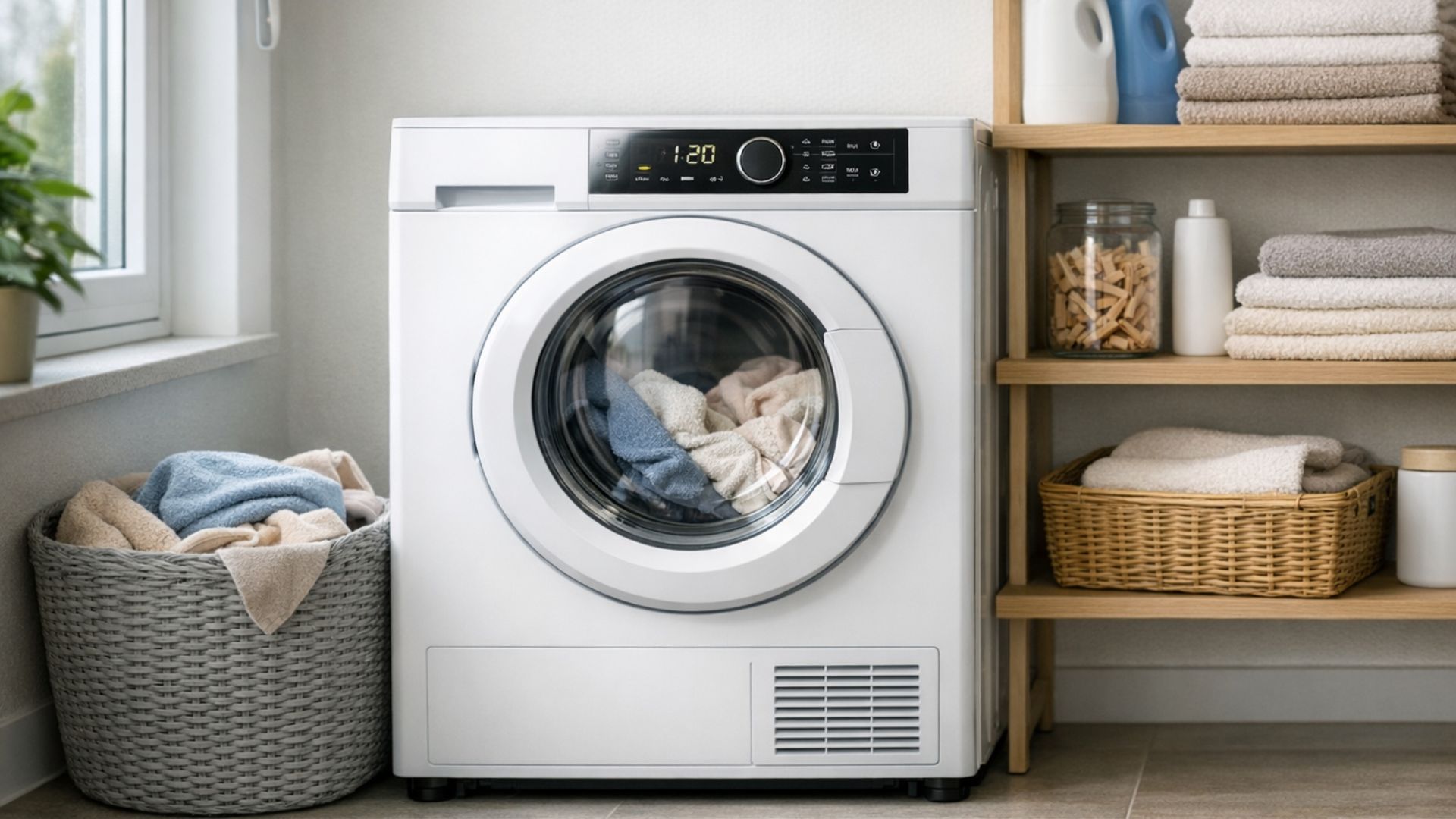
Heat Pump Technology Gains Ground by Promising Energy Savings, Ductless Installation, and Adaptation to Small Apartments, Attracting Families Seeking to Reduce Their Electricity Bills Without Giving Up the Convenience of Clothes Drying Routine.
In homes where the dryer has become a solution for rain, little sun, lack of balcony, or tight schedules, a new type of appliance is gaining traction by promising to reduce electricity bills and simplify installation: the heat pump dryer, usually marketed as a more efficient model that does not require ducting.
The switch is not related to “economy mode” or specific adjustments, but to how the equipment produces and recycles heat during drying, influencing electricity consumption, process temperature, and the overall logistics of use in smaller environments, such as apartments.
Difference Between Electric Resistance and Heat Pump
In traditional electric dryers, the logic is straightforward: a resistance heats the air, this hot air circulates in the drum to evaporate the moisture from the clothes, and in the end, the system needs to deal with steam and heat either by expelling air outside or condensing the water.
-
The “Chinese invasion” has arrived: BYD already dominates almost 45% of the electric buses registered in Brazil in May 2026, while 80% of the entire electric fleet in the country is concentrated in São Paulo with 1,300 vehicles.

-
From toy to track machine: Koenigsegg Sadair’s Spear made with over 327,000 Lego pieces reaches 111 km/h and surpasses the former Bugatti Chiron record.

-
Deep-sea marine animal can go more than 5 years without eating, combining physical adaptations and genetic mechanisms to survive in environments with extreme food scarcity; meet the Bathynomus.

-
Science wants to know what football does to you: study gathers smartwatch data to understand the real impact of World Cup emotions on the human body


On the other hand, the heat pump operates with a refrigeration circuit similar to that of an air conditioner in reverse operation, transferring heat from one point to another and recirculating the air inside the machine, rather than continuously heating like a small oven.
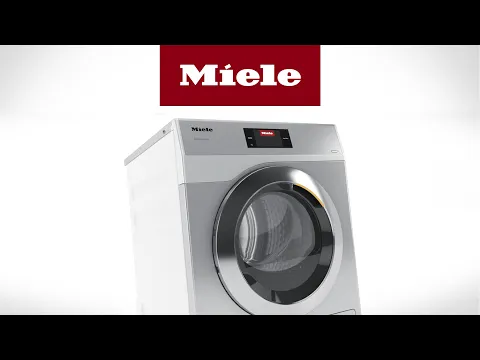

By recycling part of the thermal energy throughout the cycle, the appliance tends to require less electricity to achieve the same practical goal of removing water from the fabric, even if this occurs at lower temperatures and with a different dynamics from the resistance dryer.
What ENERGY STAR Data Says About Consumption
In the communication from ENERGY STAR, a program coordinated in the United States by the Environmental Protection Agency (EPA), the category of certified heat pump dryers appears as an alternative that can reduce energy use by at least 28% when compared to standard dryers evaluated against the label’s criteria.
In materials from the same program aimed at consumers, it is also common to indicate that certified models can use about 70% less energy than conventional dryers, always within the context of tests, reference standards, and specific conditions adopted for certification.
This type of comparison does not eliminate the variation of results in real life, as the final consumption depends on load, chosen program, frequency of use, and even ambient humidity, but it helps explain why the technology has appeared as a recurring recommendation in efficiency campaigns.
Ductless Installation and Adaptation to Apartments
Besides consumption, one of the central points for families in compact homes is installation, as creating a passage for ducting can be expensive, prohibited by condominium rules, or unfeasible due to the building’s design, especially when the laundry is in an internal area.
ENERGY STAR describes the heat pump as a simpler option to install because these models do not require external ventilation, as they do not release air outside the residence, operating in a closed circuit and internally managing the moisture extracted from the clothes.
In practice, this often means water accumulated in a reservoir that needs to be emptied periodically or directed to a drain, depending on the manufacturer’s design, which changes the “type” of care required but eliminates the dependence on hot air expulsion.
How Drying with Heat Reuse Works
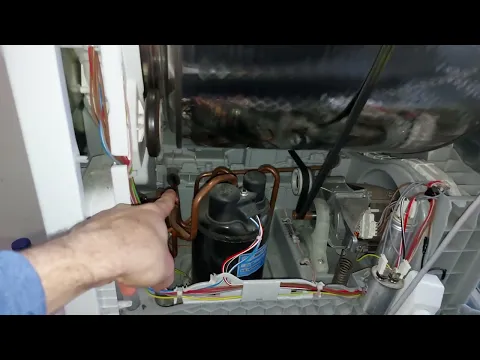
The technology may seem abstract, but the central idea is relatively straightforward: one component of the system heats the air that passes through the drum, while another part cools the flow to condense the vapor, allowing water to return to a liquid state and be collected.
Meanwhile, air circulates within the appliance and returns to the cycle with some of the heat preserved, reducing the need to generate thermal energy from scratch all the time, which differentiates it from electric resistance heating.
As drying tends to occur at lower temperatures, ENERGY STAR also associates this process with greater gentleness for fabrics, because the advancement of the cycle does not depend on extremely hot air to quickly evaporate water, as typically occurs in vented models.
Cycle Time, Maintenance, and Usage Routine
The energy gain does not mean that the experience will be identical to that of a conventional dryer, as many users notice variation in cycle time, precisely because the system operates with a different strategy for moisture removal and with temperatures lower than those of a resistance.
In informative materials from ENERGY STAR itself, the guidance is to treat cleaning and maintenance as part of performance, because the air recirculates and passes through filters and heat exchangers, and accumulated dirt can increase the equipment’s effort and reduce efficiency.
Unlike a model that “expels” part of the air outside, the machine with a closed circuit depends even more on adequate internal flow, which usually involves attention to lint filters and components related to thermal exchange, following the manufacturer’s manual.
Electric Consumption, Tariff, and Impact on Indoor Environment

There is also a difference in the profile of electricity consumption: traditional dryers may have high power during operation, concentrating usage in a short time frame, while the heat pump seeks to reduce energy per cycle by better utilizing available heat.
In regions with high tariffs, this characteristic helps to put the appliance on the radar, especially when drying is frequent due to humid weather, lack of outdoor space, or work routines, situations where use stops being occasional and becomes recurring.
Another practical factor involves heat and humidity in the room where the dryer is installed, because vented models depend on ducting to avoid hot, humid air remaining inside the house, something that can increase discomfort in poorly ventilated spaces.
When a device is used without proper expulsion, some humidity may stay in the environment, which tends to worsen in small laundry rooms, elevating the thermal sensation and creating unfavorable conditions for walls and cabinets, although the effect varies according to the location.
By operating in a closed circuit and internally managing the condensed water, the heat pump is usually presented as a way to reduce this type of interference, explaining its appeal in apartments where the resident does not want or cannot alter the structure.
Savings Depend on Habits and Usage Context
Despite the percentages being attention-grabbing, the very discourse of efficiency programs treats the results as ranges and references, not as universal guarantees, which requires caution in comparisons between homes with distinct routines and very different levels of use.
The savings reflected in public materials depend on simple factors to list but are difficult to standardize in real life, such as the number of cycles per week, load size, prior spinning in the washer, air humidity, and adherence to cleaning recommendations.
In general, sources publishing these metrics converge on the idea that the heat pump tends to be more efficient and simultaneously more flexible in installation by dispensing with ducting, linking the technology to two common problems: cost and space.


-

-

-

-

-

53 people reacted to this.