






 Portuguese
  Spanish
  4 min of reading
  0 comments


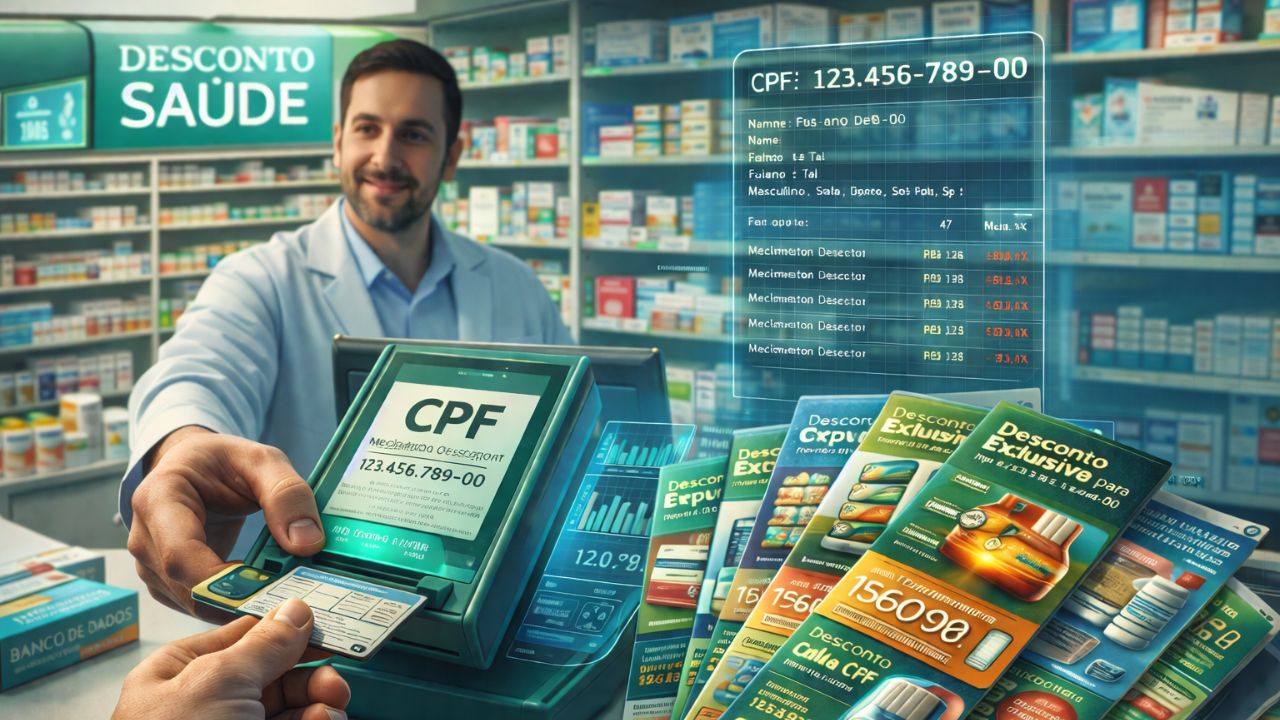
By accepting the discount, you provide an identifier that allows recording years of purchases, building consumer profiles, targeting advertising, and supporting promotions based on the price ceiling of the CMED table
Pharmacies request CPF with a naturalness that, until recently, would have been seen as an invasion of privacy. The promise is tempting: “advantages,” “club,” “lower price” and discounts that, in some cases, reach 70%. But the question that should accompany it hardly ever appears: why does a network have such an interest in your CPF to sell you medication?
The central point is not just issuing an invoice. What underlies this request is the formation of detailed databases about health-related purchasing habits accumulated over the years, and the use of maximum prices from the CMED table that create the appearance of a “super discount.” Understanding how this works completely changes the way we look at the question “what is your CPF?”.
CPF on the Invoice Is Not the Same as CPF for Discount
Hearing “CPF on the invoice?” has become a routine across Brazil, and this has a context: 15 states participate in state programs like CPF on the Invoice, aimed at encouraging invoice issuance and reducing tax evasion linked to ICMS.
-
Brazilian Joins Homeownership Consortium, Faces Decade of Dual Payments Totaling $141,000, Surpassing Traditional Mortgage

-
Land Rover to Halt Production in July, Putting 371 Jobs at Risk, as Chinese Automaker Negotiates to Convert Factory to 100,000 Vehicles Annually by 2027

-
Mexican Pest Threatens U.S. Cattle Herds at Historic Lows, Potentially Boosting Brazilian Beef Exports as Burger Prices Soar

-
Brazilian Freight Bill Progresses in Congress with $5,000 Minimum Wage, 70% Advance Payment, and Fines Up to $1 Million, as Agriculture and Industry Warn of Rising Costs and Legal Uncertainty


The first state to implement the mentioned program was Rio Grande do Sul, in 2012, and other states began adopting similar initiatives afterward.
The problem is that this normalization has created an automatic behavior. The networks realized that the CPF was already in the cash flow and, from there, started using the data not only as “registration,” but as a key to link each purchase to a specific person, in a recurring and cumulative manner.
Behind the Counter: Databases and Targeted Advertising

When the CPF is conditioned to a discount, the economic incentive makes the consumer comply. The database provides an emblematic case: in 2018, a pharmacy was fined R$ 7.9 million for conditioning discounts on the provision of CPF, in a context where clarity and transparency about data use were being discussed.
Additionally, the database describes the operations of another pharmacy using the logic of targeted advertising based on segmentation: the advertiser defines the audience, and the campaign is directed based on what the database indicates about purchasing habits.
The text mentions a volume of 48 million customers in the referenced dataset, and gives examples of segmentation by purchased items, which can influence the type of ad that the person starts to see on digital channels.
The practical implication is direct: the discount can be the “entry cost” for you to become a highly valuable advertising profile, especially when consumption involves sensitive topics like health.
The “Discount” That Can Be an Illusion Created by the CMED Table
Here comes the part that confuses many people: the enormous discount does not always mean that the “full” price was real. The database explains the logic using the CMED table, which sets limits on medication prices.
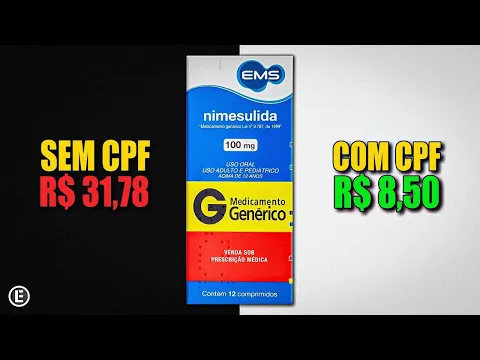
The example cited is of nimesulide: in the city of São Paulo, a box of 12 tablets was priced at R$ 31.78 and, when providing the CPF, dropped to R$ 8.50, a “discount” of 73%. However, the database compares it with other purchasing references: a chain of private hospitals would have paid R$ 4.39, and public entities R$ 1.08.
The argument presented is that the high value may reflect the ceiling allowed by CMED, creating the sensation of “super promotion,” while the effective price practiced in retail revolves around the already reduced value.
Result: the consumer thinks they received something extraordinary, but may have only paid the price that was already realistic, with the added condition of having provided their CPF to feed the registry.
Is This Legal? What the LGPD Requires and What Changes in Practice
The database indicates that the practices are not automatically illegal due to the lack of a general prohibition, but highlights an essential point of the LGPD: consent must be qualified, with transparency and information about purpose and processing of data, and without coercion.
It also mentions an advancement in the state of São Paulo, with a rule established in November of last year (as stated in the database), prohibiting the requirement of CPF at the time of purchase without properly and clearly informing about the opening of a registry and the collection of personal and consumption data that conditions promotions.
The database further mentions the requirement for notices with the text “PROHIBITED TO REQUIRE CPF…” in a visible location in pharmacies.
In practice, the guidance is: if you do not want to provide, refuse at payment and, if there is a denial of the discount linked to the CPF, seek the responsible party at the store, and if necessary, PROCON. The underlying point is that consumers should not have to fight for clarity on what they are providing and why.
In the end, the question remains that bothers because it is simple: would you provide your CPF when the pharmacy asks for CPF to “give a discount,” or would you prefer to pay without entering this registry?





Be the first to react!