






 Portuguese
  Spanish
  4 min of reading
  0 comments


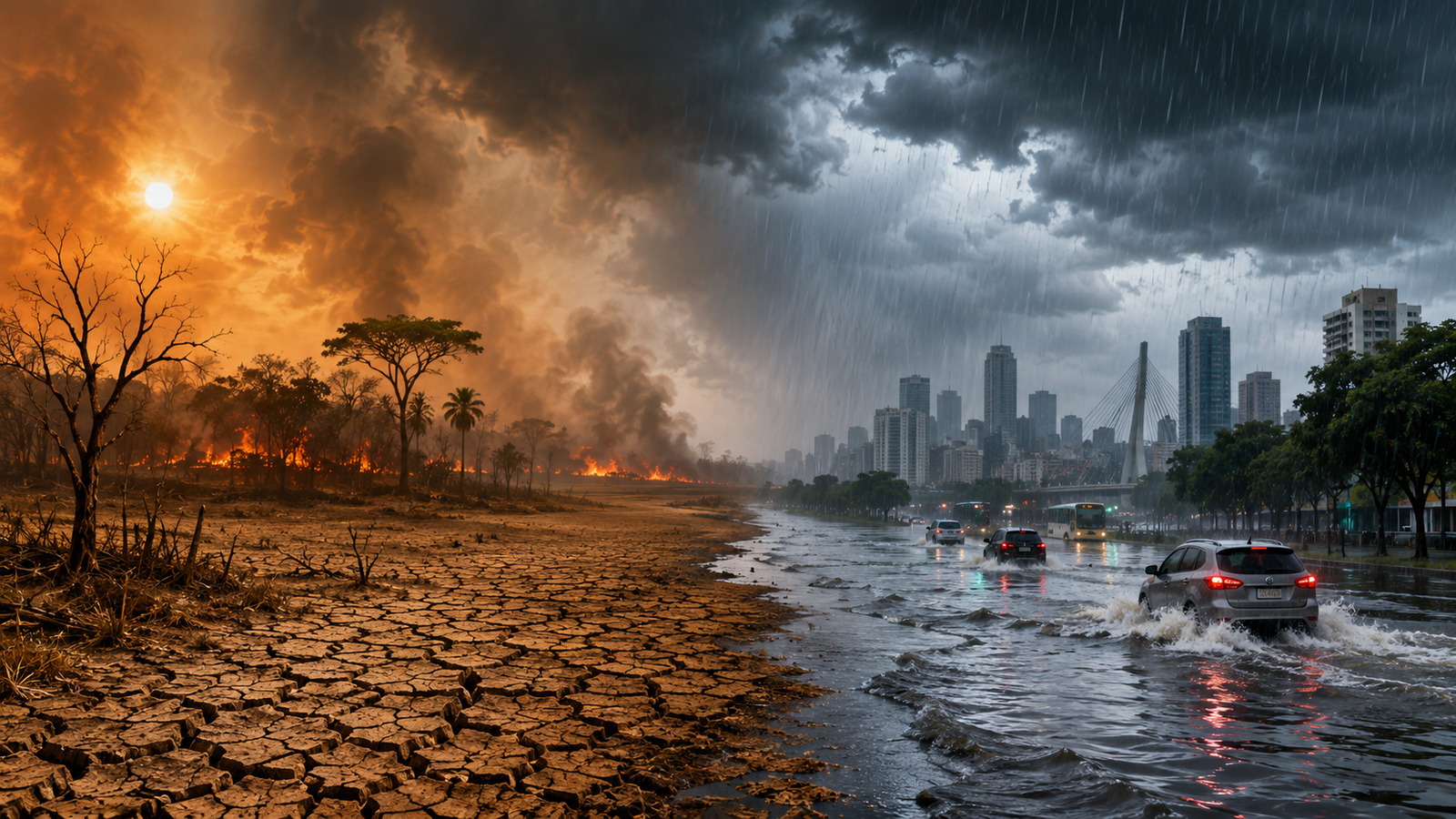
World Meteorological Organization points to an 80% chance of El Niño between June and August 2026 and warns of impacts in Brazil, including drought, fires, risk to hydroelectric generation, floods, and landslides
El Niño is expected to influence the climate in the coming months and increase the risk of extreme events in Brazil, according to a global alert from the World Meteorological Organization, a UN agency. The entity points to an 80% probability of the phenomenon between June and August 2026 and chances close to or exceeding 90% of continuation until at least November.


El Niño raises alert for drought, energy, and fires in Brazil
Brazil is among the countries that could be most affected by the advance of El Niño. The WMO points to the risk of more severe drought in the Amazon and Northeast, as well as torrential rains in the Southeast, with direct impacts on energy, fires, and population safety.
The Secretary-General of the WMO, Celeste Saulo, stated that attention is needed for energy generation by hydroelectric plants. According to her, droughts in the Northeast tend to be severe and water is usually a problem in the region.
-
Elon Musk Plans $25 Billion Chip Factory with SpaceX and xAI at Tesla’s Massive Texas Site, Visible from Space

-
Brazilian Innovator Marcelo Loureiro Sets Guinness World Record with 12,000 km Robotic Surgery from Brazil to Kuwait
-
Workers Discover 19th-Century Iron Ship and Indigenous Artifacts During COP30 Construction in the Brazilian Amazon
-
Chinese robots trained for two weeks to row a dragon boat at the Sichuan Festival in China, took full control when humans stopped rowing, and even made rice dumplings in one of the most unusual tests ever conducted with humanoids.


The lack of rain may increase the risk of blackouts in the Northeast, according to the entity’s alert. In the Amazon, the scenario is concerning because the Amazon Basin has been under stress for many months and was still in recovery.
The risk of fires also appears as one of the practical consequences associated with the drier period.
For the WMO, the combination of extreme weather, heat, and lack of rain requires preparation from governments and the most climate-sensitive sectors.
Southeast may face intense rains, floods, and landslides
While the North and Northeast are on alert for drought, the Southeast is cited by the WMO for another type of risk. The region may face floods, intense rains, and landslides, including cities like São Paulo and Rio de Janeiro.
Celeste Saulo stated that this would be another expected effect in the country, within a set of “cascading consequences” caused by El Niño around the world.
The head of the agency also recalled that, even without El Niño, Brazil recorded “impressive” rains in 2025. According to her, the events were devastating in many parts of the South of the country.
The WMO’s assessment is that Latin America is more prepared than in previous years. In the Brazilian case, Saulo highlighted the existence of strong institutional capacity for response but emphasized that the climate impact remains real.
“Extreme events are becoming more extreme, and it is very difficult to prepare for something that is outside the statistics,” stated the WMO Secretary-General.
Probability reaches 90% and models indicate at least a moderate event
The global alert was issued this Tuesday by the World Meteorological Organization, based on dozens of data provided by climate agencies from various countries. The entity’s monitoring is considered an international reference for tracking climate phenomena.
According to the report, there is an 80% probability of an El Niño event between June and August 2026. The chances of continuation until at least November are close to or exceed 90%.
UN Secretary-General António Guterres stated that the science is clear and that El Niño is coming “to our doorstep” in the coming months with 90% certainty. For him, the world needs to treat the phenomenon as an urgent climate alert.
The WMO reported that there is still uncertainty about the intensity and timing of the peak. Even so, most forecast models suggest at least a moderate El Niño, with the possibility of being strong.
The entity emphasizes that intensity is relevant, but even a moderate El Niño makes some extreme climate events more likely.
Signs come from the Pacific and indicate abnormal warming
Between the end of April and mid-May, the sea surface temperature in the Equatorial Pacific, the area used as a reference for monitoring, was approaching El Niño thresholds.
The WMO reported that the increasing anomalies on the surface are fueled by exceptionally warm subsurface conditions in the tropical Pacific. Temperatures were more than 6°C above average, forming a heat reservoir that contributes to surface warming.
The Southern Oscillation Index, the atmospheric component of El Niño, also appears consistent with the development of the phenomenon.
According to the WMO, the most recent El Niño, from 2023-24, was one of the five strongest ever recorded and played an important role in the record global temperatures observed in 2024.
The agency does not use the term “super El Niño,” as it is not part of standardized operational classifications. Even so, it warns that warmer oceans and atmosphere increase the availability of energy and moisture for heatwaves and intense rains.
This article was prepared based on information from the World Meteorological Organization and the United Nations, with data, numbers, and statements preserved as per the consulted material.


Be the first to react!