Portuguese
  Spanish


In Taylor, Texas, an area donated by a farmer in 1999 to become a public park went through foundations, city, and economic corporation until it was sold in 2025 to Blueprint. The billion-dollar data center project divides residents, local government, justice, and the promise registered in the deed and the future of the local neighborhood.
A farmer donated an area of 87 acres in Taylor, Texas, for a symbolic value of $10, with the condition that the land be used as a public park. Almost three decades later, the same area became the center of a dispute because it was sold for $10 million to make way for a Blueprint data center.
The case was published by Tom’s Hardware on June 8, 2026, and also reported by Chron on June 9, 2026, based on an investigation by 404 Media and local documents. The project planned for the land is presented by the city of Taylor as a $1 billion investment, with three phases and about 135,000 square feet of construction.
Land donated in 1999 was destined for a public park
The origin of the dispute dates back to July 7, 1999, when the farmer identified in reports as Mr. Bland transferred 87.97 acres to the Texas Parks and Recreation Foundation, a public trust. The symbolic value was $10, and the deed indicated that the area should be maintained for future use as a park.
-
Couple receives a quote of $50,000 to install a built-in refrigerator, decides to do the work themselves, spends $6,000, and claims to have saved over $100,000 by renovating the house.

-
At 77 years old, an elderly woman lives alone in an almost ghost village in the French Alps, at an altitude of 1,000 meters, where there is a town hall, a mayor, and an entrance sign, but only she lives there every day in a place destroyed by a landslide and almost erased from the map.

-
India excavates a 28 km artificial lake in the Thar Desert, lines the bottom with a giant plastic sheet to prevent 1.41 million tons of water from disappearing into the sand, and attempts to supply 5 million people throughout the year.
-
12-year-old girl develops a virtual receptionist with artificial intelligence for small businesses and demonstrates how the combination of creativity, programming, and automation can boost productivity, reduce repetitive tasks, and expand access to digital transformation.


The memory of this goal appears in the account of Pamela Griffin, a local resident interviewed by 404 Media and cited by Tom’s Hardware. She said she grew up watching children play in the former rural area and recalled that Bland spoke about the lack of recreational spaces for the neighborhood’s youth. For residents opposed to the project, the central point is not just the data center, but the original promise tied to the land.
Area went through foundations, city, and economic corporation
After the first transfer, the land changed hands several times. In 2003, the Texas Parks and Recreation Foundation passed the area to another nonprofit organization, the Williamson County Park Foundation. In the same year, the foundation transferred the property to the city of Taylor.
In 2008, the city sold the land to the Taylor Economic Development Corporation, known as TEDC, for $15,000. By 2025, TEDC sold the area to Blueprint for $10 million. The trajectory transformed a symbolic donation made by a farmer for community use into a million-dollar deal linked to digital infrastructure.
Data center of $1 billion became a local dispute issue
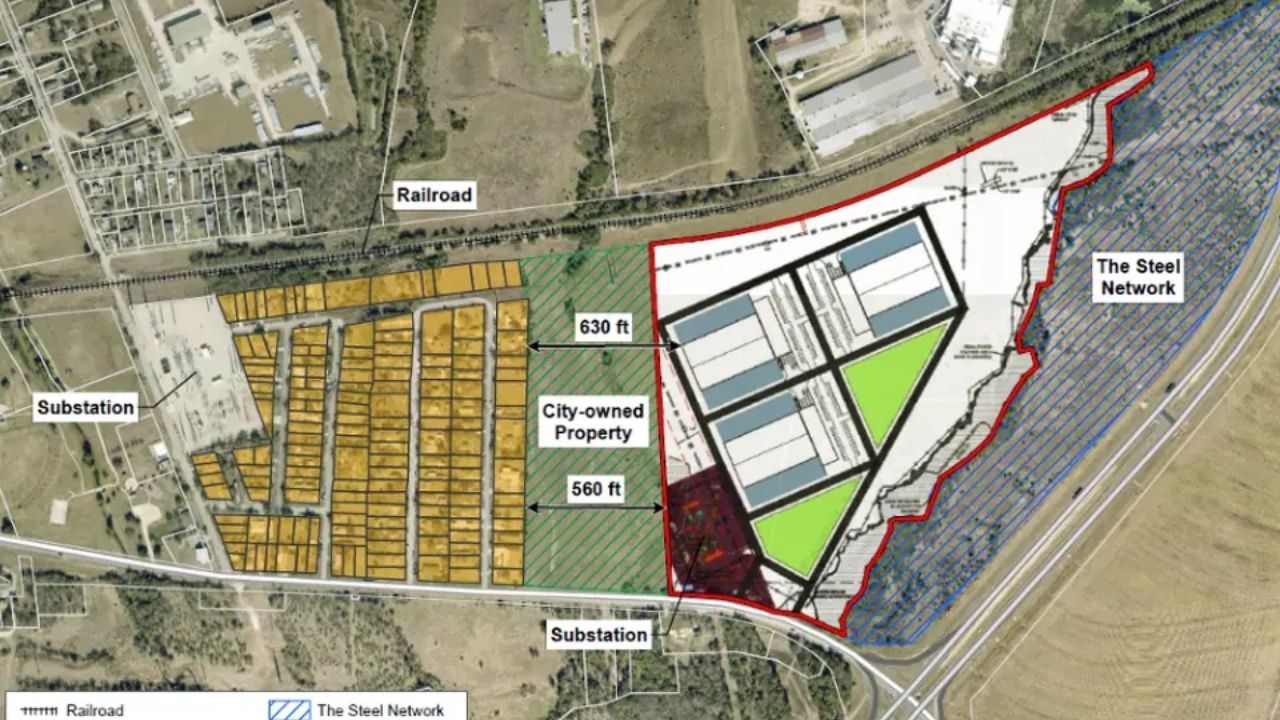
According to the official page of the city of Taylor, the Blueprint Projects Data Center is a 135,000-square-foot project planned in three phases. The structure is expected to house servers used for data storage, website hosting, artificial intelligence processing, and other digital functions.
The project site is located on the southeast side of Taylor, between Carlos G. Parker Boulevard, Martin Luther King Boulevard, and the railroad. The city presents the venture as a total investment of $1 billion. However, for critical residents, the impact of a data center in the neighborhood cannot be analyzed solely by the investment value.
Residents fear noise, light, water, energy, and loss of home value
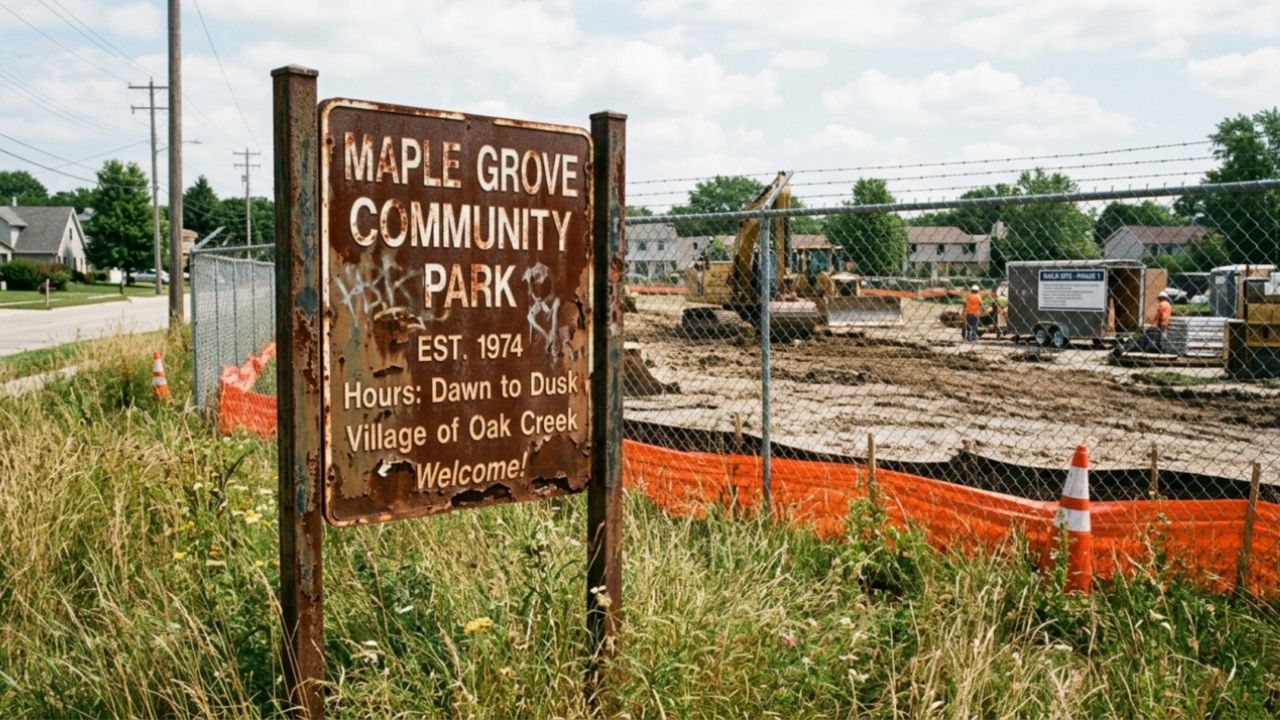
The concerns cited by residents involve possible impacts on air, water, electricity, noise, lighting, and the valuation of nearby properties. The report from Tom’s Hardware states that Pamela Griffin only learned of the plan for the data center in 2025, when local organizers began alerting neighbors about the project.
The city states that mitigation measures were discussed, including a barrier wall, landscaping, closed-loop cooling system, and the developer’s own substation construction. The Chron also reports that Taylor hired HDR to conduct an environmental impact study, which indicated containment of concerns such as noise and light, as well as lower water consumption compared to other projects in the sector.
Local government defends revenue and claims legal limits
The city of Taylor argues that the development could generate about $30 million in additional revenue over ten years. Of this total, according to the local administration, up to $20 million could benefit the school district, with investments in facilities, teacher salaries, and educational improvements.
At the same time, the city maintains that the property has been zoned for industrial use since 2005 and was designated as an employment center in the comprehensive plan updated in 2023. On its FAQ page, Taylor states that when land is already zoned for industrial use and the project meets the applicable requirements, Texas law grants the legal right to advance the proposal. The city hall says its role is to enforce design, water, noise, and setback standards, and to oversee compliance with these rules.
Legal battle continues after initial defeat of residents

Residents opposed to the project went to court to try to block the data center. According to the Chron, the lawsuit against Blueprint was dismissed by a state district judge in October 2025. After that, the plaintiffs appealed to the Third Court of Appeals in Austin.
Pamela Griffin and family members appear in reports as part of the local mobilization. The phrase attributed to her summarizes the residents’ argument: the dispute would not be just against a data center, but for the idea that the land had been intended for a public park. In this group’s view, the original deed should preserve the community purpose of the land.
Case exposes tension between rural promise and race for digital infrastructure
The story draws attention because it connects two very different realities. On one side, the decision of a farmer who gave land for a symbolic value to benefit children and local residents. On the other, the expansion of data centers in urban and peri-urban areas, driven by digital storage, online services, and artificial intelligence.
This tension is not exclusive to Taylor. The search for land, energy, and infrastructure has led data center projects to smaller cities, where governments see potential revenue, but residents question noise, resource consumption, visual impact, and changes in routine. The case shows how the digital economy also depends on very physical decisions: land, zoning, electrical grid, construction, and neighborhood.
Symbolic value of $10 became a symbol of a larger dispute
The contrast between the original $10 donation and the $10 million sale in 2025 made the case more sensitive. For the city, the project represents revenue, investment, and compatible use with zoning. For opponents, the million-dollar value does not erase the registered purpose when the land was designated as a park.
The fact that the area was linked to a public trust also increases the symbolic weight of the controversy. In a state where deeds and property rights have strong legal and cultural relevance, the question remains whether a promise of community use can be overridden by institutional changes, zoning, and economic development.
The land that should have become a park now tests the limits of public trust
The dispute in Taylor is not limited to technology against residents, nor progress against nostalgia. It involves documents, local memory, revenue, legislation, urban planning, and the fate of an area that entered the community’s history as a promise of a park.
In the end, the case of the farmer and the 87 acres raises a difficult question: if land was given for a symbolic value to serve the public, should a city be able to change this destiny decades later in the name of investment and revenue? Leave your opinion in the comments.