Portuguese
  Spanish


Even without rural zoning, family farming remains active in Florianópolis, especially in Ratones, with cassava, vegetables, honey, oysters, and organics. Family properties combine income, preservation, education, rural tourism, and memory, but face urban pressure, property tax, and lack of formal recognition as the capital expands over traditional local productive areas.
Family farming continues to be present in Florianópolis, even without rural zoning, and is prominent in neighborhoods like Ratones, where properties combine local production, honey, organics, and rural tourism. The report from the Agro, Health, and Cooperation project was published by ND Mais on June 17, 2026.
The text highlights small properties, family enterprises, and initiatives that maintain food production, beekeeping, organic cultivation, educational experiences, and environmental preservation within the capital of Santa Catarina, despite urban expansion and the lack of formal recognition of agricultural activity.
Rural Florianópolis exists outside the tourist imagination
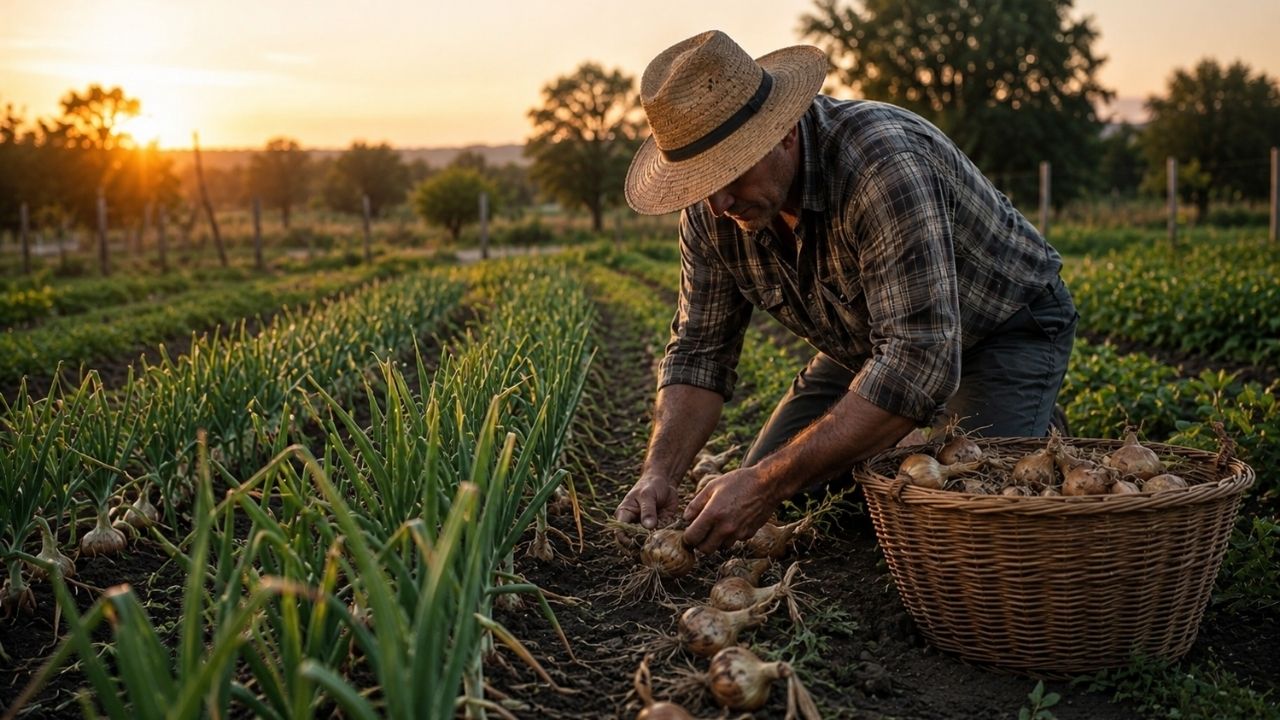
Florianópolis is usually remembered for its beaches, urban life, technology sector, and tourism. But, far from the more well-known image of the capital of Santa Catarina, there is still a city where families plant, raise animals, produce honey, cultivate vegetables, and preserve lifestyles connected to the countryside.
-
Producer receives news and had to cull almost the entire herd, bounced back with the help of compensation, and is now producing 450 liters of milk per day in SC.

-
Quail Eggs Reveal a “Secret Code” on Their Shells Explaining Unique Patterns and Colors

-
Rare Tropical Fruit Canistel, with Egg Yolk Color and Caramel Flavor, Gains Interest from Researchers and Small Producers in Brazil
-
Brazilian Farmers Develop Wheeled Metal Lever to Ease Cassava Harvesting Without Heavy Machinery


This presence does not appear as a formal rural zone, but it remains alive in small properties and family enterprises. Family farming in Florianópolis shows that the capital is not just sea, buildings, and services: it is also farmland, productive backyard, Azorean tradition, and local food.
Ratones concentrates production, memory, and green areas
In Ratones, in the North of the Island, rurality appears more visibly. The neighborhood holds extensive green areas, productive properties, and families that still maintain a direct relationship with the land, even in the face of urban advancement.
On a property of about six hectares, the production includes cassava, sweet potato, pumpkin, beans, vegetables, and experiments with special coffees. The agroecological and agroforestry model reinforces the pursuit of diversity, environmental preservation, and quality food within the capital itself.
Family farming also became stingless bee honey
One of the most striking changes reported in the source involves the transition of part of the plant production to the breeding of stingless bees. Pedro Gonçalves, agronomist and meliponiculturist, has focused efforts on this activity, although he has worked with bees for almost two decades.
The construction of a private agro-industry allowed processing honey within the property, controlling stages, and expanding commercial reach. This movement shows how family farming can also professionalize without losing the connection to the territory.
Meliponiculture unites income and environmental preservation
The property works with species like jataí, mandaçaia, uruçu, manduri, and guaraipo. Each honey presents its own characteristics of flavor, acidity, and complexity, resulting from the diversity of bees and the surrounding green areas.
The achievement of the Selo Arte opened the possibility of selling the products throughout Brazil. Even so, the activity is not limited to commerce. Meliponiculture helps in pollination, preserves biodiversity, and reinforces the importance of natural areas within Florianópolis.
Without rural zoning, production continues in various formats
Even without rural zoning, Florianópolis maintains different forms of production. The source cites plant production, bee breeding with and without stingers, apiculture, meliponiculture, fishing, mariculture, and algaculture as activities present in the municipality.
Oyster production also appears as a local strength, as the capital accounts for a large part of the volume produced in the country. In addition, horticulture remains in neighborhoods like Ingleses, Ratones, and Sertão do Ribeirão, supplying local markets and keeping family properties active.
Urban pressure threatens the permanence of producers
The challenge is to keep these areas productive in a city that is growing, valuing land, and expanding urban uses. In many cases, producers face difficulties related to land use, property tax charges, and the lack of formal recognition of agricultural activity.
This conflict reveals a central question: how to protect family farming within a capital where the countryside does not officially appear as countryside? Without territorial security, each productive site can become an area pressured by cost, bureaucracy, or speculation.
Azorean tradition keeps knowledge alive
The rural presence in Florianópolis is also expressed in cultural practices. In Ratones, Normelia Caetano, known as Dona Nonô, preserves bobbin lace and loom tapestry, techniques linked to Azorean memory and the city’s rural past.
Her memories describe a Florianópolis where cassava, corn, sugarcane, and vegetables were planted, and part of the production was taken by cart to the Public Market. This memory helps to understand that family farming is not a hidden novelty, but part of the historical formation of the capital.
Organics maintain farms among urbanized neighborhoods
Seu Valter Caetano, husband of Dona Nonô, has been working in organic farming for almost 30 years. The property where he works distributes vegetables to supermarket chains in Greater Florianópolis and maintains productive areas with cassava, sweet potatoes, beans, and some animal husbandry.
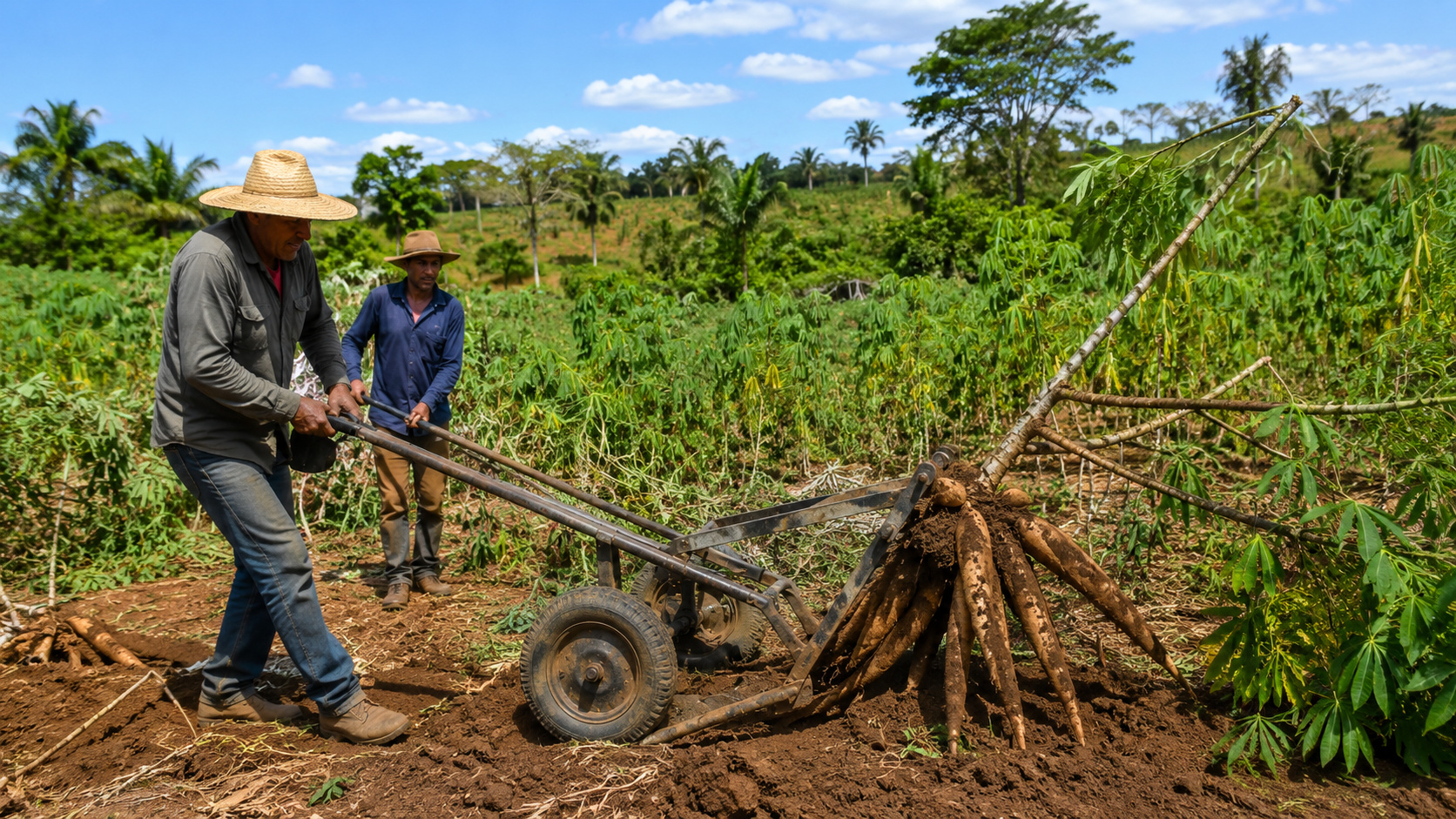
The harvested cassava is also used to make flour, repeating a habit learned from his father. Among urbanized neighborhoods and green areas, the production shows that the countryside still reorganizes itself in small spaces, without completely disappearing from the landscape.
Rural tourism brings residents closer to country life
In the North of the Island, some properties also combine production, rural tourism, and educational experiences. There are spaces that welcome visitors, promote contact with animals, offer experiences with horses, and bring children and adults closer to a routine rarely present in urban life.
This type of initiative expands the role of family farming beyond food production. The site ceases to be just a workplace and becomes a space for learning, leisure, memory, and reconnection with nature.
Site turned into a school with 86 thousand square meters of usable area
In Vargem do Bom Jesus, an area purchased more than three decades ago started as a site with cattle raising and transformed into an educational project. The property includes Atlantic Forest, restinga, mangroves, trails, animals, and outdoor learning areas.
The school occupies a usable area of 86 thousand square meters and uses the natural environment as part of the educational process. Children learn by observing plants, animals, natural cycles, and the relationships between food, territory, and society.
Countryside within the capital creates another idea of the city
The presence of these properties changes the perception of Florianópolis. The city is not just a tourist destination or urban hub; it also hosts families that produce, teach, preserve, and maintain practices related to the countryside.
This coexistence between urbanization and rurality creates tensions, but also opportunities. Family farming can bring consumers closer to food, preserve green areas, maintain local income, and protect knowledge that helps tell the story of the capital of Santa Catarina.
How long will the countryside resist within the capital?
Family farming in Florianópolis persists in areas like Ratones, Ingleses, and Sertão do Ribeirão, producing cassava, honey, oysters, vegetables, organics, and educational experiences. Even without rural zoning, small properties continue to connect food, nature, work, memory, and income.
The challenge is to know if this presence will remain alive in the face of urban growth, land appreciation, and lack of formal recognition. Do you think Florianópolis should officially protect these productive areas, or will urban expansion end up pushing the countryside out of the capital? Share your opinion.