Portuguese
  Spanish


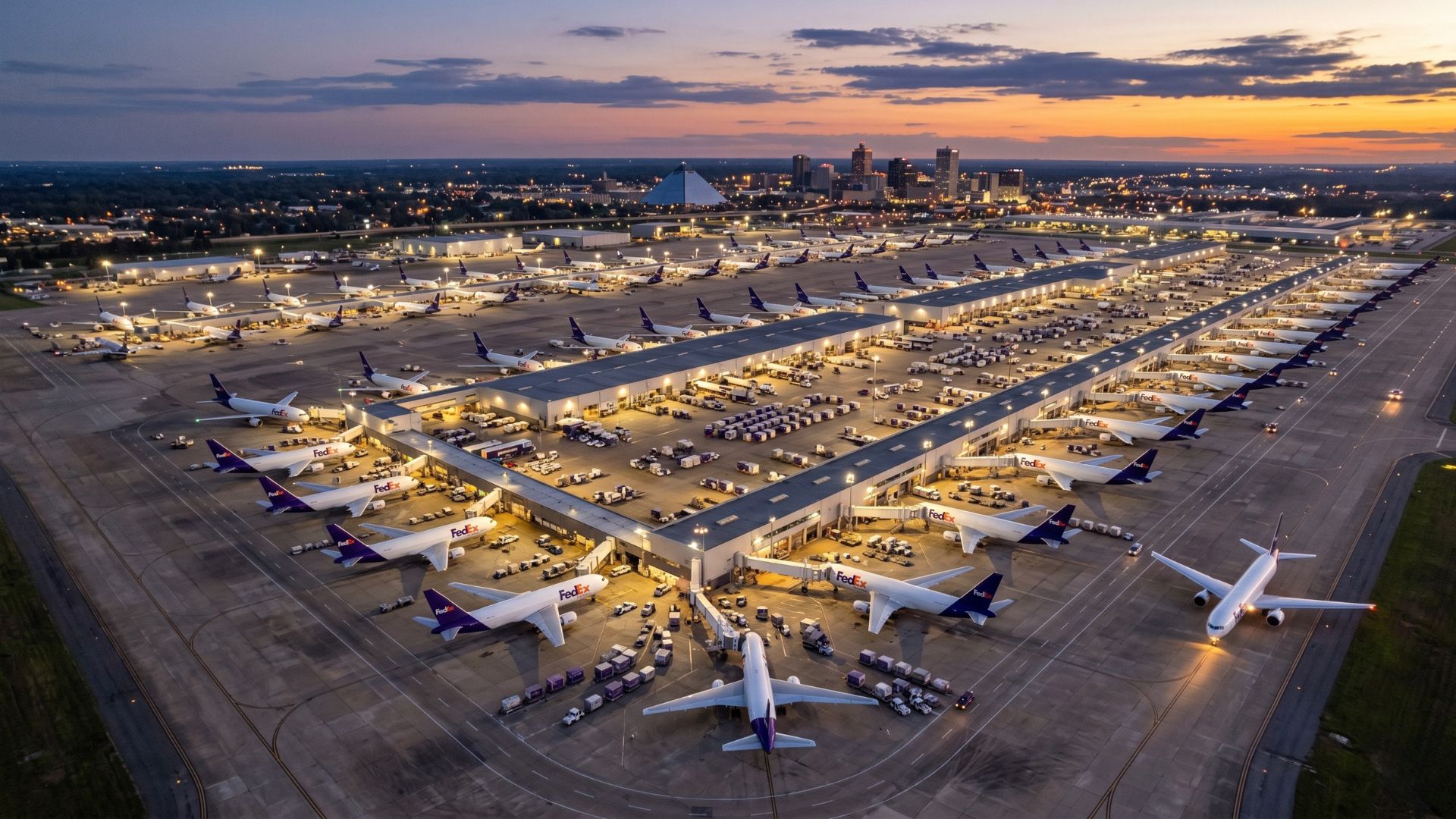

The Memphis World Hub of FedEx occupies 940 acres, operates 171 gates for aircraft, and can process up to 484,000 packages per hour.
Millions of people shop online, send documents, ship goods, and track deliveries without imagining the gigantic operation happening behind the scenes. In Memphis, in the American state of Tennessee, there is a structure so large that many experts describe it as an industrial city dedicated exclusively to the movement of packages. It is the Memphis World Hub, the main operational center of FedEx and considered the heart of the company’s global logistics network.
The facility occupies about 940 acres, has 171 gates for aircraft, more than 84 miles of conveyor belts, and the capacity to process up to 484,000 packages per hour, numbers that place it among the largest logistics operations on the planet.
An aerial city built to connect practically the entire planet
The complex located at Memphis International Airport does not function like a conventional airport.
-
Farewell to Toilet Paper? New Technology Sparks Debate on Bathroom Habits

-
Young Entrepreneur Who Started Recycling Bottles at Age 3 Becomes Environmental Icon in the U.S.

-
Nivea Blue Tin Cream: Popular Post-Beach and Pool, But Pharmacist Warns About Missing Ingredients and Common Summer Mistakes Regarding UVA and UVB Protection.
-
Archaeologists Recover Colossal Structure Lost for Over 1,600 Years Under the Sea, Including 22 Monumental Blocks Weighing Up to 80 Tons, Intriguing Experts.




For much of the day, the movement seems relatively normal. But when night falls, the operation changes completely in scale.
Hundreds of aircraft begin to converge on Memphis from different regions of the United States and abroad, transforming the location into a gigantic synchronized machine of global distribution.


The geographical position of the city was one of the factors that led FedEx to establish its main distribution center there. The location allows reaching a large portion of the American territory within a few hours of flight, facilitating the rapid redistribution of cargo to practically any destination in the network.
Today, Memphis is so important to the company that FedEx itself describes the location as the “heart” of its global operation.
940 acres, 171 gates for aircraft, and an infrastructure comparable to that of a small city
The numbers help to understand why the Memphis World Hub impresses even aviation professionals. The facility occupies approximately 940 acres, equivalent to about 3.8 square kilometers.
Within this area, there are 171 dedicated aircraft positions, allowing dozens of planes to be loaded and unloaded simultaneously during peak periods.
The structure employs about 13,000 workers, who engage in activities ranging from cargo handling and aircraft maintenance to operational control, technology, and logistics management.
The scale is so large that many visitors describe the facility as a city of its own, with internal flows, automated systems, and a continuous operation that functions almost without interruptions.
84 miles of conveyor belts create a network that resembles a highway for packages
One of the most impressive parts of the facility is hidden inside the warehouses. The complex has about 84 miles of conveyor belts, equivalent to approximately 135 kilometers of automated systems used to move packages between different areas of the operation.
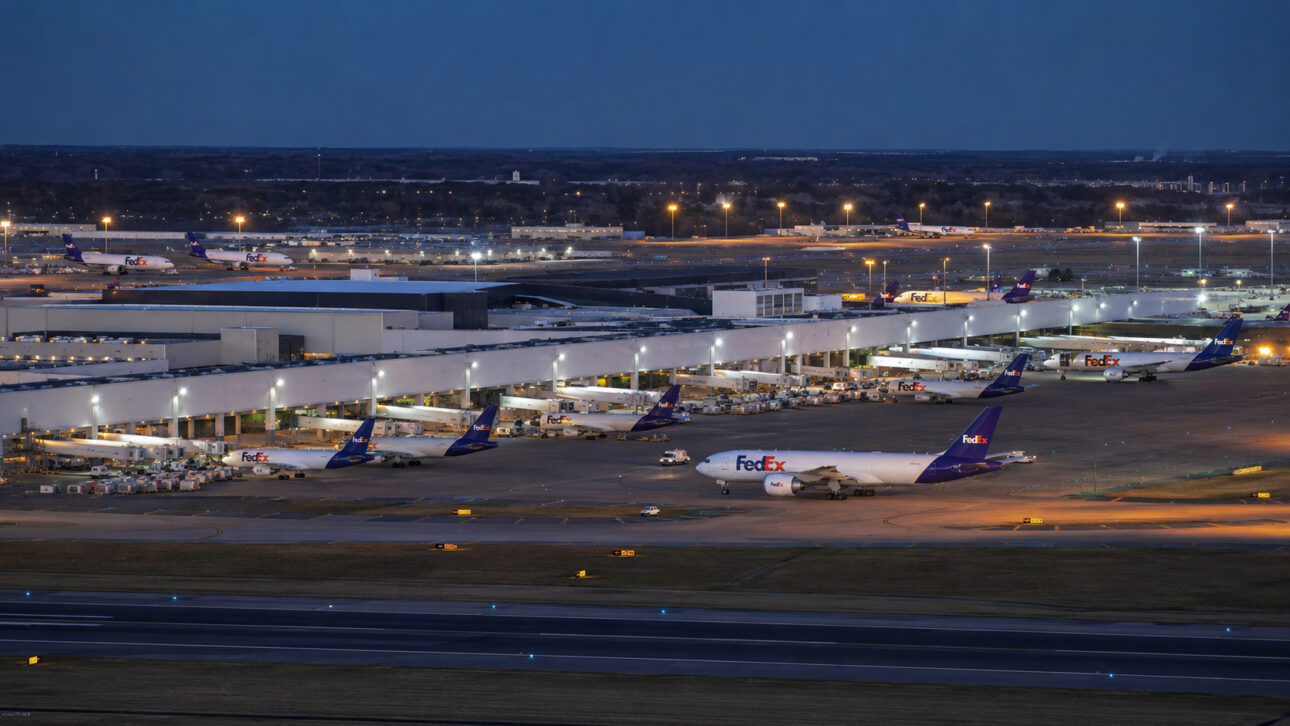
These belts function like a kind of circulatory system of the facility. Packages arrive, are identified by automatic systems, follow different paths, and are directed to the correct planes, trucks, or distribution centers.
The goal is to minimize the time between the arrival of a shipment and its departure to the next destination. In an operation of this size, a few minutes of delay can represent thousands of packages off schedule.
Capacity to process 484,000 packages per hour places Memphis among the largest logistics machines in the world
The most impressive data might be the speed. According to information released by FedEx itself, the Memphis World Hub has the capacity to process up to 484,000 packages per hour. This means that in just sixty minutes, almost half a million packages can pass through the facility’s sorting systems.

To further expand this capacity, the company recently inaugurated a new automated facility known as Secondary 25.
The building has about 1.3 million square feet spread over four levels, incorporates 11 additional miles of conveyors, and can sort approximately 56,000 packages per hour on its own.
The new unit was designed to absorb more than half of the main nighttime sorting volume, increasing the speed and efficiency of the operation.
A thousand cameras and intelligent systems monitor every step of the operation
Managing hundreds of thousands of packages per hour requires an extreme level of automation. FedEx’s new infrastructure uses six-sided reading systems, allowing packages to be scanned regardless of their position.
Weighing and measuring equipment automatically checks the dimensions of the loads, while about 1,000 cameras continuously monitor the operational flow.
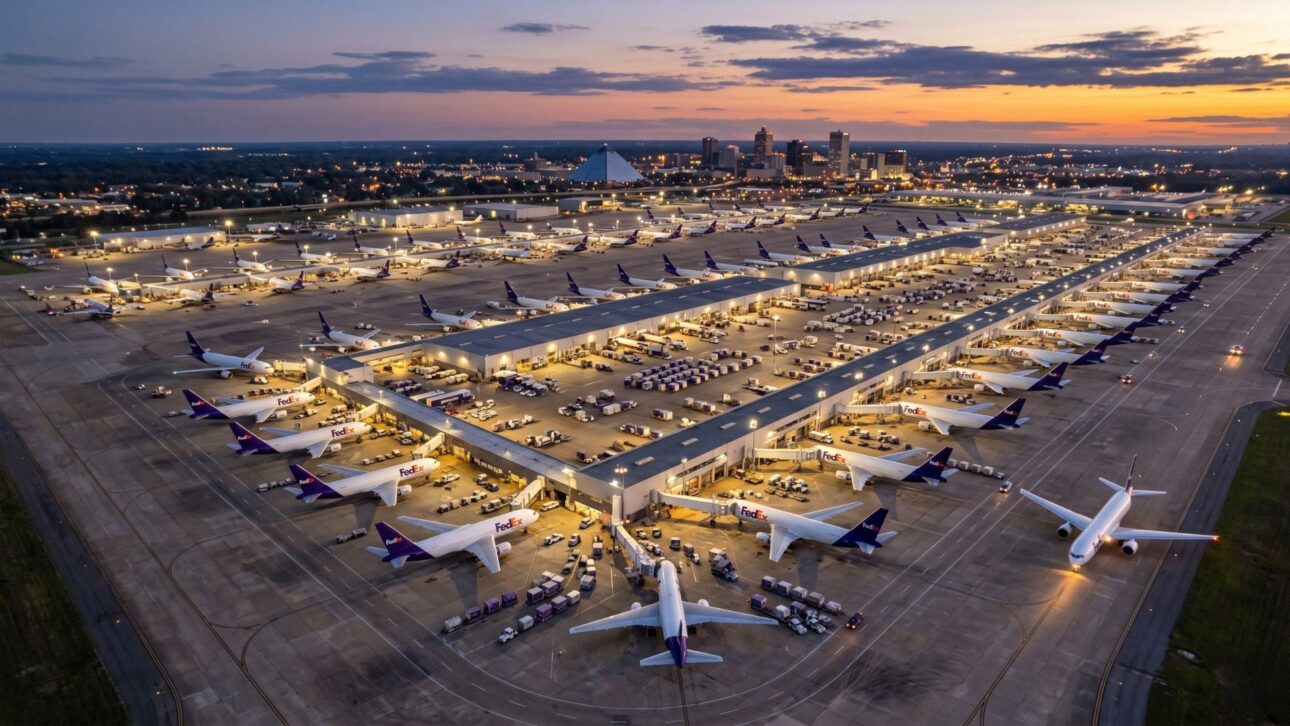
The generated data feeds control centers responsible for supervising the entire movement of the facility in real-time. The company also significantly expanded its operational command center, which is now approximately three times the size of the previous structure.
The result is a highly coordinated operation, capable of identifying bottlenecks, redistributing flows, and quickly reacting to operational or weather-related issues.
Hundreds of flights arrive and depart during the early morning to keep the network running
Most people are sleeping when the Memphis World Hub reaches its operational peak. According to information linked to the Memphis International Airport, hundreds of FedEx flights pass through the complex daily.
During the so-called “night window”, aircraft arrive from different origins, quickly unload their cargo, receive new shipments, and return to the skies within a few hours.
This system allows a package collected in one city to be redistributed to another region of the country or even to another continent in an extremely short time frame.
It is precisely this synchronization between aviation, automation, and logistics that has transformed Memphis into one of the most important air cargo hubs in the world.
The invisible operation that supports part of global trade
When a package crosses continents in a few hours, there is a good chance that it passed through Memphis at some point during the journey.
With 940 acres, 171 aircraft positions, 84 miles of conveyor belts, 13,000 employees, and the capacity to process up to 484,000 packages per hour, the Memphis World Hub represents one of the largest concentrations of logistics infrastructure ever built.
While most people only follow the delivery notification on their phone, thousands of workers, hundreds of planes, and a gigantic network of automated systems work throughout the night to keep goods moving.
And it is precisely this hidden aerial city in Tennessee that helps explain how packages can cross entire countries practically overnight.