






 Portuguese
  Spanish
  3 min of reading
  0 comments


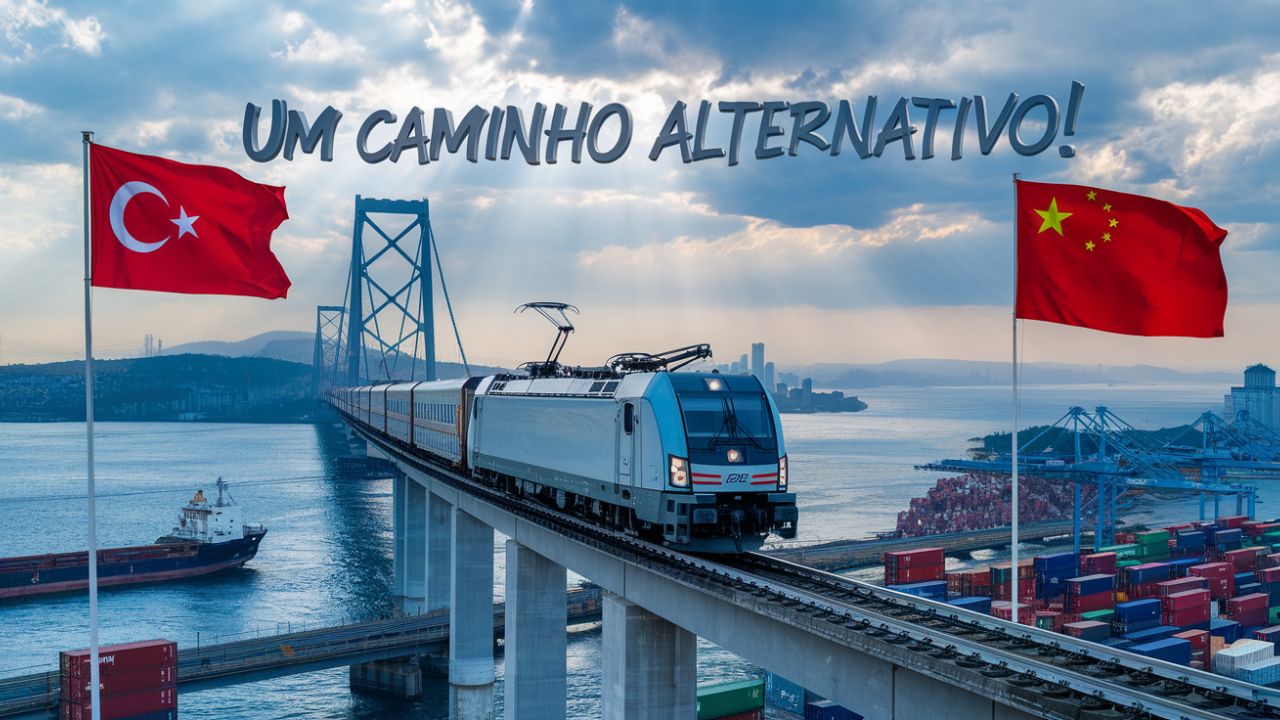
With Billions in Improvements, Electrification, and New Strategic Routes, the Turkish Railway Could Become the Main Link Between Asia and Europe, Bypassing Russia and Reducing Costs in Global Trade Amid the War in Ukraine.
Could Turkey be the next protagonist in global logistics? With a strategically positioned railway network and an ambitious modernization plan backed by China, the country promises to revolutionize the transport of goods between Asia and Europe. But how does this work, and why is it so important now?
An Alternative Path to Europe
With the war in Ukraine disrupting traditional transport routes, European companies are seeking safe and fast alternatives. This is where Turkey comes into play. Located between two continents, the country serves as a natural bridge for global trade.

The routes that crossed Russia and Ukraine are practically unusable, leading to delays, increased costs, and uncertainties. The Turkish railway emerges as an efficient solution, allowing goods to reach Europe without relying on conflict areas.
-
Mato Grosso inaugurates the first 162 km stretch of the largest railway project underway in Brazil, with around R$ 5 billion invested to transport 10 million tons of grains per year to the Port of Santos.

-
Without money to pay rent and without an architect’s degree, a man took a chisel, chainsaw, and hammer, carved a house into the hillside, and built a fairy-tale dwelling that looks like it’s straight out of The Lord of the Rings in just four months for less than R$ 25,000.

-
A 33-year-old from Paraná received a quote of R$ 12,000 just for the structural base of the house, opened tutorials on YouTube, and transformed a family plot into a 200 m² two-story house for about half the price charged by professionals.

-
Without a mansion, without high investment, and without a traditional classroom, a teacher living in a 22 m² house taught students to build a 9 m² studio apartment with the equivalent of R$10,000.





Imagine Turkey as a major knot in a network of global roads. Its railways connect Central Asia and the Middle East to Europe, offering a more direct and accessible route for freight carriers.
The Vision of Improvement: Billions in Infrastructure Investments
To make this vision a reality, Turkey is betting big on modernization. About US$ 60 billion is expected to be invested in improvements, including electrification, new domestic routes, and even a high-speed line between Istanbul and Ankara.
Electrification promises to reduce operational costs and environmental impact. New domestic routes increase internal connectivity, speeding up cargo transport.
China, with its infrastructure experience, has already shown interest in leading this project. In addition to financial resources, the Chinese bring technological innovation, such as state-of-the-art railway systems.
The Role of CRRC Zhuzhou Electric Locomotive in the Project
CRRC Zhuzhou Electric Locomotive is one of the main names in this initiative. This Chinese manufacturer already operates in Turkey and is revolutionizing railway transport in the country.
Last year, the company launched the fastest subway train in the country, demonstrating the potential for collaboration between the two nations. This is just a taste of what’s to come.
The Chinese expertise in high-speed railway systems will be crucial in transforming the Turkish network into one of the most modern in the world.
Benefits of the Railway for Europe and Asia: More Efficient Logistics
The modernization of Turkish railways benefits not only the country, but also the European and Asian markets.
With a more direct route, carriers will save time and resources, making products more competitive in the global market.
As long as the war continues, the route through Turkey will be a viable and strategic solution to bypass tensions in Eastern Europe.


-

-

-

10 people reacted to this.