






 Portuguese
  Spanish
  5 min of reading
  0 comments


Named Imigrante, the variety developed by Alexandre Lemke Belz in Santa Leopoldina reaches 145 tons per hectare in organic management, is certified as disease-free, and begins to be sold on July 17. The Capixaba ginger is already attracting the interest of producers abroad.
A Capixaba farmer created in 14 years the first registered ginger cultivar in Brazil, with a yield of 145 tons per hectare, more than double the state average, and is already receiving orders from South Africa and Peru. The achievement was born from the patient observation of a producer who spent more than a decade selecting his best plants.
The cultivar was named Imigrante, in homage to the pioneers who developed the mountainous region of Espírito Santo, the largest national producer and exporter of ginger. According to information released by the portal Globo Rural, the variety begins to be sold on July 17 at the first certified seedling nursery, located at Sítio Hort Belz in Santa Leopoldina (ES). The author of the feat is Alexandre Lemke Belz, who in November 2021 received support from the Federal Institute of Espírito Santo (Ifes) to scientifically validate his work and register the variety with the Ministry of Agriculture. According to the producer, the price per kilo of seedlings will be R$ 9, with sales limited to 1,600 kilos per CPF this year.
14 years of selection until the first ginger cultivar in the country
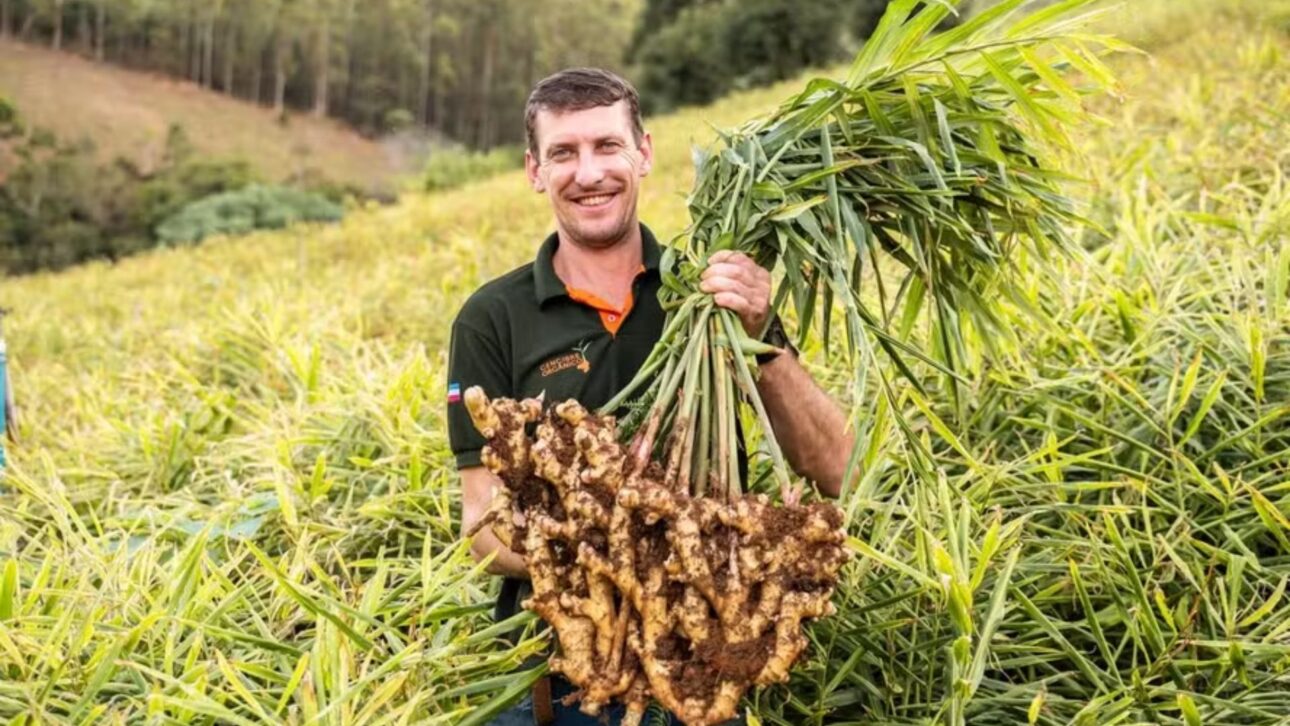
The story comes from the property of Capixaba farmer Alexandre Lemke Belz, who has always been very curious and observant. Before starting work with ginger 14 years ago, he had already done selection of bees, vegetables, and coffee, and the goal was to identify more productive plants and those more resistant to nematodes and diseases such as fusarium wilt.
-
In Virginia, a family of small-scale farmers refused to swap the countryside for the city and transformed their milk production into award-winning artisanal cheese from Mantiqueira de Minas.

-
The alligator that was once illegal game has become a business in the Pantanal: Caimasul, the largest alligator slaughterhouse in the world, slaughters nearly 100,000 per year and exports alligator leather and alligator meat.
-
At 17, Andressa swapped the city for life in the countryside with her father on a farm in Minas Gerais, where they take care of 15,000 fish in aquaculture, cows, and other animals.
-
Organic grape juice from São Roque surprises experts, scores over 90 points in a blind test, and wins a national award after six years of agroecological research.



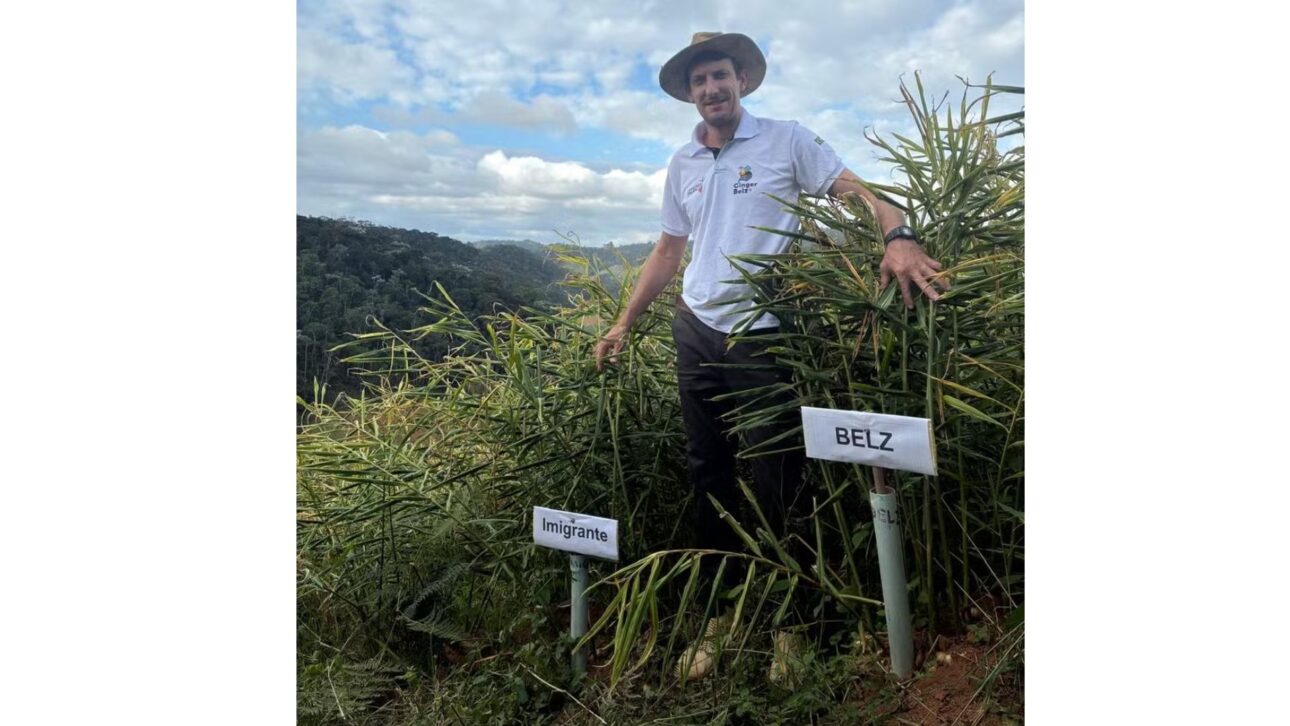
The result was the cultivar called Imigrante, a tribute to the pioneers who developed the mountainous region of Espírito Santo, the largest national producer and exporter of ginger. It is the first registered cultivar of the species in Brazil, the result of the patient observation of a producer who spent more than a decade selecting his best plants in the field.
The science of Ifes that validated the producer’s knowledge
In November 2021, Alexandre received support from the Federal Institute of Espírito Santo (Ifes), which conducted scientific tests on the property. The partnership enabled, together with the Ministry of Agriculture, the registration of four ginger cultivars in the National Cultivar Registry (RNC), led by biologist and plant breeder Ana Paula Candido Gabriel Berilli, a researcher at Ifes.
According to Ana Paula, the partnership occurred through the Fortac Project, aimed at strengthening agriculture in Espírito Santo, which includes, besides ginger, crops like cassava, banana, and black pepper, with an investment of around R$ 500,000 in the case of ginger. For her, science provided a basis for what the farmer was already doing in practice:
“We applied science on the property to validate Alexandre’s empirical knowledge.”
Productivity of 145 tons and the sale of seedlings
The number that draws attention is the productivity of the ginger. The Imigrante reaches 145 tons per hectare in organic management, more than double the state average of 60 tons per hectare, and is certified as disease-free, with the nursery already officially registered in the National Seed and Seedling Registry (Renasem).
Sales begin on July 17 at the first certified ginger seedling nursery, at Sítio Hort Belz, in Santa Leopoldina (ES). According to the producer, the price per kilo will be R$ 9, with this year’s sales limited to 1,600 kilos per CPF, and the nursery is expected to produce ten thousand boxes, each containing 180 to 200 seedlings.
Orders from South Africa and Peru
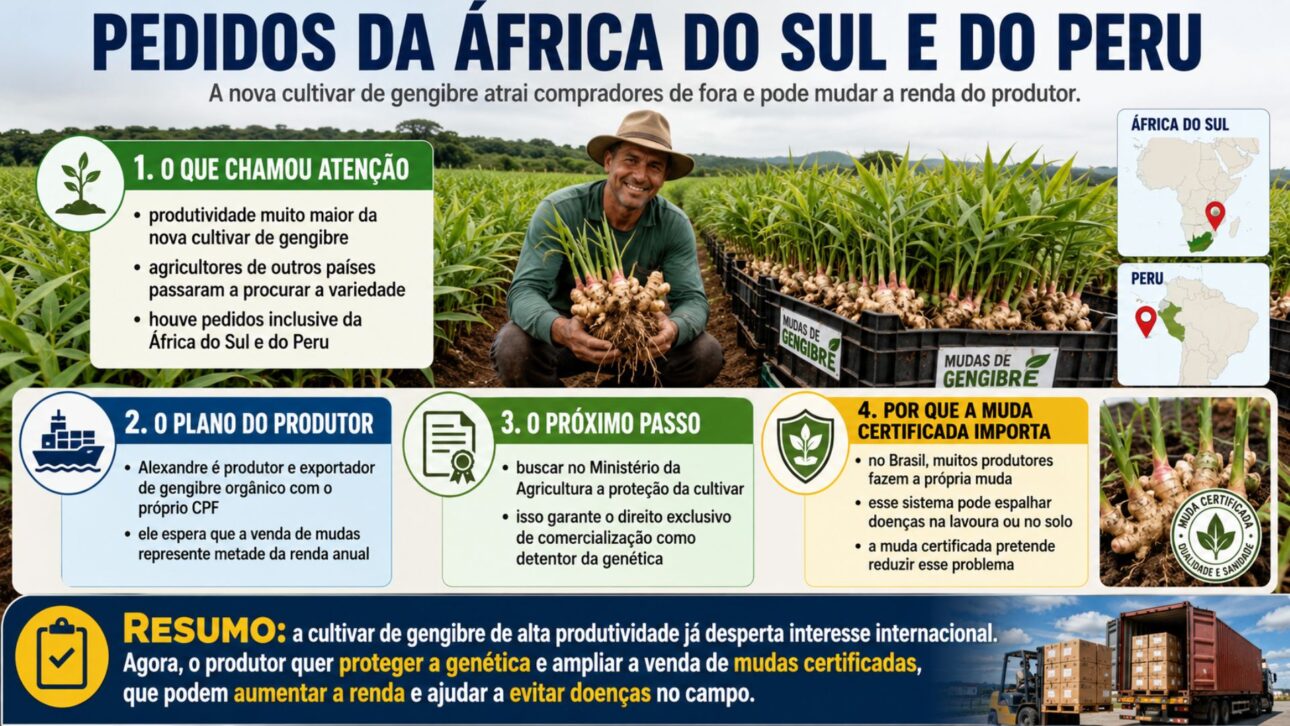
The much higher productivity of the ginger cultivar has already crossed borders. Alexandre says he received many requests, including from farmers in other countries, such as South Africa and Peru, attracted by the variety he developed. A producer and exporter of organic ginger with his own CPF, he hopes that the sale of seedlings will represent half of his annual income.
The next step is to obtain cultivar protection from the Ministry of Agriculture, which will guarantee him the exclusive right to market as the holder of the genetics. Traditionally, ginger producers in the country make their own seedlings, but this system often propagates diseases in the crop or soil, a problem that the certified seedling aims to solve.
More varieties and the standard that was missing in cultivation
Buying the certified and disease-free seedling also gives the buyer the right to the technical information of the cultivar, such as the ideal spacing, fertilizer dose, irrigation management, and the planting and harvesting time. According to Ana Paula, this matters because, in field trials, Ifes visited another 30 properties and found no standardization in ginger cultivation, with each producer using different spacing, very varied fertilizer volumes, and distinct management practices.
In addition to Imigrante, the ginger varieties Alexandrino, Manzuc, and Belz were registered, all developed by Alexandre and with productivity higher than the state average, as well as differences in rhizome anatomy, DNA, and plant size.
As all the research was done in organic management, Ifes is starting tests with Imigrante in conventional management, with chemicals, expecting even higher productivity, with the support of Incaper and the municipalities of Santa Maria de Jetibá and Santa Leopoldina.
Over 14 years of patient observation, the Capixaba Alexandre Lemke Belz turned his curiosity into the first registered ginger cultivar in Brazil, Imigrante, alongside three other varieties, all with productivity above the state average.
Validated by the applied science of Ifes, certified as disease-free, and sold from July 17 for R$ 9 per kilo, the seedling is already attracting requests from countries like South Africa and Peru, and the next step is cultivar protection, to guarantee the producer exclusive rights.
More than a productivity record, the case shows how the empirical knowledge of a farmer, combined with science, can put Brazilian ginger on the map and offer the sector something it lacked, a certified and standardized seedling.
And you, what did you think of Alexandre’s achievement with the ginger cultivar? Did you know that Espírito Santo is the largest ginger producer in Brazil? Share your opinion and exchange ideas with other readers about agriculture and innovation in the field.





Be the first to react!