






 Portuguese
  Spanish
  5 min of reading
  0 comments


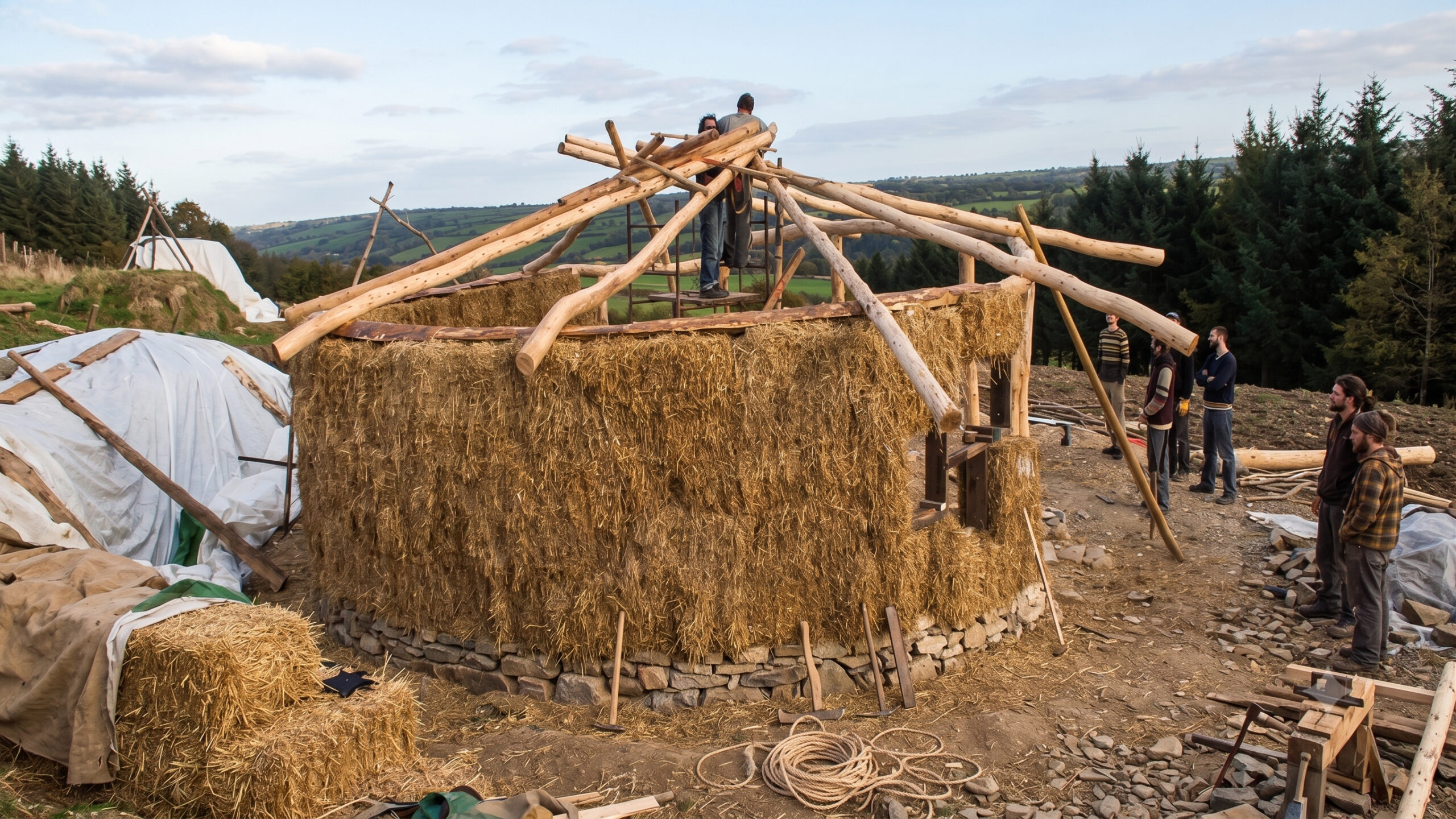
Simon Dale built a low-impact hobbit house in Wales for less than £3,000, using natural materials and off-grid solutions.
Simon Dale transformed a hillside in the forests of western Wales into one of the most well-known sustainable dwellings on the internet. With help from his father-in-law and occasional support from friends and visitors, he erected a low environmental impact hobbit house that emerged from a muddy hole in the ground and was completed in about three to four months, with a total cost of less than £3,000, equivalent to less than $5,000 at the time.
The case gained attention because the construction brought together almost everything that usually seems improbable in a family dwelling: low cost, self-building, natural materials, and life off the conventional grid. Dale himself describes himself as a “have a go architect”, something like someone who dares to design and build, and attributes the result to limited prior experience, a lot of reading, and self-confidence to bring the plan to life.
Lack of money pushed the family towards self-building in the middle of the forest
The origin of the hobbit house is not in an aesthetic quest, but in a concrete need for housing. Walden Labs, based on Simon Dale’s account, reports that the family had no capital, lived on a low income of about £5,000 per year, and considered both financing a property and sustaining a rent unfeasible.
-
A 33-year-old from Paraná received a quote of R$ 12,000 just for the structural base of the house, opened tutorials on YouTube, and transformed a family plot into a 200 m² two-story house for about half the price charged by professionals.

-
Without a mansion, without high investment, and without a traditional classroom, a teacher living in a 22 m² house taught students to build a 9 m² studio apartment with the equivalent of R$10,000.

-
Largest bridge in São Paulo reaches 75% completion and is expected to strengthen strategic connection in the interior of São Paulo.

-
Without her own home and pressured by rent, a 25-year-old bought a small 15-meter boat, gradually renovated the interior by herself, transformed the interior with paint, new flooring, a larger bathroom, and started living on the canals, paying much less per month.


It was in this context that a landowner offered the chance to occupy a forest area in western Wales to build an eco-house, with £2,000 available for materials.


This point is central because it dismantles the idea that the house was born solely as an alternative lifestyle experiment. The project was a practical response to the difficulty of accessing housing, and Dale makes it clear in the account reproduced by Walden Labs that he was neither a builder nor a carpenter when he started.
Before the construction that would make him known, Simon Dale had already made a previous attempt. According to Living in the Future, his first experiment was a round straw bale house on stilts, built in the forest, which cost between £2,000 and £3,000 and took about two months until the family could move in. This experience served as a rehearsal for the underground house that would later go viral.
Oak wood, stone, clay, and straw formed the structure of the hobbit house
The structure of the house was assembled with local materials and simple solutions. According to Walden Labs, the main skeleton used oak thinnings taken from the surrounding forest, while stone and clay excavated from the site itself were used in the retaining walls and foundations.
The walls were fitted with straw bales and lime, and the main tools for the work were just a chainsaw, hammer, and one-inch chisel.
The volume of work is also noteworthy. Walden Labs estimates that the house required about 1,000 to 1,500 hours of work, which helps to gauge the effort needed to transform raw land into a dwelling.
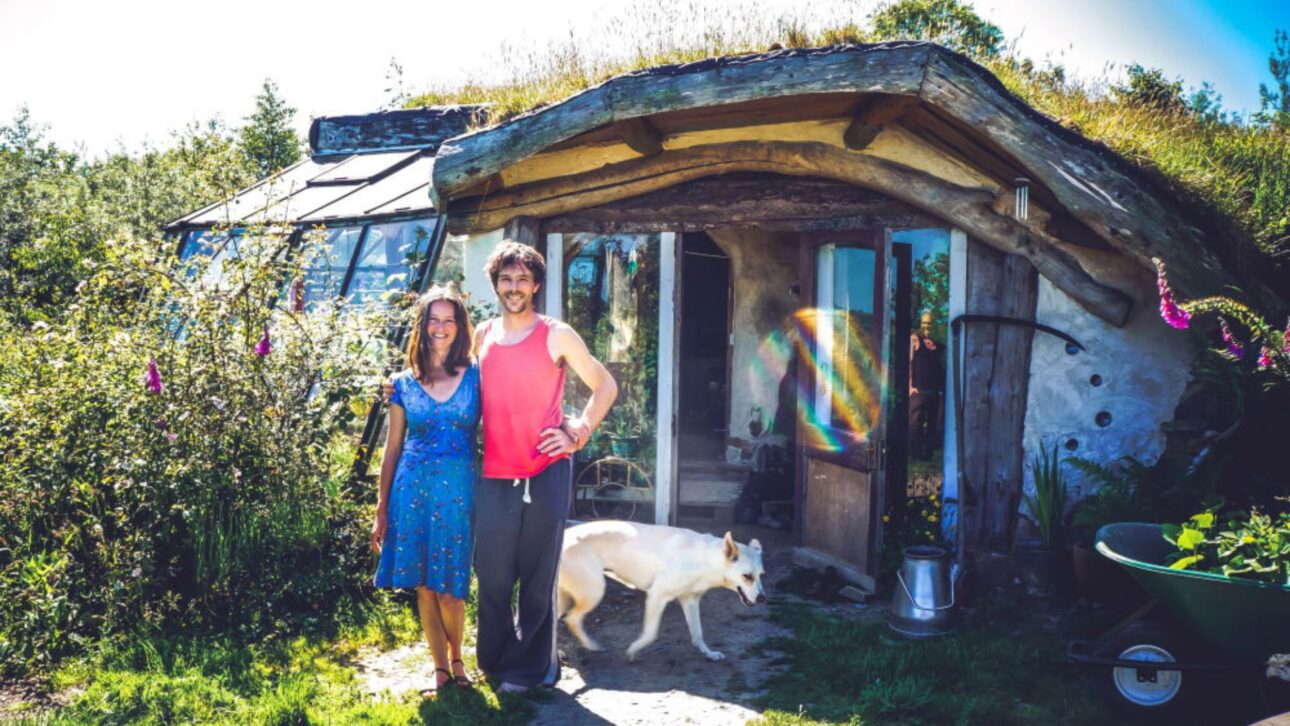
Excluding labor, the cost was around £3,000, or approximately £60 per square meter, a value well below the standard of conventional construction.
The finish reinforced the low-impact logic. New Atlas reports that the interior walls received lime plaster, a more breathable and eco-friendly solution than cement, while reclaimed wood was used in the flooring and fittings. The combination of earth around the structure with straw on the roof and walls helped to increase the thermal insulation of the house.
House operates off-grid with wood stove, spring, skylight, and solar energy
Simon Dale’s eco-house was designed not only to be cheap to build but also to depend as little as possible on conventional systems.
According to New Atlas, a wood stove heats the interior, electricity comes from solar panels, water is pumped from a nearby spring, and the bathroom uses a composting toilet. Rainwater is also collected from the roof for use in the garden.
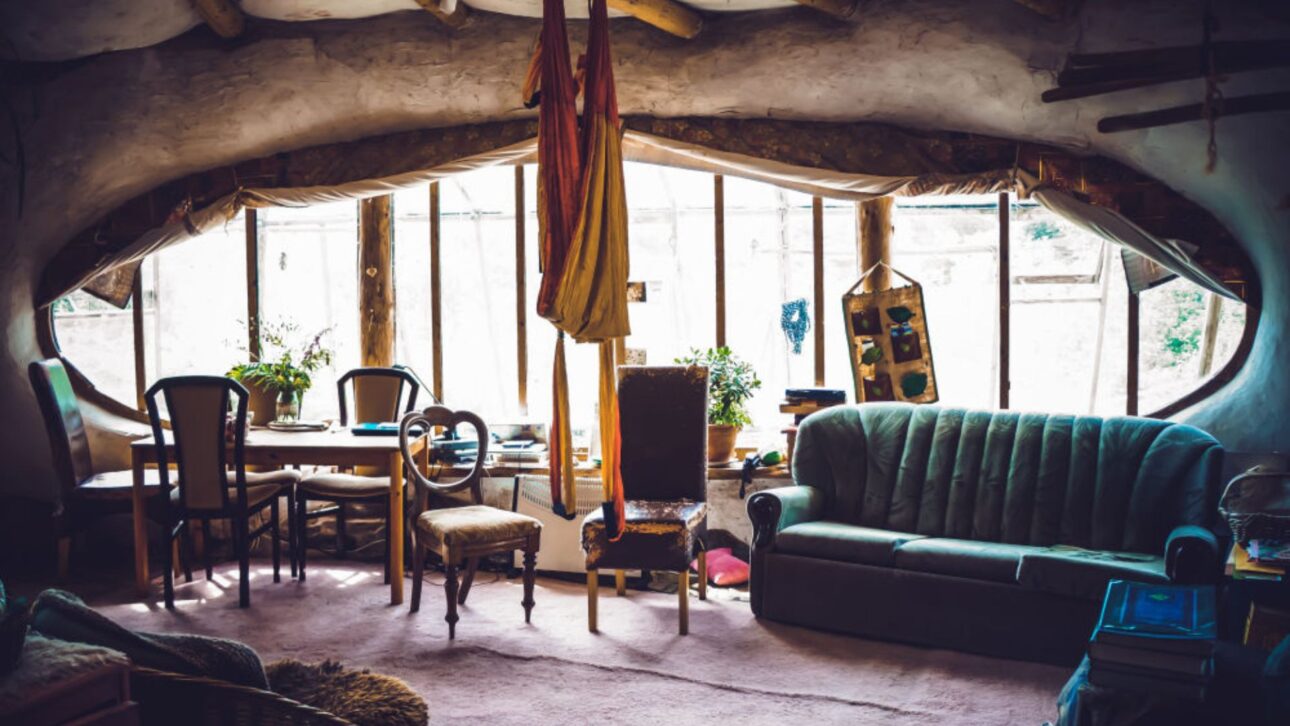
One of the most well-known details of the project is the refrigerator cooled by a system that takes advantage of the cold air coming from underground. The same source reports that the house uses this natural flow to maintain refrigeration without relying on a conventional high-consumption appliance, while a central skylight spreads natural light throughout the interior during the day.

This combination of solutions makes the house seem less like a traditional property and more like an organism adapted to the terrain.
The roof covered with vegetation helps integrate the building into the hill and reinforces the image that made it famous: a dwelling that seems to have come from a fantasy universe, but was built as a practical response to financial and environmental limitations.
Project gained worldwide attention and led Simon Dale to the Lammas eco-village
The house’s impact went beyond the local scope. Living in the Future states that Simon Dale and Jasmine Saville inspired media interest worldwide with their self-built homes, often called hobbit houses. The source also notes that the family began living in the Lammas ecoVillage, in Pembrokeshire, Wales, a community linked to a low-impact housing model.
New Atlas also links the house’s success to the next step in Dale’s journey, noting that he moved on to a new project within the first authorized low-impact eco-village in Wales, an initiative by the Lammas organization, focused on developing ecological housing and low-impact lifestyles.
This continuity shows that the hobbit house was not limited to the status of an internet visual curiosity. It became a showcase for a way of building that combines self-construction, natural materials, low cost, and less reliance on traditional infrastructure, helping to establish Simon Dale as a recurring reference in reports on alternative housing.
Simon Dale’s hobbit house remains a symbol of affordable and low-impact housing
The fascination that the work still inspires today comes from the rare combination of beauty, feasibility, and purpose. The house attracted attention not only for resembling the fantasy dwellings popularized by pop culture but for showing that a family with few resources managed to build a functional home with less than £3,000, local materials, and a construction logic far removed from standardized housing.
More than an architectural curiosity, Simon Dale’s story has become a recurring example of how the housing access crisis can push people towards creative and low-impact solutions.
What began as a family necessity on a Welsh hillside ended up becoming one of the most well-known references for a self-built ecological house in the world.






Be the first to react!