Portuguese
  Spanish


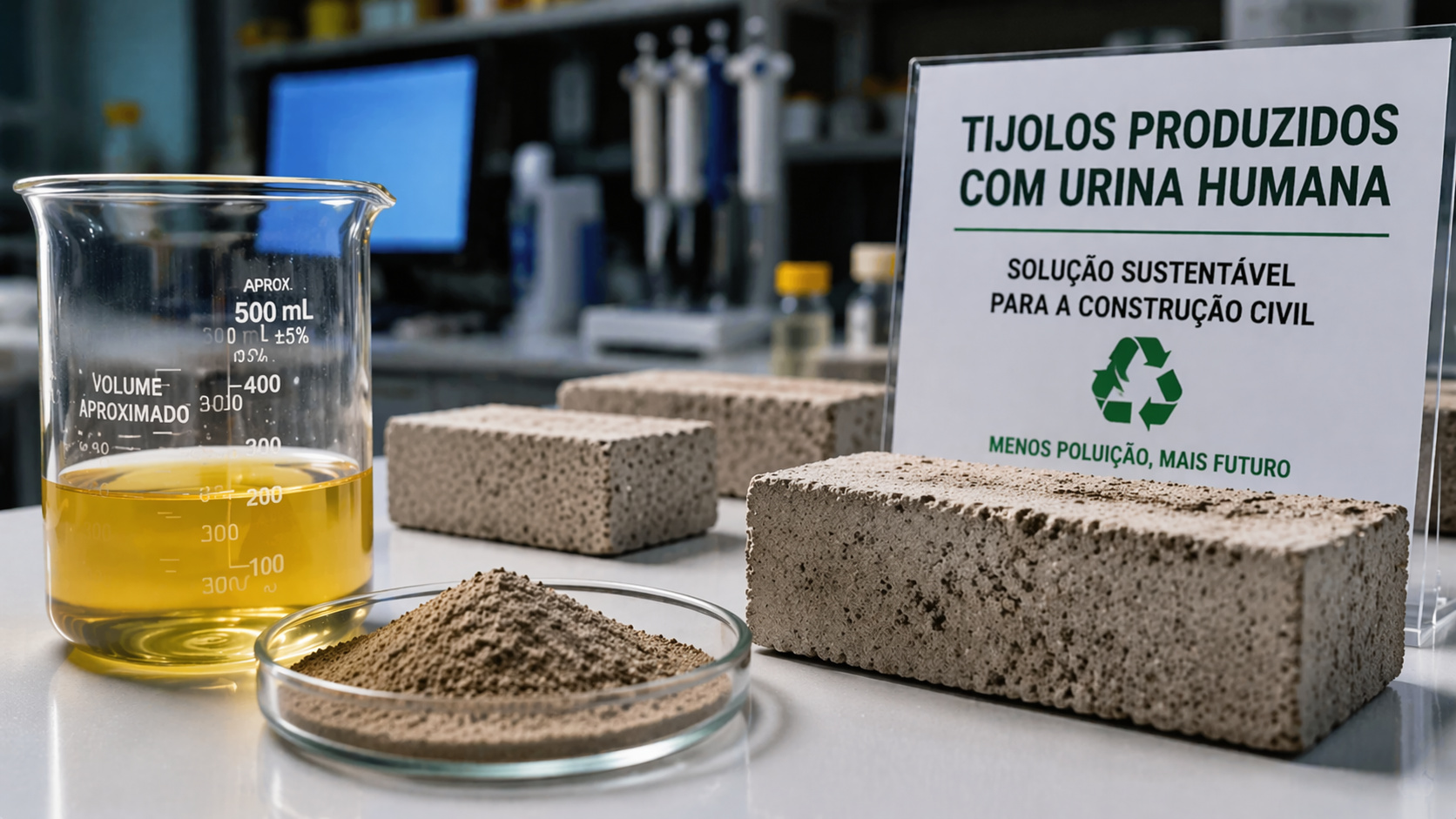

Human urine brick technology shows sustainable alternative, reduces pollution in construction, avoids high temperatures, and can transform the future of construction
Few remember this fact, but a new type of brick created by students continues to change the way we think about construction. This innovative material does not require high temperatures, uses human urine in the process, and hardens in just a few days.
In addition to repurposing waste, the technique helps reduce pollution caused by traditional production. The result is a sustainable brick, with the potential to lessen the environmental impact of construction projects.
How the brick made with human urine and bacteria works
The production process mixes human urine, sand, and bacteria, forming a natural reaction that creates a solid material. The bacteria produce an enzyme that breaks down the urea present in the urine.
-
Farewell to Toilet Paper? New Technology Sparks Debate on Bathroom Habits

-
Young Entrepreneur Who Started Recycling Bottles at Age 3 Becomes Environmental Icon in the U.S.

-
Nivea Blue Tin Cream: Popular Post-Beach and Pool, But Pharmacist Warns About Missing Ingredients and Common Summer Mistakes Regarding UVA and UVB Protection.
-
Archaeologists Recover Colossal Structure Lost for Over 1,600 Years Under the Sea, Including 22 Monumental Blocks Weighing Up to 80 Tons, Intriguing Experts.



This reaction generates calcium carbonate, a compound that acts as a type of natural cement. It binds the grains of sand and forms the so-called biobricks, which gain strength over time.
The process resembles natural processes, such as coral formation, where minerals accumulate and harden naturally.

Production without high temperatures reduces pollutant emissions
The traditional brick manufacturing requires about 1,400 degrees, which generates a large amount of polluting gases. In contrast, the new type of brick created by students is produced at room temperature, without the use of kilns.
This reduces energy consumption and decreases carbon dioxide emissions. The construction industry now has a cleaner and more efficient alternative.
The information was released by BBC News, an international news agency, which presented the details of the development of this sustainable technology.
Bricks harden in a few days and can be as strong as rocks
The biobricks take between four and six days to be ready. This time can increase when seeking greater strength in the material.
The initial tests showed rigidity similar to materials with 40 percent limestone. With adjustments in the process, this strength was even greater.
Another important point is that the shape and firmness of the bricks can be adapted, depending on the construction needs.
Process also generates fertilizer and quickly eliminates odors
Before the production of bricks, part of the material is used to generate a solid fertilizer rich in nutrients. This enhances the use of human urine in the process.
During manufacturing, ammonia is released, which causes a strong smell at first. However, this odor disappears within 48 hours, leaving the material ready for use.
BBC News, an international news agency, highlighted that the environment of the process virtually eliminates all harmful microorganisms, ensuring safety.
The use of human urine paves the way for more sustainable construction
The use of human urine as raw material represents a new way to recycle waste. Unlike old methods that used artificial substances, this technique reduces energy consumption.
This creates new possibilities for the construction industry, focusing on sustainability and resource reuse.
The technology shows that simple solutions can generate a significant positive environmental impact.

Sustainable brick could change the future of construction
The new type of brick created by students shows that it is possible to build in a cleaner, more efficient, and economical way. Production without high temperatures, the use of waste, and rapid formation make the material a promising alternative.
With the advancement of this technology, the trend is for sustainable solutions to gain more and more space in the construction industry.
Would you dare to live in a house made with this type of material? Do you think this innovation can really replace traditional bricks? Leave your opinion in the comments and join the conversation.