






 Portuguese
  Spanish


Tested in Italy, the Fiat Grande Panda 2025 Combines Retro Design with a Modern Peugeot Platform and Has the Potential to Revolutionize the Compact Segment in the National Market, Rescuing the Legacy of an Icon.
The launch of the Fiat Grande Panda 2025 in Europe has raised a red flag in the Brazilian automotive market. With a design that blends nostalgia and modernity, the new compact was tested firsthand in Italy by the team from the Opinião Sincera channel, which brought crucial details about what we can expect from what is being quoted as the spiritual successor of the iconic Fiat Uno. The brand’s bet on a square and robust look, combined with cutting-edge technology, signals a bold strategy to reclaim valuable space in the hearts and garages of Brazilians.
More than just a simple launch, the Grande Panda represents a strategic movement from Stellantis. It uses the modern CMP platform, the same as models like Peugeot 208 and Citroën C3, already present in Brazil. This decision not only optimizes production costs but also elevates the level of safety and technology of the vehicle, positioning it as a strong competitor in an increasingly competitive segment. The big question remains: will it be able to replicate the sales phenomenon of the Uno?
Retro-Futuristic Design: A Tribute to the Past with Eyes on the Future
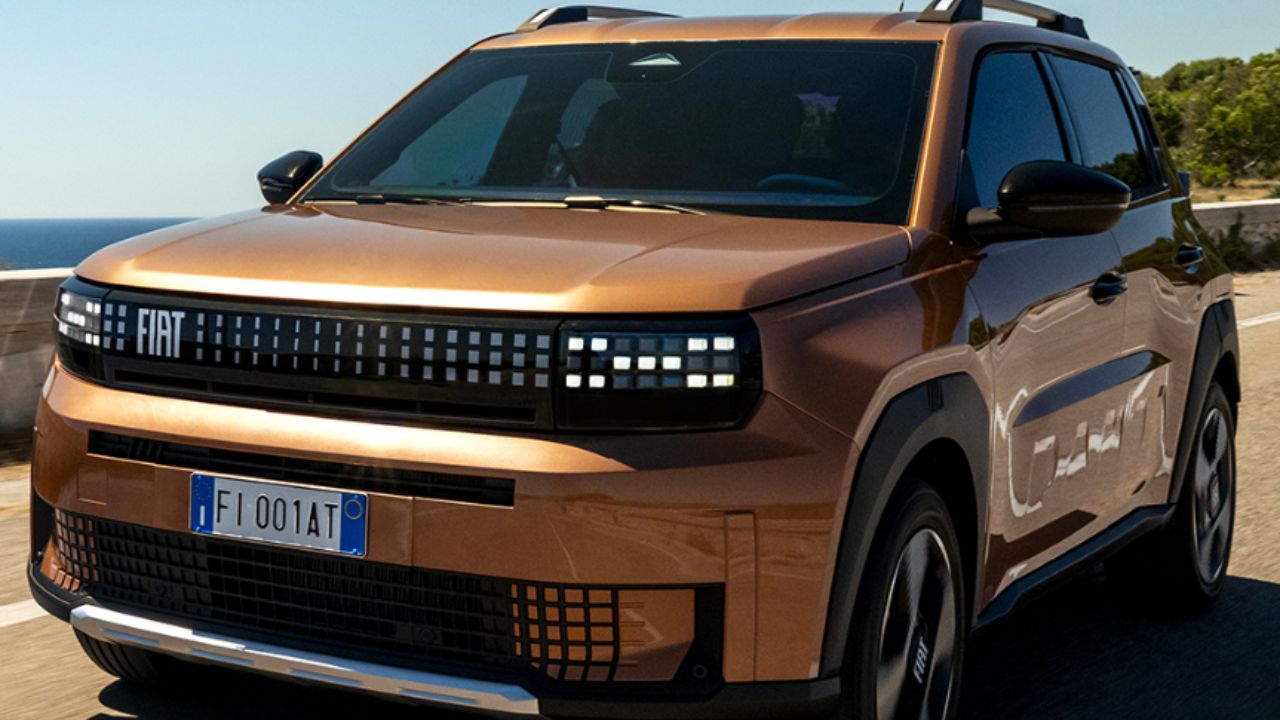
The first impression upon seeing the Fiat Grande Panda 2025 is one of familiarity and surprise. The body with sharp and defined lines, nicknamed “squareish,” is a direct reference to the first-generation Panda, launched in the 1980s, which in turn inspired the design of our first Fiat Uno. Details such as the LED headlights that form pixels and the name “PANDA” embossed on the doors create a unique visual identity that stands out from any other Fiat model currently. It is a clear break from the fluid and rounded lines seen in models like the Pulse or the Fastback.
-
Toyota Launches First 100% Electric Car in Brazil: bZ4X with 343 HP, All-Wheel Drive, 361 km Range, Priced at $419,990 BRL, Limited to 99 Units

-
Chinese SUV Achieves 24.4 km/l, Outperforms Toyota Yaris Cross in Real-World Tests with 224 hp Hybrid System, Offers 51-Liter Tank for Greater Range, and Costs Up to R$ 5,000 Less.

-
Uber Black Revamps Fleet, Drops Ten Car Models and Sets Deadline for Electric BYD Dolphin
-
Chinese Giant Uses Metal Structures and Cranes to Deliver Over 700 Electric Cars to Brazil


As highlighted in the evaluation by Opinião Sincera, this design choice is not just aesthetic, but also functional and strategic. The square shape evokes a robust and spacious car, while modern elements ensure it does not appear outdated. Fiat seems to have understood that, to create a new popular success, it needed to rescue the simplicity and brilliance that made the Uno famous. The emotional connection to the past, coupled with an innovative proposal, is the main asset of the Grande Panda to win over consumers.
CMP Platform: The French Base That Promises Safety and Space
One of the biggest technical differentiators of the Fiat Grande Panda 2025 is the adoption of the CMP (Common Modular Platform). Originally developed by PSA (Peugeot-Citroën), this base is known for its modernity, structural rigidity, and versatility. In Brazil, it already equips the Peugeot 208 and Citroën C3, which would greatly facilitate the production of the new Fiat domestically. According to analyses by Opinião Sincera, this platform is superior to the bases currently used by Argo and Pulse, especially in terms of safety.
The structure of the European Grande Panda, for example, already comes standard with six airbags and driver assistance features (ADAS), such as emergency braking and lane-keeping assist. Another relevant technical point is the possibility of including disc brakes in the rear, a feature absent in current Fiat compacts in Brazil. Additionally, the CMP platform architecture allows for better use of interior space. With 3.99 meters in length and 2.54 meters in wheelbase, the Panda offers surprising space for passengers and a trunk with 350 liters of capacity, surpassing many of its potential direct competitors.
Hybrid Engine and the Big Question for Brazil
In Europe, the Fiat Grande Panda 2025 was launched with two engine options: a 100% electric and a 48V mild-hybrid, which combines a 1.2 turbo three-cylinder engine with 100 horsepower and a small electric motor. However, it is very likely that the Brazilian model will receive a different mechanical setup, adapted to our market and fuel reality. The most logical bet, as speculated by the Opinião Sincera channel, is that Fiat will leverage Stellantis’ industrial synergy in Brazil.
This means that the strongest candidate to equip the national Grande Panda is the well-known 1.0 Turbo 200 Flex engine, which already powers the Pulse, the Fastback, and the Peugeot 208, delivering up to 130 horsepower with ethanol. This engine could be combined with the 12V Bio-Hybrid system that Stellantis is developing in Brazil. This solution would be cheaper to produce than the European 48V system, help the vehicle meet the new Proconve emission standards, and position the car with an excellent balance between performance and energy efficiency, without excessively raising its final cost.
Intelligent and Functional Interior: The ‘Uno Way’ of Being
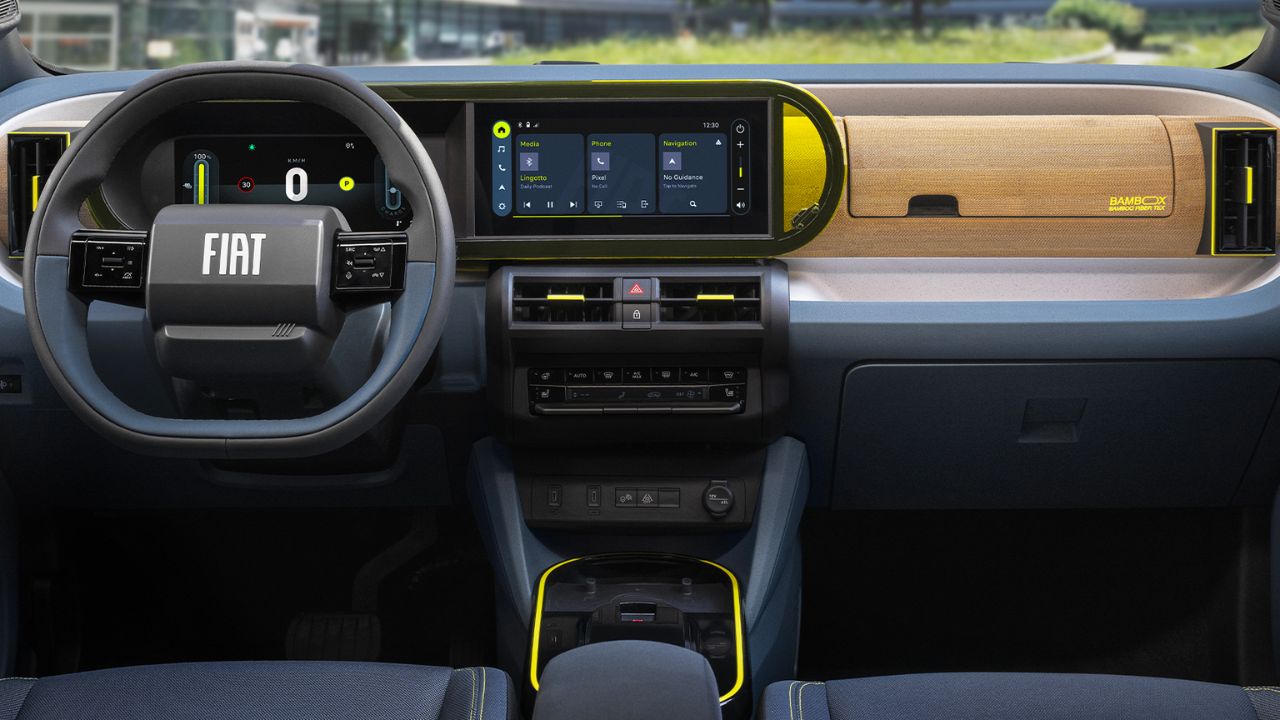
Inside, the Fiat Grande Panda 2025 continues to impress with its personality. The dashboard is modern and technological, dominated by two digital screens, one for the 10-inch instrument cluster and another for the 10.25-inch multimedia center. The internal design is stylish and full of smart solutions, such as the various storage compartments scattered throughout the cabin. One detail that caught the attention of Opinião Sincera was the large shelf on the dashboard, a clear tribute to the storage compartment that existed in the dashboard of our Uno, showing that functionality remains a priority.
Despite being a compact car, the interior space is one of its strong points, thanks to the CMP platform. The test showed that even tall passengers over 1.80m can sit comfortably in the back seat, with good knee and headroom. The finish, while using hard plastic on most surfaces, features textures and design details that give a sense of quality and care, such as the name “FIAT” embossed on the door panel. It’s a car that seems to have been designed to be beautiful, practical, and accessible, without requiring expensive materials to achieve this.
Success Depends on Price and Name
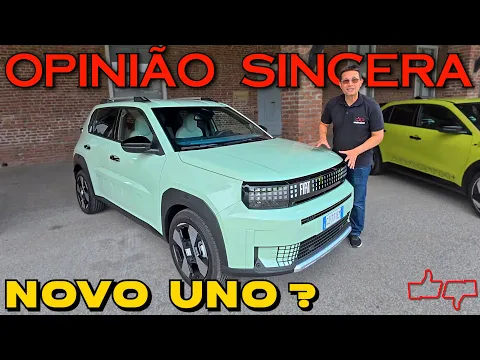

The Fiat Grande Panda 2025 has all the ingredients to become a phenomenon in Brazil. It combines a charismatic design with a modern, safe, and spacious mechanical base. It rescues a legacy of success without seeming stuck in the past and offers the technology that today’s consumer desires. If Fiat can strategically position it in price, perhaps between the Citroën C3 and the Fiat Pulse, and name it a heavyweight title like “new Uno”, the chances of leading sales are immense. It is undoubtedly one of the most promising launches for the future of our market.
Does the Fiat Grande Panda 2025 have what it takes to become the new Uno and conquer Brazil? Or could the bet on such bold design be risky? Leave your opinion in the comments; we want to know what you, driver, think about this news.





Be the first to react!