Portuguese
  Spanish


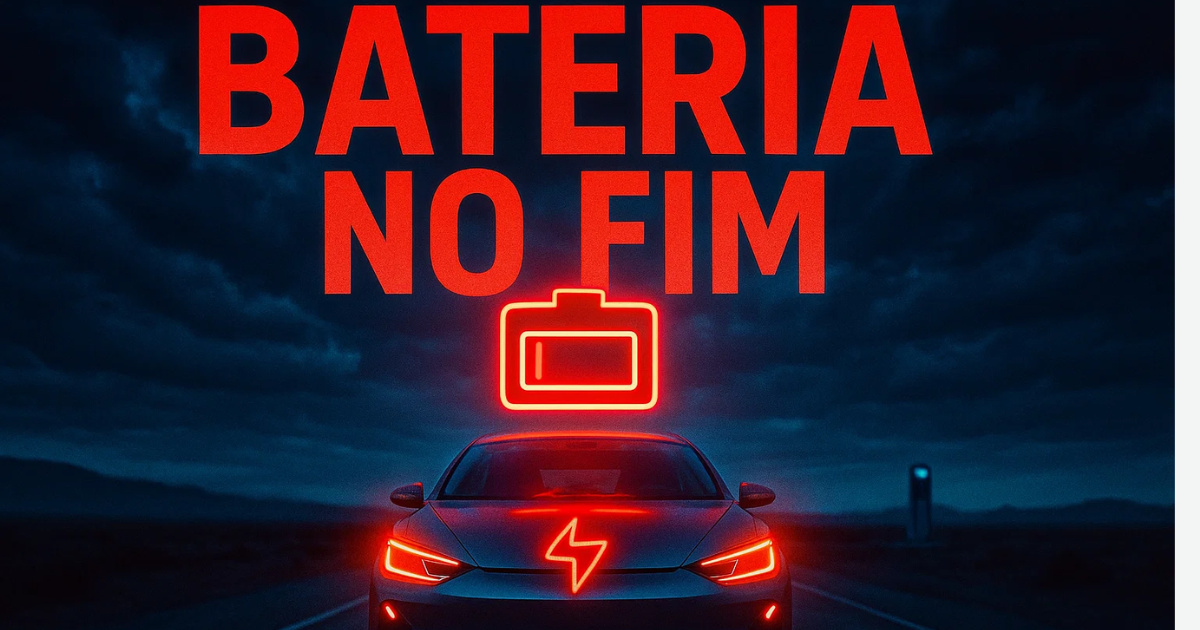


With the Advancement of Electric Cars, the Fear of Running Out of Battery Is Changing. Understand How Current Technology Redefines Safety and Autonomy.
The popularization of electric vehicles is transforming urban and rural mobility, but still raises questions about what happens when the battery reaches 0%.
Unlike combustion cars, electric vehicles have smart systems that prevent sudden stops and give the driver time to react.
In the year 2025, electric cars are no longer a distant promise of the future.
-
English Skills Boost Career Opportunities in the Oil and Gas Industry

-
Brazil Secures Second Place at WorldSkills 2024 in Lyon, with 64 Young Professionals and 8 Medals, Including Gold from a Rio de Janeiro Hairdresser

-
3,000 Military Personnel from 10 Countries, Including US and Chinese Marines, Train Together in Brazil’s Savanna: Operation Formosa Becomes Largest Naval Ground Exercise Before First Cancellation Since 1988
-
UAE Sends 110 Date Palm Trees to Brazil, Signs $4 Million Deal to Boost Date Production in Bahia’s Hinterland, with Presidential Palace Receiving 10 Saplings


Models with over 300 km of range and built-in safety systems are part of the reality of thousands of drivers in Brazil and around the world.
However, the charging infrastructure still does not keep pace with this growth, which fuels concerns about the risk of “electric dry-out.”
Autonomy Anxiety Has Given Way to Another Concern
For a long time, the biggest fear of those thinking about switching to an electric vehicle was autonomy.
With the evolution of batteries and energy efficiency systems, this scenario has changed.
Models like the Kia EV6, Nissan Leaf, Porsche Taycan, and BYD Dolphin already guarantee over 300 km on a full charge.
That is more than enough for the urban routine of a large portion of the population.
However, the real challenge now lies in the charging network.
According to the ABVE – Brazilian Electric Vehicle Association (ABVE), Brazil has already surpassed 4,000 public charging points, but many still face long lines, damaged equipment, or hard-to-reach locations.
This reality creates uncertainty, especially on long trips.
What Happens When the Battery Is Depleted
Unlike a gasoline or ethanol-powered car, which can simply shut down abruptly, the electric car tries to protect the driver until the very last moment.
The sequence goes more or less like this:
First, alerts appear on the dashboard indicating the low battery level.
Then, the system shows messages like “low battery level” and suggests the driver look for a nearby charger.
Some models indicate charging points on the built-in GPS and recalibrate the route automatically.
If the charge continues to drop, the vehicle’s performance is drastically reduced.
At this point, the so-called “turtle mode” kicks in, which reduces power to preserve the little energy remaining.
Features like air conditioning, multimedia systems, and heaters are disabled to prioritize traction.
Behavior Varies by Model
Each manufacturer implements different systems to handle total discharge.
In the case of the Fiat 500e, for example, the vehicle may stop more abruptly when it reaches 0%.
On the other hand, the Kia EV6 has shown it can continue running even with the dashboard indicating a zero battery, reaching speeds of up to 60 mph (about 96 km/h).
Eventually, it came to a gradual stop, but without power steering, which complicated towing.
Other models, like the Porsche Taycan, keep the electrical system active longer and maintain power steering, facilitating transport to a safe location.
What If the Car Stops Completely? How Does Towing Work?
If the battery completely discharges and the car stops, the ideal is to call a specialized service.
Unlike conventional cars, electric vehicles cannot be towed in the traditional way, as most do not have a true neutral gear.
Direct traction on the electric motor can be damaged if the vehicle is pulled with the driven wheels on the ground.
The recommendation is to use a flatbed truck or a tow truck with the wheels off the ground, especially for front or rear-wheel drive models.
According to the RAC (Royal Automobile Club), models like the Nissan Leaf (front-wheel drive) can be towed with the front wheels off the ground.
The Cupra Born (rear-wheel drive) requires the rear wheels to be off the ground.
Some models feature a smart towing mode that automatically releases the parking brake, making removal easier in case of failure.
How to Avoid Being Caught Off Guard by Low Charge
The best way to avoid “electric dry-out” is planning.
Before embarking on a trip, especially in areas with few charging points, it’s wise to chart a route that includes locations with adequate infrastructure.
Apps like PlugShare, Waze, and Google Maps already show public charger locations.
Additionally, using the eco mode and regenerative braking helps gain a few extra kilometers.
In critical situations, turning off items like the radio, air conditioning, and heater can extend the range by a few kilometers, enough to reach a station.
Another simple but effective tip is to reduce the vehicle’s weight, as extra cargo directly affects battery consumption.
What If the Battery Runs Out Anyway?
If the car stops completely, the solution is to call the 24-hour assistance service.
Some companies already offer trucks equipped with fast charging generators, capable of providing enough charge for the vehicle to reach the next charging point.
In situations where this is not possible, the flatbed tow truck will be the only viable option.
The Future Holds Fewer Surprises
The evolution of electric cars goes beyond autonomy and is already advancing to make concerns about charging obsolete.
Some technologies being tested in Europe and the United States include inductive charging on roads and ultra-fast charging stations, capable of charging 80% of the battery in less than 15 minutes.
Manufacturers like BMW, Hyundai, and Tesla are already working with this vision of continuous and dynamic refueling.
With this, the driver’s experience will become increasingly similar to that of someone driving a conventional car — but with more intelligence, less environmental impact, and more safety.
Running out of battery in an electric car is no longer synonymous with despair.
With embedded technology, smart alerts, and planning, it is possible to easily avoid this setback.
The secret is to know your vehicle, make use of the available resources, and always keep charging under control.
Electric mobility is not just a trend; it is a revolution — and those who drive an electric vehicle are already part of it.